China's tariff 'moo-ve' will affect Western Plains producers

Kristin Murdock
07 January 2026, 11:25 PM
 [IMAGE: Cattle Australia]
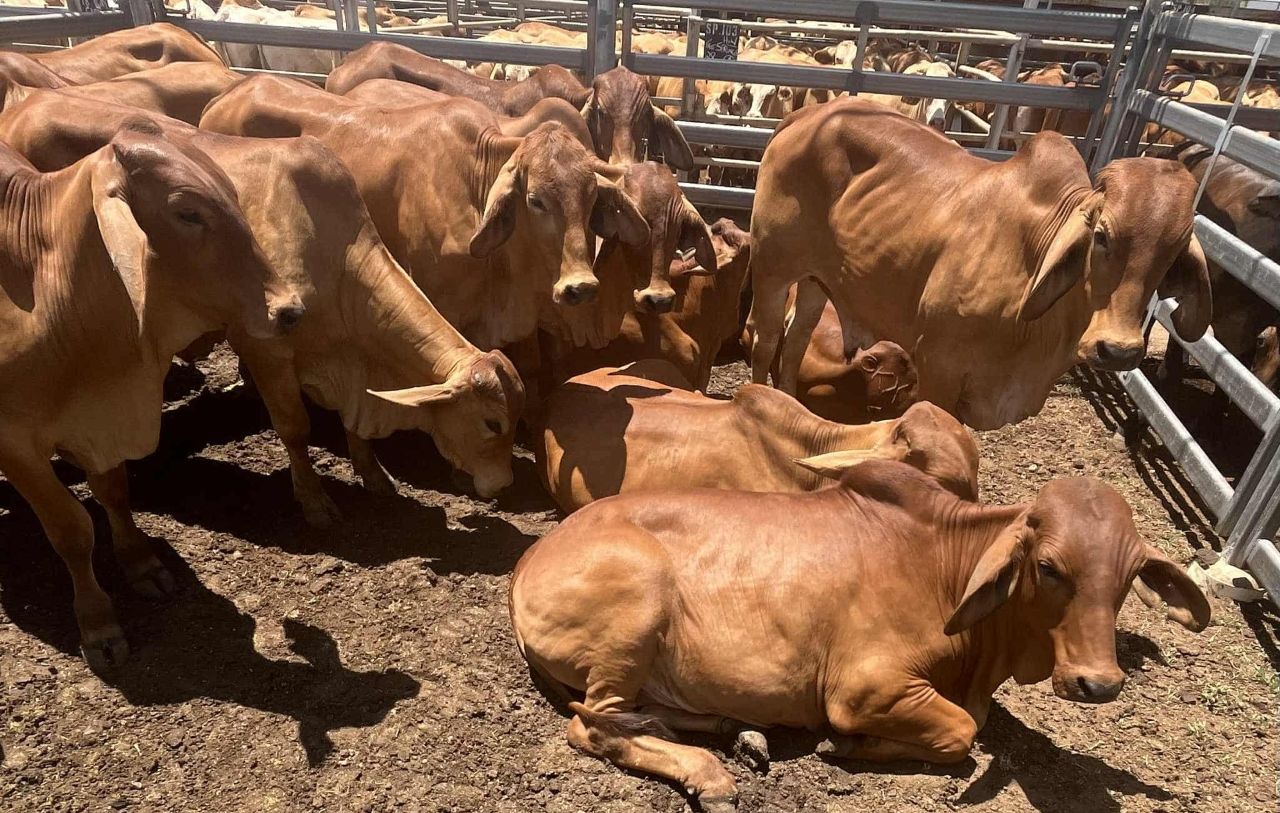
Industry peak body Cattle Australia has warned the sector could lose up to $1 billion in beef exports following the announcement by China’s Ministry of Commerce to impose an additional 55 per cent tariff on beef imports that exceed quota levels, affecting several exporting nations including Australia.
Cattle Australia chair Garry Edwards said the decision followed a year-long investigation by China’s Ministry of Commerce and would unfairly disadvantage Australian producers.
“Australia has a long-standing relationship with China as a trusted source of high-quality and safe beef, and we are deeply disappointed by this decision – a decision we believe to be entirely unwarranted and at odds with the sentiment of the Free Trade Agreement we share,” Mr Edwards said.
“Throughout the review process, Australian representatives engaged extensively with Chinese officials, both here and in China, to demonstrate the value of the trade we share and provided formal evidence our imports do not injure the local Chinese beef industry."
He warned the safeguard measures would also limit access for Chinese consumers.
“We strongly believe this decision will erode the access of Chinese consumers to a reliable source of high-quality, safely produced protein,” he said.
The move comes as New South Wales remains one of Australia’s largest beef-producing states, with an estimated 6.2 million head of cattle and accounting for 22 to 25 per cent of the nation’s total beef and veal production.
In Western New South Wales, beef production is a cornerstone of regional economies, contributing close to one-fifth of total agricultural output across the Western Plains, according to NSW Government figures.
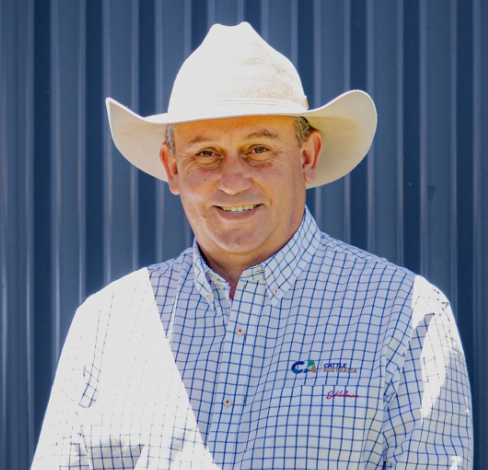
Cattle Australia chair Garry Edwards said new restrictions on beef imports into China will disadvantage Australian cattle producers. [IMAGE: Cattle Australia]
Cattle Australia also noted the safeguard measures apply globally and do not single out Australia, with other exporting nations including Brazil, Argentina, Uruguay, the United States and New Zealand also affected.
However, the organisation said Australia accounts for only a small share of China’s beef imports.
“The safeguard measures are particularly disappointing for our industry given Australia accounts for only eight per cent of China’s beef imports, while other countries have massively increased the volume they supply at lower prices,” Mr Edwards said.
Leader of The Nationals David Littleproud says China’s decision is extremely disappointing for the cattle industry, warning it could have serious consequences for producers, including those across regional New South Wales.
Mr Littleproud said the announcement was devastating for producers already facing rising costs and uncertainty.
“China’s announcement is devastating to the beef industry this year, but unfortunately it is also the latest development of failures under the Albanese government,” he said.
“The Prime Minister and Trade Minister must make urgent representations to their counterparts in Beijing.”
Australia’s Trade Minister Don Farrell has described the decision as disappointing, saying Australian beef does not pose a threat to China’s domestic industry and that Australia expects its free trade agreement commitments to be respected.
Cattle Australia said it would continue to engage with Chinese and Australian officials to seek further detail on the safeguard measures and work toward long-term, mutually beneficial outcomes.
“While China is within its rights to impose safeguard measures under certain circumstances, we need more detailed information and discussions to understand why this decision has been made,” Mr Edwards said.
The National Farmers’ Federation has echoed Cattle Australia's concerns, and expressed concerns about the need to achieve a strong outcome on the major trade policy item for 2026: the European Union Free Trade Agreement (EU FTA).
“There are clearly many factors out of Australia’s control in global trade, but one thing the Australian Government has absolute control over is the deal it chooses to accept from the EU,” Mr McIntyre said.
“The way for Australia to respond to trade headwinds is by doubling down on strong, principles-based leadership, as opposed to accepting a subpar deal for important industries such as agriculture.
“If we drift away from the principles of open and liberalised trade, we set a precedent for future trade agreements that will ultimately be detrimental to us, as well as going against the very standards we expect from others in forums such as at the World Trade Organisation and Cairns Group.
“While we can’t control other nations’ policies, we do have control over the trade deals we accept."