Coonamble greyhound track officially axed

Farren Hotham
14 January 2026, 11:29 PM
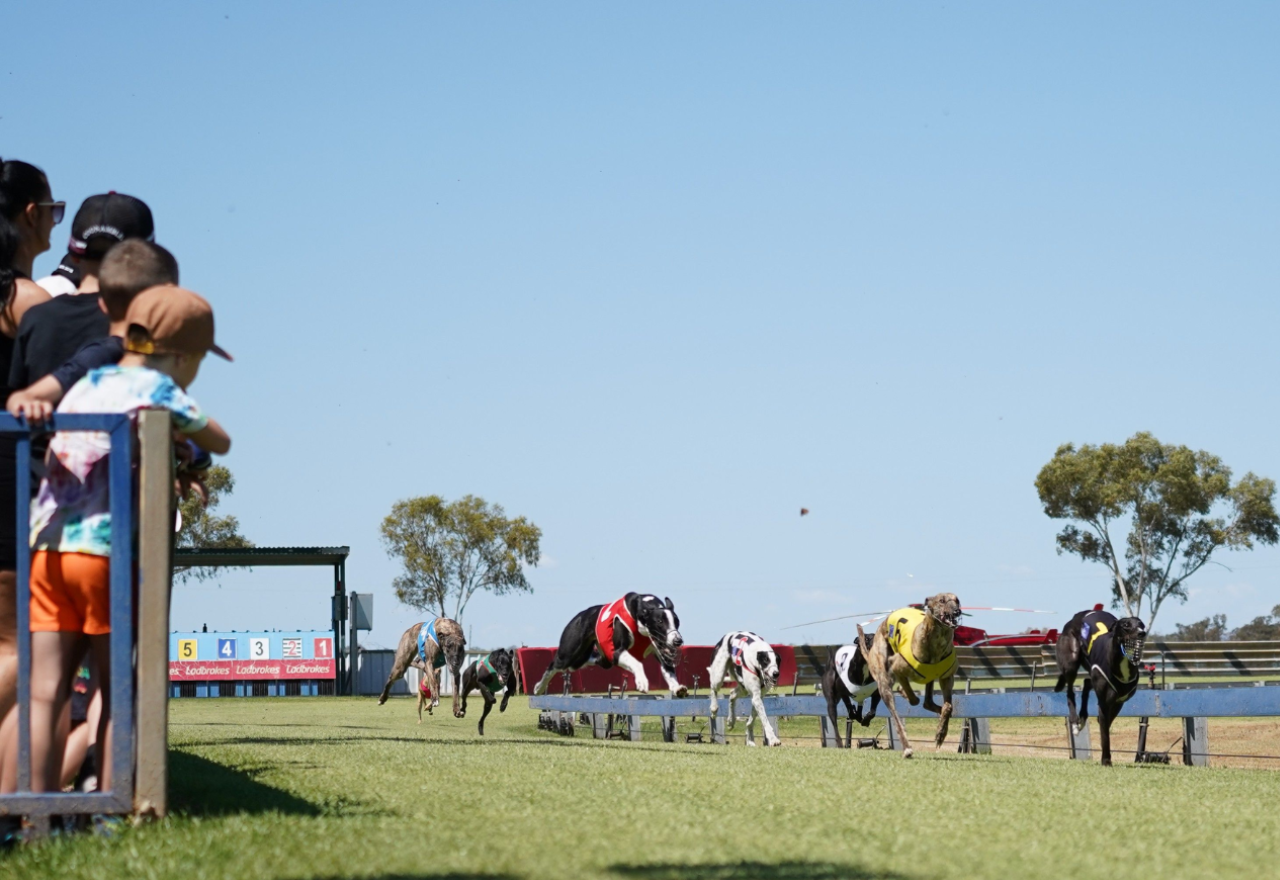
Greyhound Racing NSW confirmed yesterday (Wednesday 14 January) the demise of Coonamble greyhound racing as their new optimisation plan cuts a swathe through country racing.
The plan effectively centralises racing to just a few tracks, including Dubbo.
Tracks in Broken Hill and Muswellbrook were also confirmed to close by 30 June this year.
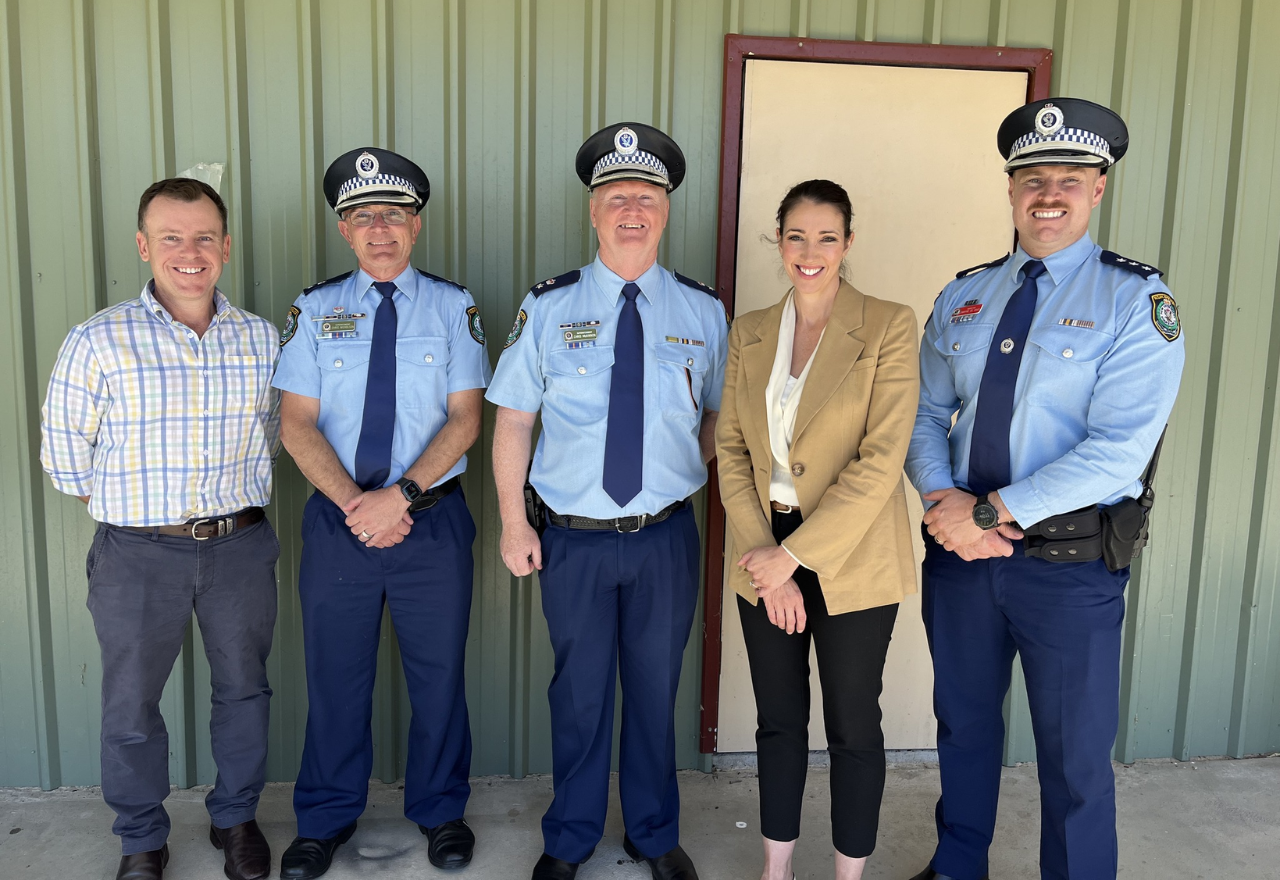
Coonamble Club President Graham Pickering is not giving up and acknowledged the support received from Independent Member for Barwon Roy Butler, Nationals MP Dave Layzell and Sydney MLC Mark Latham.
"I blame the Minister for Racing Dave Harriss but Roy and Layzell have tried everything," he said.
"It's stupid, but Dubbo don’t care, they are happy."
Barwon MP Roy Butler says he is still in there fighting for the western tracks.
"I will talk with the Minister, it cuts through the social fabric of country communities."
Greyhound Racing CEO Steve Griffin said after extensive consultation, and following the recommendations of both an independent report from Deloitte Australia, and that of the Drake Inquiry, the next phase of optimisation in the NSW greyhound industry will commence on 30 June 30 this year.
The initial phase saw all NSW non-TAB racetracks - Coonamble, Kempsey, Moree, Potts Park, Tamworth, Wauchope, and Young - close by the end of 2025.
There remained an opportunity for each to make a submission to GRNSW to become a trial track if desired.
But Coonamble Secretary Graham Pickering said there is little support on the table.
"We have applied to be a trial track but offered no funding – where’s the money going to come from?"
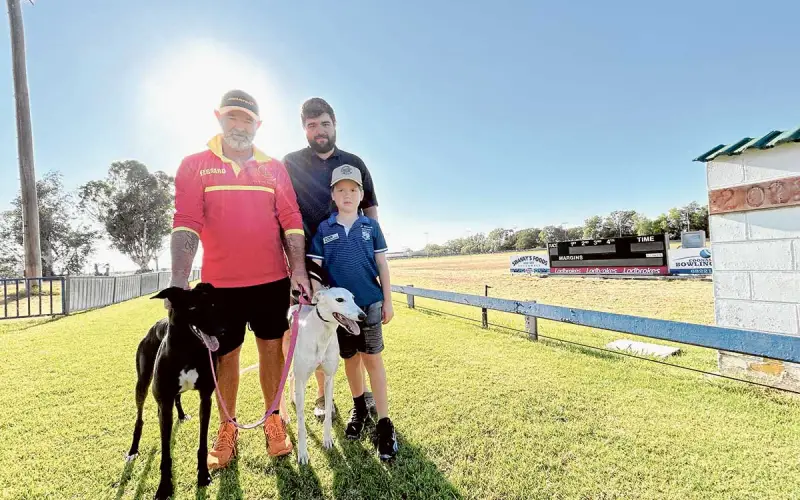
The future is uncertain for Coonamble trainers like Damien and Aiden Lee (pictured with Nate Hodges and greyhounds Rhea and Eva.
Optimisation was announced as a key part of the Industry Future Blueprint following discussion at a whole industry Summit held in May last year where the decision to rationalise the number of racetracks was unanimously agreed to by key stakeholders and trainers.
Deloitte recommended that stage two would see Wagga, Broken Hill and Maitland close, but after further investigation, and an evaluation of the cost of works required to bring Muswellbrook up to Minimum Track Standards (MTS), GRNSW’s Board decided to expedite the closure of Muswellbrook, and retain Maitland.
“Of course it’s a difficult time for the clubs which are impacted by these decisions, but it was a decision based on criteria which was formulated and unanimously agreed upon by all parties including GCNSW, at the Industry Summit last May,” Greyhound Clubs NSW (GCNSW) President Shayne Stiff said.
The Dubbo based president Shayne Stiff says the changes had to happen for the sport.
“That’s important here.
"This was not my decision or Steve Griffin’s (GRNSW CEO) decision, it was an industry decision for the betterment of the industry following the recommendations of Deloitte and the Drake Inquiry that will result in sustainability and viability of the industry."
The closure of the Wagga Wagga Greyhound Racing Club will not occur on 30 June as recommended by the Deloitte report but will occur once the upgrading of the Temora track is completed in late 2026 or early 2027.
In her Inquiry report Acting Commissioner Lea Drake recommended that the number of tracks remaining open should not exceed 14, and GRNSW should set and implement its track rationalisation strategy based on three primary factors:
(1) serious injury rates,
(2) the level of compliance with the Minimum Track Standards (MTS), and
(3) the regional spread of tracks.
Winners and losers
Deloitte provided its report to GRNSW in September and recommended that GRNSW implement three tranches of club closures over the next two years thereby reducing the industry’s footprint to 12 tracks across NSW, without reducing the total number of racing slots or the distribution of prizemoney to participants.
GRNSW has already stated that regardless of the reduction of tracks, the number of race meetings will remain the same, and possibly increase, each year delivering substantial benefit to the clubs where tracks are retained.
GRNSW received substantial feedback from stakeholders, regarding the proposed closure of Maitland on the basis it would leave the Hunter region without a one turn track which would be detrimental to trainers and the welfare of greyhounds in that region.
Although Muswellbrook scored highly as a result of the asset being owned by Greyhound Racing NSW and recent significant investment into racing infrastructure, the track needs further investment to upgrade from grass to loam, install lighting, ensure appropriate water resources and bring the track up to the MTS standard.
As a result, the GRNSW Board decided that the Muswellbrook track closure would be brought forward.
The site will be utilised by the industry as a Greyhounds As Pets (GAP) facility representing an essential component of the GRNSW welfare program in a perfect location in the lower Hunter region.
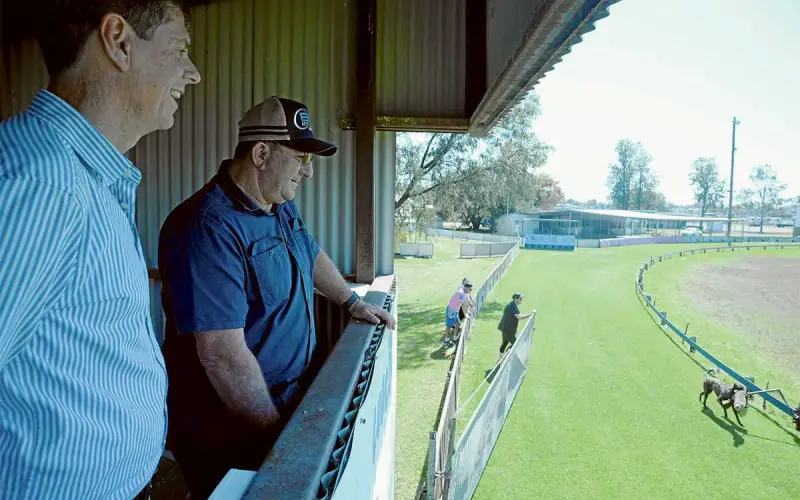
Nationals MP Dave Layzell watches a dog trial with Coonamble Greyhound Racing Club president Graham ‘Boppa’ Pickering. [IMAGE: Coonamble Times]
The GBOTA (Greyhound Breeders, Owners & Trainers Association) is a key player in the industry and welcomed the decision to retain the Maitland track.
“We presented our submission and reasoning why we believed Maitland should remain a part of the racing footprint, and felt we presented a compelling case," GBOTA chairman Geoff Rose said.
“Now that the future of Maitland has been confirmed, the GBOTA will work on making significant improvements to the track and facility and ensure the people of the Hunter have one of the best and safest facilities to race at.
“We naturally feel for those clubs whose tracks will close but as everyone at the Summit last year agreed, we have too many racetracks, we needed optimisation for the sustainable future of our industry, and we enlisted Deloitte to provide recommendations for optimisation.
“The GBOTA will as always offer its support to members who will be impacted by optimisation.”
"Numbers don't lie"
GRNSW Chief Executive Officer Steve Griffin said his organisation will remain focused on delivering a racing schedule that maximises the opportunities for the industry and participants.
“You only need to look at our history to know that while making a decision for the industry as a whole, optimisation has been done before, actually following through and putting it into practice has been much more difficult,” he said.
“The numbers don’t lie.
"For the future of our industry, we needed right-size our racing footprint and firstly the Deloitte report confirmed this, then the Drake Report emphatically said the same, and we shouldn’t forget that after being extensively discussed at the Future Summit in May, it was unanimously agreed that we had too many racetracks to be sustainable.
“I do understand how difficult this will be for those in the affected regions, and nobody wanted it to be them and their track, but we were diligent in the process and let facts and data dictate the decisions made.
“With optimisation we won’t lose any racing in NSW and it will result in GRNSW being able to lower costs and maximise returns and profits to participants and clubs.”