Gilgandra and Warrumbungle councils 'pioneer' local drought planning
Kelsi Davis
25 November 2025, 8:20 PM
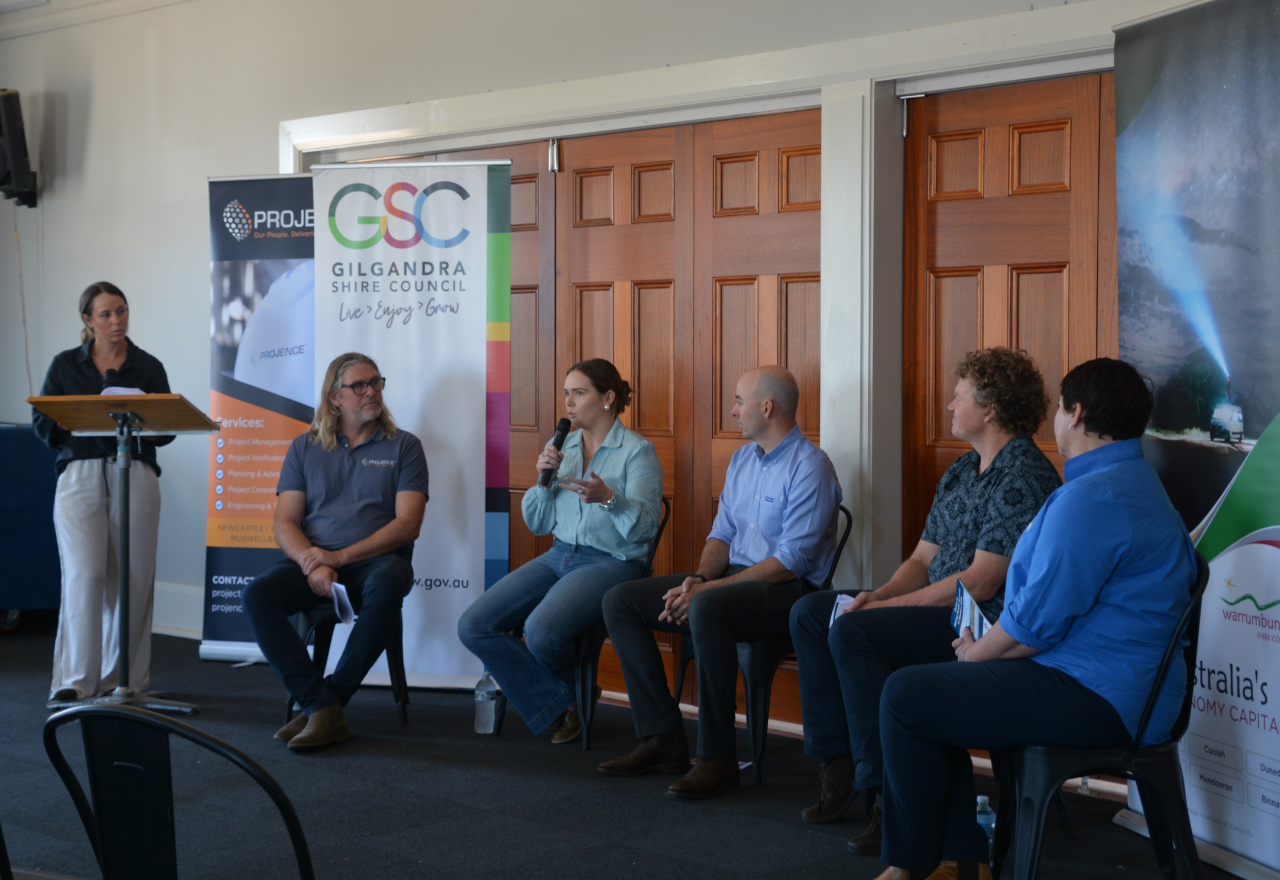 Drought experts listening to Brooke Watts' during the panel discussion.
Specialists from across the state travelled to Baradine last Thursday 20 November to share their knowledge with locals on planning for the next big dry - before it arrives.
An audience of around 25 farmers, community members and shire councillors attended the Castlereagh Country Drought Resilience & Innovation Showcase to soak up suggestions to strengthen local drought resilience.
Castlereagh Country Drought Resilience Plan project manager Dr Andrew Krause introduced a three step strategy to help Warrumbungle and Gilgandra districts prepare for, respond to and recover from drought.
Dr Krause says, through the project, the shires are pioneering drought resilience and planning for NSW.
He says he is hopeful other regions and councils will jump on board to help their locals withstand the "horror of drought."
Social media influencer Kaitie Nash hosted the event and moderated the panel discussion at the Baradine War Memorial Hall.
Speakers included University of Newcastle hydroclimatology associate professor Dr Anthony Kiem, Bralca dynamic agribusiness professional Brooke Watts, Rural Advisory Mental Health program (RAHM) nurse Gabrielle Schultz, and Rabobank commercial banking manager Bede Young.
The group shared their expertise, encouraging the audience to be 'proactive not reactive' with their drought planning.
The key pillars of the plan focus on the economic, social & cultural and environmental aspects to drought to increase local understanding of drought resilience, mitigate risks, identify actions and opportunities for improvement.
The plan involves an interactive map which allows users to access information, such as on groundwater sources available, yield estimates, median final depth of drilling and more, in any given area.
Although this data was already available online, it needed to be sourced from multiple webpages, so the new interactive map makes accessing the information faster and easier.
Dr Krause says the map and the other steps to the plan, will be launched for public use within the next few months.
The project worked with local farmers, councils and the NSW Government, and was financially supported by the national Future Drought Fund.

Dr Andrew Krause introduced the project to the audience.
Anthony Kiem, who has studied climate for decades says "you never know when the next drought will happen, but you know that it will happen."
"What I can absolutely guarantee is that there will be another drought, and the another thing I can guarantee is that it won't be the same as the last," he says.
The effects of the last record-breaking drought swept through NSW from 2017 to 2020 are lingering in many communities.
Dr Kiem says these events can be predicted and planned for.
He says although weather forecasts are not always indicative of the drought situation, the NSW Government combined drought forecast, which takes into consideration soil moisture and vegetation, as well as current weather patterns, is a tool that provides farmers with an idea of their area's predicted precipitation three months ahead.
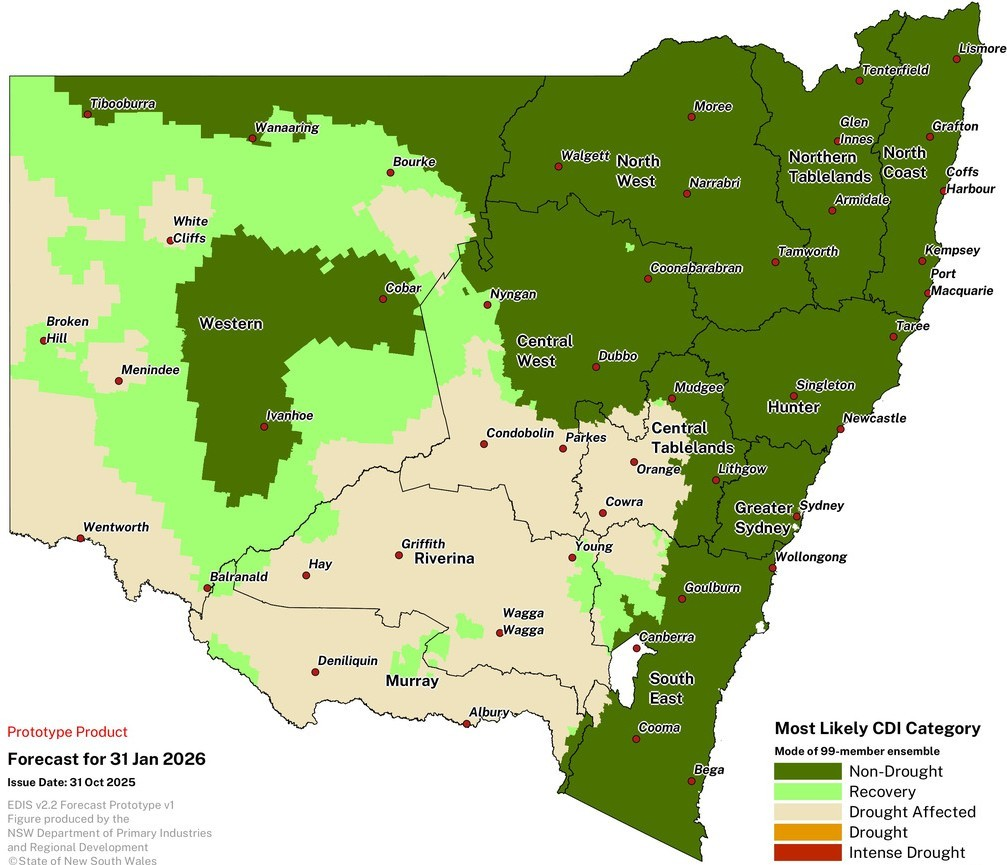
The current drought map forecast until January next year [Sourced NSW Department of Primary Industries and Regional Development drought forecast].
The guest speakers returned repeatedly to the idea of drought planning being proactive, not reactive.
Dr Anthony Krause says "if you're already in a drought it might be too late."
"The worst plan is no plan."
By frequently listing best and worst case scenarios, and everything in between, plus actively making plans for those situations, farmers are proactively planning for drought.
He said the list should factor in rainwater, bore water and other ground water sources.
"The uncertainty of drought is never going away, we have to get comfortable with it."
Brooke Watts from Bralca discussed how the government's role is essential in drought planning, but the communication needs to come from the ground up.
She says farmers need to keep in contact with the government and councils to keep them informed, so they can help when it's needed.
"If growers aren't pushing that up into council, community groups or government it's not going to be a major [government] priority," she said.
The technological farming innovator believes reporting issues, complaints, spaces for improvement and need for grants to governmental bodies keeps the issue of drought relevant.
Rabobank commercial banking manager Bede Young zeroed in on negotiating the economic distress and how to plan ahead.
While much of the program focused on how this initiative can help farmers minimise financial strain during the next drought, RAHM nurse Gabrielle Schultz addressed the mental and emotional strain.
It was acknowledged that the seminar took place during the midst of harvest, so the organisers recorded the panel discussion for farmers and community who could not attend.
The audio recording will be released as a podcast early next year.