Carbon choices on the table as ABARES modelling released

Kristin Murdock
29 December 2025, 8:40 PM
New modelling from the Australian Bureau of Agricultural and Resource Economics and Sciences (ABARES) is prompting fresh discussion about how carbon sequestration could sit alongside food and fibre production, particularly for farmers in regional New South Wales.
The modelling, released this month, examines how agriculture, forestry and carbon markets may interact under different policy and carbon price scenarios.
Importantly, it does not prescribe land-use outcomes, but instead models possible responses based on economic signals and policy settings.
The National Farmers’ Federation (NFF) welcomed the report, describing it as a tool to help governments understand the consequences of their policy decisions rather than a directive for farmers.
NFF Interim Chief Executive Su McCluskey said the modelling made it clear that carbon sequestration was a choice, not a mandate.
“This is not a blueprint telling farmers what to do with their land,” Ms McCluskey said.
“It’s a scenario tool that helps governments understand the consequences of their own policy choices.”
The ABARES Spatial, Agriculture, Forestry and Environment (SAFE) model assesses land use across agricultural “cells” of around 2,200 to 3,000 hectares, allowing a landscape-level view of how farming systems and carbon markets could interact.
The report identifies so-called “opportunity zones” where some producers may choose to diversify their operations by incorporating carbon sequestration alongside ongoing agricultural production.
Ms McCluskey said that while carbon could provide a complementary income stream for some farmers, it would not be suitable for all operations.
“The key word here is choice. For some producers, carbon could be a complementary income stream.
For many others, it won’t stack up and that’s entirely appropriate,” she said.
The modelling also highlights a strong relationship between carbon prices and participation, with uptake increasing as prices rise - a finding that reinforces the need for careful policy design.
“Location matters.
"The right model, in the right place, can work alongside agriculture,” Ms McCluskey said.
“But the NFF remains clear-eyed about the risks of land competition.”
The federation has consistently emphasised that food and fibre production must remain the priority for Australian agriculture, particularly as farmland faces increasing pressure from housing, renewable energy developments, transmission infrastructure and mining.
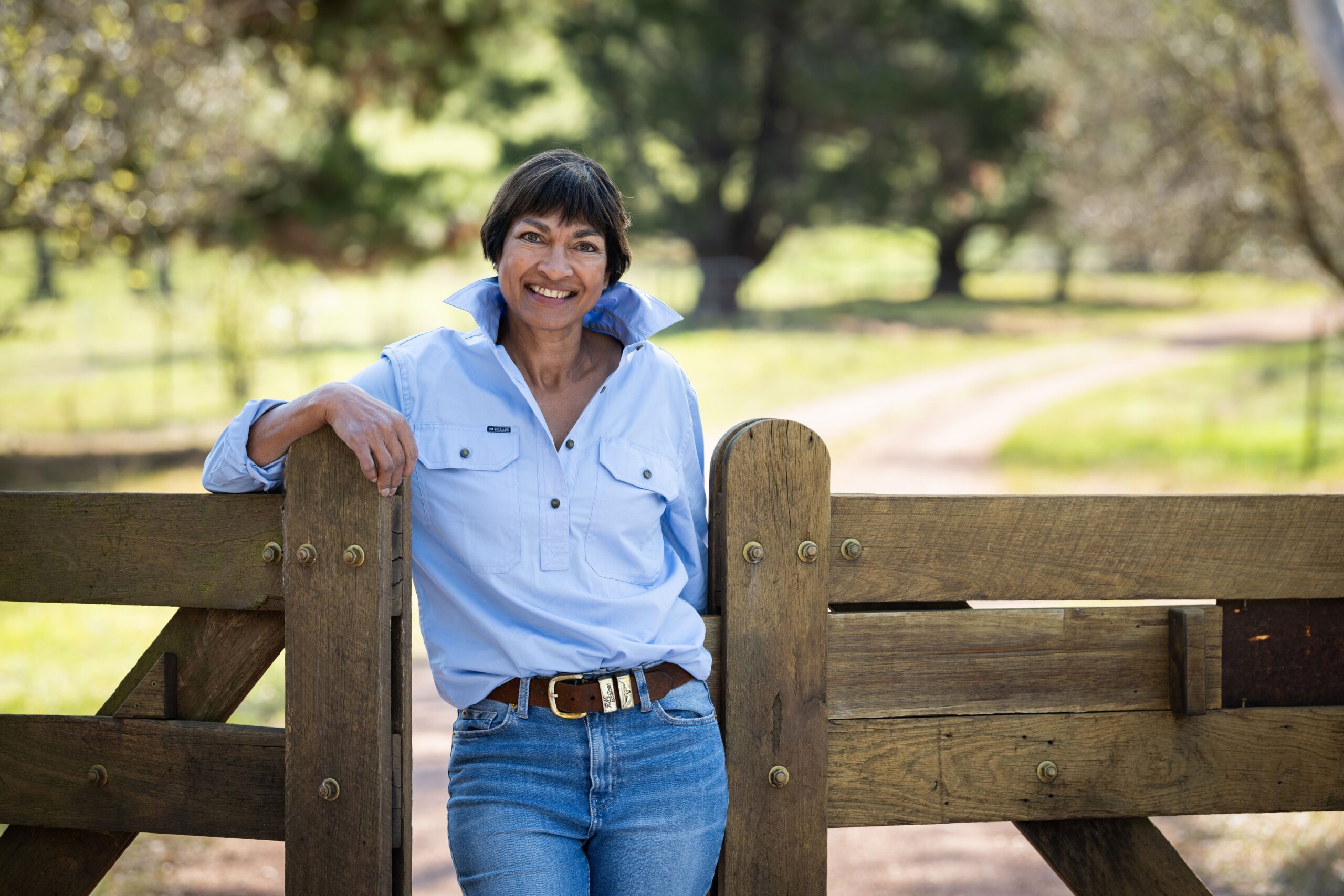
Su McClusky was appointed National Farmers’ Federation Interim Chief Executive in August 2025, and said while carbon could provide a complementary income stream for some farmers, it would not be suitable for all operations.
“We will keep pushing the principle that emitters should focus first on reducing their own emissions, not simply outsourcing the problem to agriculture,” Ms McCluskey said.
NSW farmers cautious but interested
While industry group NSW Farmers has not issued a specific public response to the ABARES modelling, recent research into farmer attitudes suggests strong interest in carbon-related opportunities, tempered by caution around complexity and risk.
A NSW Government-commissioned study into farmers’ views on carbon and environmental markets found that many producers are already undertaking practices that increase soil and vegetation carbon such as stubble retention, rotational grazing and ground cover management, but do not necessarily view these as “carbon farming”.
The research found that a significant proportion of this state's farmers expressed interest in participating in carbon or environmental markets, particularly where there were clear productivity or land- management benefits.
However, familiarity with formal carbon markets remains relatively low, and many farmers identified administrative complexity, uncertainty and long-term commitments as barriers.
For broadacre producers in regions such as the Western Plains, these findings reflect a practical mindset: interest in opportunities that support resilience and soil health, alongside wariness of arrangements that could limit future land-use flexibility.
Balancing opportunity and community impact
Ms McCluskey said any future policy settings must be carefully designed to avoid unintended consequences for regional communities.
“Any future settings must avoid unintended consequences and keep regional communities strong,” she said.
The ABARES modelling suggests that agriculture and carbon sequestration can coexist in some circumstances, but industry groups continue to stress that participation must remain voluntary and grounded in sound economics.
As debate around emissions reduction and land use continues, the report adds to a growing body of evidence that carbon markets may suit some farming systems, but not all, and that flexibility, transparency and choice will be critical for farmers navigating the path ahead.