National Parks defend 'ticking timebomb' claims

Farren Hotham
11 December 2025, 2:40 AM
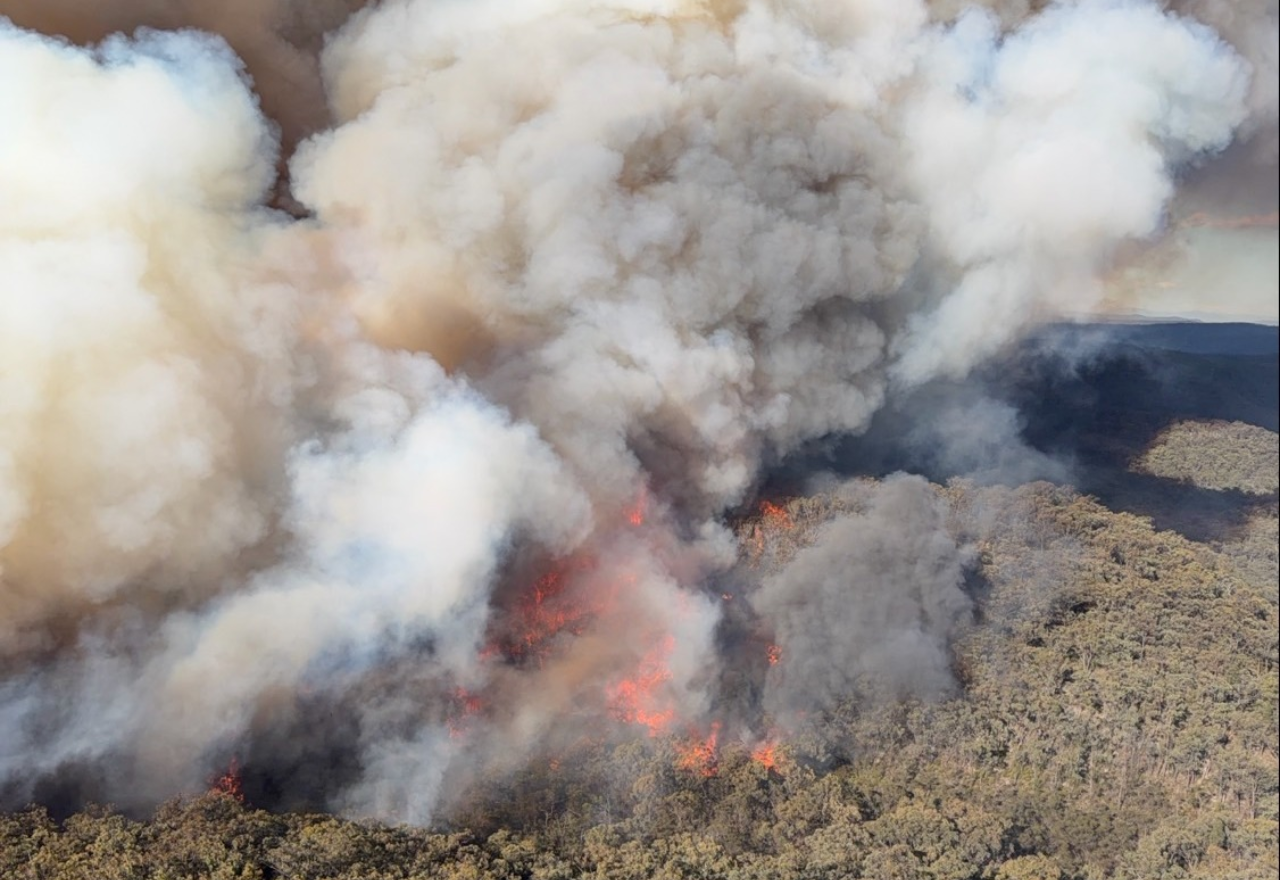 A large fire near Merriwa burned large area of national park in early December.
Already 'under fire' over its recent buy ups of western NSW land for new national parks, a spokesperson for NSW National Parks has defended claims that the state’s parks have become 'ticking time bombs ' for bushfires this summer.
NSW Farmers’ President Xavier Martin said vital resources to properly manage bushfire risks on public land had failed to materialise.
“Farmers and communities have done a lot of work to prepare for this year’s fire season, but we’ve got a serious danger that’s out of our hands and out here on our doorstep,” Mr Martin said.
“This isn’t just a few fallen branches in these parks – we’re talking about huge tinderboxes of timber and vegetation that are just sitting here, simply waiting to explode.
“Fuel loads haven’t been managed at all well, and burnoffs aren’t happening when they should – so there’s real question marks about how safe we are living and working near these parks here in NSW.”
But a spokesperson for NSW National Parks said the NSW Farmers President’s comments were misleading.
‘’NSW National Parks and Wildlife Service conducts the largest hazard reduction program in NSW, delivering over 75 percent of all burning across the state, despite only managing 10 percent of land," they said.
"The NSW Government is making record investments into National Parks, including an additional 200 firefighters.
"Since 2019 NPWS staffing levels have increased by 30%. NPWS now has over 1,200 firefighters with over half of these staff trained for arduous remote-area deployments.
"In 2024-25 NPWS invested over $96m in the maintenance and upgrades of fire trails,’’ the spokesperson told the Western Plains App.
NSW Farmers’ Western Division Chair Gerard Glover said the state government must step up and do more to manage bushfire risks in national parks, with farmers in the west among those facing an uncertain summer ahead.
“Before they can even think about declaring another square inch of land as a mecca for pests, our governments have got to stop, think and invest real resources to reduce the bushfire risk in the national parks they’ve already got,” Mr Glover said.
“Some of these parks in the west of the state span hundreds of thousands of acres, and often there’s barely anyone monitoring them.
“Apparently it’s going to be another hot summer ahead, and as any Aussie can tell you, there is simply no room for complacency when it comes to bushfire season.”
But the National Parks spokesperson said the NPWS operates a robust firefighting fleet, including over 420 firefighting appliances, 220 heavy plant units, and 6 aircraft.
In the last year 96 percent of bushfires that started on NPWS managed land were contained within the park boundaries, exceeding the 85 percent target.
The creation of the Great Koala National Park will see significantly higher fire management, feral animal and weed control than is currently carried out in State Forests. The creation of the park will involve over 100 new roles in NPWS to do this work.
NPWS is one of four firefighting authorities identified under the Rural Fires Act.
It collaborates with the NSW Rural Fire Service, Fire and Rescue NSW and Forestry Corporation of NSW to suppress bushfires and reduce fire hazards within and beyond the national park system.
Cooperative arrangements are established through the NSW Bush Fire Coordinating Committee and implemented via local Bush Fire Management Committees.
It notes over the past five years, NPWS has completed more than 300,000 hectares of prescribed burning across the national park estate.
Table 1: Prescribed burning in NSW – Source NSW Rural Fire Service Annual Reports
| Prescribed Burning Delivery NSW | NPWS Result | All NSW Result | % NPWS |
| 2020/21 | 53,145 | 70,350 | 76% |
| 2021/22 | 28,162 | 36,266 | 78% |
| 2022/23 | 70,491 | 82,393 | 86% |
| 2023/24 | 89,703 | 126,087 | 71% |
| 2024/25 | 61,934 | 89,341 | 69% |
| 5 year total | 303,435 | 404,438 | 75% |
| 5 year average | 60,687 | 80,888 | 75% |
Only a small proportion of bushfire ignitions in NSW occur within national parks, most commonly caused by lightning. NPWS maintains strong rapid-response and remote-area firefighting capability, which ensures most ignitions are detected early and contained quickly.
NPWS also has rapid aerial response teams (RART). These teams consist of firefighters and three dedicated aircraft strategically positioned across the state. Working with the NSW Rural Fire Service, our crews can reach fires in the shortest time possible, protecting life and property.
As the major cause of bushfires is lightning strike, the ability of NPWS to quickly respond in remote areas greatly reduces the size, spread and impact of these fires.
In information provided to the Western Plains App on 1 December, NPWS said larger bushfires are almost always the result of challenging weather, inaccessible terrain, limited safe access for crews, or conditions that restrict the safe use of aircraft.