Western NSW calls for fair treatment on vital Sydney road link

Kristin Murdock
19 February 2026, 8:20 PM
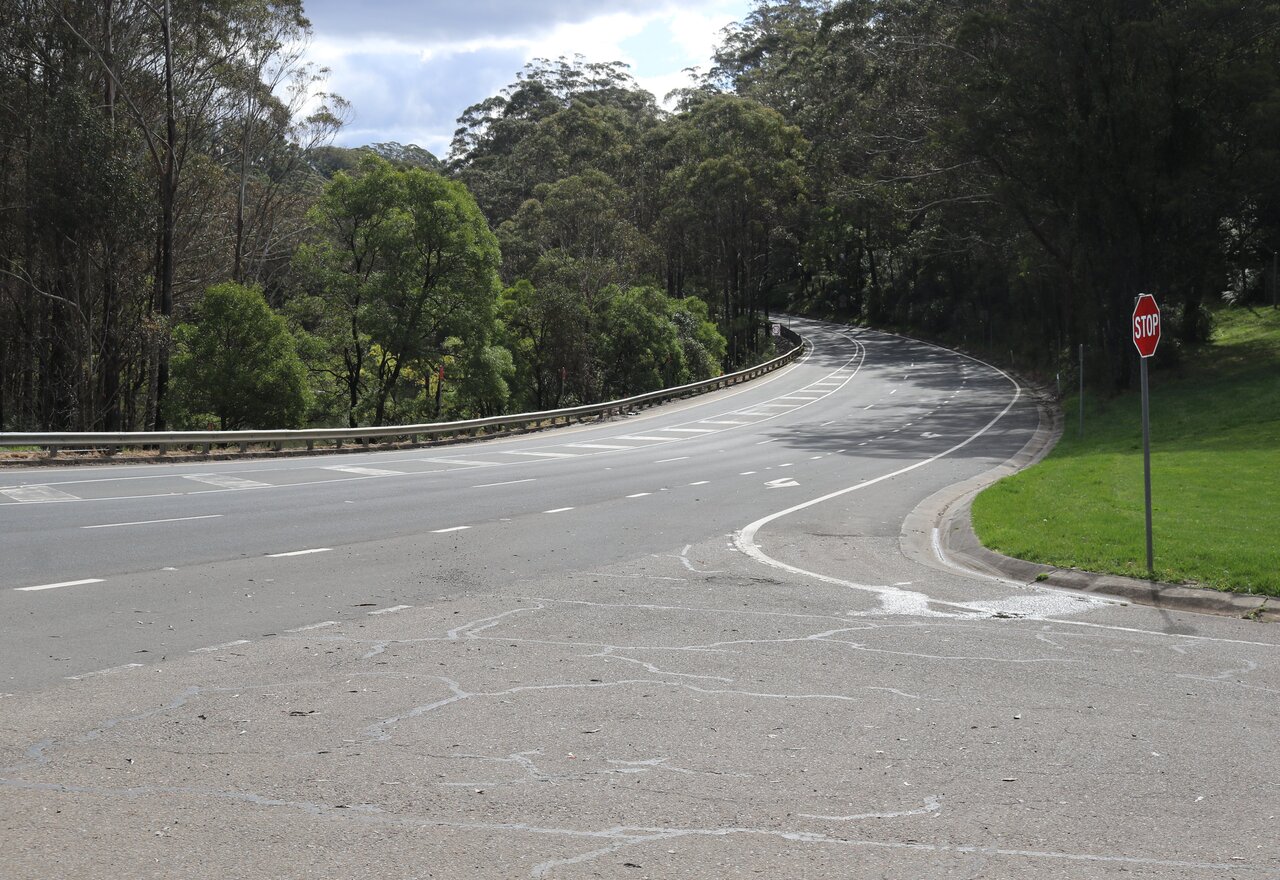 Bells Line of Road is one of few continuous east-west connections between Sydney and the Central West
Central and Western NSW contribute approximately $26.4 billion annually to the state’s economy, yet the region continues to depend on a constrained east–west road connection to Sydney that carries local traffic, visitors and state-significant freight on the same mixed-use route.
Following the release of the Sydney to Central West Corridors White Paper, Lachlan Shire Council, as part of the Central NSW Joint Organisation (CNSWJO), says the region must now see delivery, not further delay.
The Great Western Highway and Bells Line of Road remain the only continuous east–west connections between Greater Sydney and Western NSW.
These corridors underpin food and agricultural supply chains, renewable energy projects and mineral production, including gold, copper and critical minerals, while also servicing commuter and visitor traffic.
Transport for NSW analysis confirms demand on the corridor will intensify as Western Sydney grows and new economic activity emerges, adding further pressure to an already constrained route.
CNSWJO Chair and Cabonne Mayor Cr Kevin Beatty said the issue is no longer about identifying problems, but about committing to solutions.
“Central NSW has been dealing with these constraints for decades. The evidence is clear. What’s missing is a delivery pathway that turns that evidence into action,” Cr Beatty said.
Between Lithgow and Penrith alone, the Great Western Highway contains 38 speed changes, 35 sets of traffic lights and six school zones - a level of stop-start movement that affects freight efficiency, safety and travel reliability.
“Ongoing congestion, safety risks and unreliable travel times, particularly on the Great Western Highway, are holding back freight efficiency, tourism and everyday access for our communities,” Cr Beatty said.

CNSWJO Chair and Cabonne Mayor Cr Kevin Beatty said Central NSW has been dealing with transport and road constraints for decades.
“This corridor carries local traffic, visitors and state significant freight, yet it still operates as a constrained, mixed-use route.
That creates safety risks, delays and real costs for producers, businesses and the communities that rely on it.”
CNSWJO says transport limitations are restricting the region’s ability to support continued growth across agriculture, mining and minerals, forestry, renewable energy, manufacturing and logistics.
“Producers and freight operators need certainty to plan and invest.
When a critical freight corridor is unreliable, decisions are delayed and confidence is lost, not just in the region, but across the supply chains that depend on it,” Cr Beatty said.
The corridor also affects the visitor economy, particularly during major regional events.
“Visitors who come to our region for major events like the Bathurst 1000 should end their trip on a high - not stuck in hours of traffic as they try to make their way back to Sydney.
This level of congestion diminishes the overall experience and undermines the benefits these events bring to our region,” he said.
Cr Beatty noted that work on sections of the Great Western Highway has already progressed, including concept design, consultation and environmental assessment between Katoomba and Blackheath, with sections such as Medlow Bath delivered.
“It’s ready to move forward and should be treated as a priority, not sent back for more investigation,” he said.
While acknowledging that significant investment will ultimately be required, CNSWJO says immediate focus should be placed on establishing a clear pathway to implementation.
“Our message is clear and practical: Central and Western NSW are the backbone of our state’s food, energy and critical minerals supply.
A safe, efficient road connection to Sydney isn’t a luxury - it’s essential to sustaining the economic strength of NSW. We want to see delivery, not another excuse to procrastinate,” Cr Beatty said.