Western Plains App
Western Plains App
What's what out west!
What's OnShop WestEat Drink StayYour Local MemberYour CouncilAdvertise NOWEducationEmergency ContactsPuzzles & GamesRadio
Western Plains App

Blogs


Building the skills for tomorrow to prepare youth for an ever-changing workforce

10 July 2024, 5:00 AM

In today's rapidly evolving job market, preparing the next generation for future roles is more crucial than ever. While technical knowledge remains important, there is a growing consensus that non-technical skills are equally, if not more, vital for success in the modern workforce. Generation Z and those that follow are more likely to have more than one career through the course of their working lives. This is driven by accelerating technology, robotics, AI and automation changing the playing field as well as a growing appetite for job and career mobility among younger generations.In fact, today’s school leavers are likely to have 18 jobs across 6 careers during their working lives. This can be astounding for Gen X and Baby Boomers, who are likely to have had just 1 or 2 careers from qualification to retirement. With rapidly increasing career mobility, it’s pivotal that we equip students with the transferable skills to thrive from the beginning of their school years onwards.  ‘Soft’ skills are fundamental The workplace is changing at an unprecedented rate. With advancements in technology and a shift in workplace dynamics, certain skills that were once considered additional are now fundamental.  They are also inherently transferable across jobs and careers and don’t have a limited lifespan. We are now seeing jobs at both ends of the skills spectrum impacted by technology. Robotics and automation are impacting lower and unskilled labour, and AI is impacting higher-skilled roles. In this environment, it’s our uniquely human capabilities, relationship-building and adaptive problem-solving that will come to the fore. A wide range of skills fall into the category often called ‘soft skills’ (a name that is becoming increasingly inadequate as the need for these capabilities accelerates). In my opinion, three core skills should be considered at every step of education. Critical thinking is at the top of the list In a world overloaded with information (and a good deal of it not fact-checked), it’s crucial to know how to assess, analyse and make decisions based on many variables. Critical thinking skills build these analytical capabilities, readily questioning information and synthesising a range of data to solve problems. According to the University of Melbourne, there is evidence to suggest that ‘without explicit instruction’, students aren’t learning critical thinking skills. As this article also points out, a lack of critical thinking has ‘real implications on real people’.While there are some innovation initiatives out there, like this research database, it’s imperative that we focus on deliberately and explicitly building this capability into education at all levels to prepare young people for what’s next.  It’s a skill they can take with them as they job or career hop in response to a dynamic world of work. Creativity is key Innovation is at the heart of growth and competition. Creativity is not just about having new ideas but also about the ability to see problems and solutions from new angles and think outside the traditional boundaries. It isn’t just about creative roles, it’s about the ability to solve problems, envision future possibilities and adapt whenever necessary. In addition, research by the Australia Council for the Arts has highlighted that creative learning increases confidence, improves learning engagement and, critically, prepares our youth for a future of disruption. AdaptabilityIn a world where change is the only constant, the ability to adapt to changing environments and circumstances, and a willingness to learn new skills, are essential. As the lifespan of skills becomes shorter, adaptability ensures individuals can navigate the changes effectively.The career landscape is shifting, with some roles becoming obsolete and new ones emerging as a result of technological advancements and evolving business needs. Young people need adaptability to navigate these changes successfully. This skill allows them to pivot when their career paths change or when they encounter unforeseen challenges or opportunitiesThe imperative is clear Education providers at all levels must consider how these skills can be built into increasingly shorter, sharper learning experiences to keep pace with change. It’s not just about preparing emerging generations for the world of work, it’s about preparing them to lead successful, fulfilling lives in a world that’s in constant flux. Giving our youth a balanced skill set is a commitment to their future and the future of our workforce. It’s a step towards a more innovative, adaptable and successful tomorrow for all of us.

Roy's Roundup 08 July 2024

10 July 2024, 4:28 AM

G’day folks, Parliament is on a long sitting break over July, but that has given me the chance to make a few journeys out to the electorate. It is also proving to be a busy time for other members of parliament to visit Barwon. Over the last two weeks we have seen two ministers and an MLC out and about, and there are others due out in coming weeks.With meetings, committees and paperwork that needs to be done in Sydney and minister’s visits out west, it has meant that I have been dividing my time between Macquarie Street and Barwon. This week I will be with another minister who will be travelling almost the entire length of Barwon from Narrabri to Tibooburra and back. It should be an interesting trip. Opportunity in renewables Bipartisan support in parliament means projects involving renewable energy were not able to be halted or the legislation amended. We therefore need to see Renewable energy projects, like the Renewable Energy Zones (REZs) as opportunities for regional and rural towns. These projects could bring a range of positive infrastructure developments, including upgrades to roads, housing and medical services. There are also opportunities to give local manufacturing a boost and bring jobs and money into regional areas.However, after the Electricity Infrastructure Investment Act was passed in the last parliament, projects were often launched without much in the way of direction from the department, and many also lacked community consultation. REZs are causing a lot of concern and even conflict in the communities affected.In the June sitting weeks in Parliament, I introduced the Electricity Infrastructure Investment Amendment (Tender Moratorium) Bill, as a way of introducing a bit more fairness, direction and consistency into the process.If the bill is passed in parliament, it will freeze tenders for new renewable energy generation projects until a parliamentary committee can hear from farmers, communities, and electricity generators about the problems they are all having. The current process would be subjected to a review and reported on. The review would occur between tender rounds to minimise disruption.Farmers feel their attempts to discuss unacceptable impacts have been ignored, and communities hear the words of benefiting but need a clear plan. Generators are concerned about being blocked from the best wind resource on the hills.The bill would provide time to ensure these projects are economically sound, community concerns are heard, and that the benefits are fully known to those on whom the projects will have an impact. This won’t resolve all of the problems, but it will give some agency back to the communities affected by the REZs and dispel some of the sense that they have been unable to have any say in their own future. Community Consultation BillAs I said, one of the big problems with many renewable projects is the lack of community consultation. But unfortunately, that problem is not confined to renewables. This has been a common theme across many large projects involving the investment of public money, many of them in Barwon, where there are some of the most disadvantaged communities in New South Wales. Instead of engaging with the public officials often resort to D.A.D. consultation - decide, announce, and defend, where a decision is already made, then announced and the department goes into defending the decision they have made without consultation. Poor consultation can lead to some terrible outcomes, including confusion, fear and sometimes even division in the community, so it is vitally important that communities understand what is happening and have a say in things that will affect them.There also needs to be some accountability if there is a failure to consult with a community. In the June sitting weeks I also introduced the Regional Communities (Consultation Standards) Bill, which will set a prescribed standard for consultation. I will keep you posted. Minister Jackson visits WilcanniaRose Jackson MLC, Minister for water, travelled to Wilcannia recently to meet with members of the community and to listen to what they have to say, primarily about the Wilcannia Weir Replacement Project.The Minister held an open community forum in Baker Park and around 50 people were able to listen, actively question and provide their solutions and thoughts to the Minister and her team. Later she met with Central Darling Shire council members and other community representatives in a frank meeting at the Council Chambers. One thing was made perfectly clear, that the community is still united in its opinion that the original design, as agreed in August 2022, is still the best choice for the community.The minister agreed that the way forward is to have an independent inquiry into the factors that lead to the original design being replaced. She has also said “I hope to get out here again,” making a commitment to continue to listen to the Wilcannia community.There is still a way to go before construction of the weir can get underway, and I will continue to support the community in their desire for the original design.I want to thank the Minister for taking the time to travel so far and for listening to the community. Minister Kamper in WalgettAfter meeting Minister Jackson in Wilcannia, I had to head to Walgett to meet with Minister Steve Kamper to announce $250,000 funding for the Walgett Memorial Swimming Pool.This money can be used for the design and planning of the new pool and will help to get this project going. Once design and planning is complete, we can get a new pool built in a subsequent budget year.We had Walgett Shire Council Mayor Jason Ramien, General Manager Megan Dixon, and a bunch of community members along for the announcement.This is great news for Walgett. Minister Jackson in MenindeeWhile I was in Walgett, the Water Minister, Rose Jackson MLC, was in Menindee to announce a $25 million funding package for rehabilitating the Darling-Baaka following the recommendations made in the Chief Scientist’s report into the mass fish deaths at Menindee last year.The package includes:A trial of state-of-the-art temporary fish passage technologies, beginning with a temporary fish passage. Meanwhile a detailed business case for permanent fish passage in the Lower Darling and Menindee Lakes system will be prepared. The implementation of a Menindee-specific mass fish death event response sub-plan. The installation of new real-time multi-parameter water quality monitoring buoys and data loggers for much improved data collection on the water levels.Ongoing maintenance and operation of real-time water quality sensors and other water quality monitoring in the weir pool.A new governance model to coordinate integrated management of land use, water and natural resources.Strategic planning for on-ground rehabilitation works to improve water quality, ecological and cultural outcomes.On-the-ground resources in Menindee to support the program and develop a new water quality monitoring frameworkI welcome this $25 million in funding, which will be rolled out over four years. Funding for Coonamble AHSI was delighted to see that Coonamble Aboriginal Health Service (CAHS) was the recipient of $132,000 in funding, which was recently announced by Health Minister Ryan Park. CAHS does such a great job looking after the health needs of the Coonamble Community but it does so much more. This funding will go particularly towards helping fund their Fair Dinkum Choices program, which helps people make better choices about their personal health. The funding will provide an atmosphere in which community members can feel comfortable to talk freely about matters relating to their health. Mental Health Unit at Broken HillThe Minister for Mental Health, Rose Jackson MLC, was in Broken Hill recently to take part in a sod turning for the new Acute Mental Health Inpatient Unit.This eight-bed facility is part of a $700 million State-wide Mental Health Infrastructure Program.At the ceremony the minister spoke about the importance of expanding mental health services in remote areas to challenge the tyranny of distance and also to challenge the stigma surrounding mental illness, which cannot be underestimated.Providing new or upgraded facilities helps attract and retain staff, creates a better and safer environment for health workers, and a much better environment, importantly for patients and their families.This is a great investment for Barwon. Funding for Festivals and events in BarwonOver the last couple of weeks, we have heard some good news about funding in Barwon. Some of it has been for fun events across. I want to congratulate these successful applicants for Street Festival GrantsBogan Shire Council, Big Bogan Street Festival, $141,000Bourke Shire Council, Back O' Bourke Fiesta, $135,000Coonamble Shire Council, Vision Splendid Country Music Extravaganza, $150,000Gilgandra Shire Council, Under the Gums + Goin’ to Gil Weekend, $125,000 Lachlan Shire Council, Condo Comes Alive, $93,350Narrabri Shire Council, Boggabri Business Chamber monthly markets and Narrabri LGA Christmas Activation 2024, $86,017.50 Street Party, $66,000Warrumbungle Shire Council, Warrumbungle Shire's Vibrant Street Fests, $150,000 There were also two successful applicants for Regional Event funding:Cobar’s Grey Mardi Gras, a festival celebrating music, fashion and fun from the 50s, 60s and 70s.Pilliga Ultra, a fun family event that celebrates running and the beauty of the Pilliga Forest

Roy's Roundup 10 June 2024

11 June 2024, 12:32 AM

G’day folks,Winter is here, the budget is almost upon us and tax time looms. Last week was a sitting week but this week I will be back out in the electorate, before returning for budget week next week, usually one of the busiest weeks of the parliamentary year. I will be paying close attention to what the treasurer has in store for Barwon.Palliative Care in Broken HillI was fortunate enough while I was in Broken Hill in May to get a tour of the new Jacaranda House Palliative Care facility. It opened on May 24, during National Palliative Care Week. Unfortunately, I was unable to be there for the official opening, but I was given a tour a few days before by the Director, Melissa Cumming. Jacaranda House is situated in a beautiful heritage building opposite the hospital and has a dedicated team working to provide a high standard of care. She told me that when she arrived in Broken Hill 35 years ago there was no palliative care, but over that time with help from the Broken Hill community and ministry support, the team has grown. The palliative care centre now has such a great reputation that it makes health workers want to move to regional and remote areas.Palliative care is such an important part of the health system. With so many areas in deficit for palliative care, with Jacaranda House the Far West Local Health District has set a standard that should be available everywhere.Bourke PreschoolI was in Bourke in the last week of May where I attended a meeting of the Maranguka Early Childhood and Parenting Working Group. This group meets regularly to discuss everything relating to early childhood in Bourke. But this time one topic dominated the meeting: the potential creation of a new preschool in Bourke under the Education Department’s plans for 100 new preschools in regional areas.  The problem is that Bourke already has the Bourke & District Children's Services (BDCS) - a Childcare Centre, Preschool, Mobile Play Service and Before and After School Care - that has brought the community together and provides so much more than a standard preschool could. It is what the community wants to grow and there are plans for a major expansion, but the consultation for the 100 preschools seems to have missed that, by not consulting key stakeholders and also ignoring agreed consultation principles and methods.The community is concerned that BDCS preschool could be impacted financially and in terms of staff and resources if another is established at Bourke Public School. The creation of a second school could reverse years of community harmony creating separate Aboriginal and non-indigenous schools. Any investment in Bourke, is welcomed but the community (and I) think it would be better placed in the existing service.Sarah and Poppy from the department listened respectfully to the community’s concerns and have indicated a commitment to reflecting those concerns to the Minister and Deputy Premier, Prue Car MP. I have also spoken to Prue. I will continue to speak to her, and ensure we keep that consultation process going.I also delivered a private members statement in Parliament last week, talking about the preschool plan and how it might impact the town. To see video of the statement, go to https://www.roybutler.com.au/video_clipsYouth Crime in BourkeWhile I was in Bourke, I also caught up with Superintendent Gerard Lawson at Morrall's Bakery. Gerard is the Commander of the Central North Police District, which covers a huge area that takes in Collarenebri, Lightning Ridge, Walgett, Bourke, Brewarrina, and Wanaaring (have a look at a map). We had a good chat about a range of things, but one of the prominent issues discussed was youth crime in Bourke. One of the potential solutions is diversionary programs for minor offences, as an alternative to custody or bail.Even that is not a simple solution, there are a lot of conditions that need to be met to allow a program to be implemented and to work well, not least broad community agreement and support, good governance, and the ability for any program to deliver outcomes.It was good to get Gerard’s perspective on issues in this part of the electorate. Nyngan CouncilWhile out on the road I had a meeting with the Mayor and Engineer of Bogan Shire Council. The council is having problems with what to do about a river crossing near Monkey Bridge Crossing. It was created decades ago, possibly by the council, but now NSW Fisheries wants it modified.They also have a dangerous level railway crossing at Hoskins St that needs a safety upgrade, they are badly in need of more before and after school care, and need to fund replacement of lights on their airstrip. We have been working with the council on these issues and I will continue to talk to the relevant ministers about possible solutions.Narrabri Pathology ServicesA couple of weeks ago rumours started to pass around that Narrabri’s pathology lab was being closed and the services would be sent to Moree and that this was being planned without adequate consultation with either staff or the Narrabri community. I was contacted by many concerned members of the community looking for answers and for action. In the absence of any information from Hunter New England (HNE) Local Health District, I elevated the matter to the office of Ryan Park, the Health Minister.Last week I met with the Minister, senior staff of NSW Health and a representative from HNE LHD. I was assured that no decisions had been made on the model to be adopted and that they would pause the process of making any changes pending consultation with health staff and the community, which began last week.I have made it clear that any reduction in services is something that neither I, nor the community, will tolerate. I will continue to advocate on behalf of the community and work with Minister Park to get the best outcome for Narrabri. I want to thank everyone in Narrabri who contacted me, without this kind of feedback from the public, and the information they provided, it would have been difficult to get action. Community consultation should always be the starting point for any changes that will affect that community, never an afterthought. Greyhound Racing in CoonambleEvery town needs its special events. In regional towns events like greyhound racing add more than just a bit of local colour to a community, they bring money and people to the town, benefiting local businesses. They are also important socially, as a place for people to meet and to mix with people who share their passion for the sport.The week before last Greyhound Racing NSW (GRNSW) announced that they were planning to close Coonamble's Greyhound Racing Club track as part of their Track Safety & Welfare Strategy 2024. After hearing the news, I contacted GRNSW and, after discussions with the CEO, he confirmed that they will hold the 2024 October Long Weekend Carnival, Coonamble’s biggest greyhound racing fixture of the year.Rob Macaulay, CEO of GRNSW, has committed to meeting with the community and the club to discuss.Secondary Student Leadership ProgramEvery year Parliament of NSW plays host to student leaders from schools around the state as part of the Secondary Student Leadership Program. Something I always look forward to is chatting with students from schools in my electorate when they come to learn about our democracy and how it works. They ask great questions and have a strong understanding of key issues in their communities.I met with young leaders from Dunedoo Central School Nyngan High School Coonamble High School Warren Central School Gilgandra High School Condobolin High School.Cost of Living Notice of MotionWhile we all know that the cost-of-living crisis has affected the entire state, it is obvious that it has had a much bigger effect on people in regional areas than those who live in the big cities. In the bush we pay more for petrol and also have to use more of it because of the distances we have to travel and without as many public transport options as they have in urban areas.The distances also add to the cost of groceries, services, hiring tradespeople, seeking medical treatment and a range of other things. This week in the Parliament I moved a motion recommending that the disproportionate impact of cost-of-living rises on regional areas should be factored in whenever the Government formulates policy. I have posted video of the Notice of Motion on my website at www.roybutler.com.au/video_clipsBe Fire Safe this WinterDuring the sitting week I had a chance to catch up with some members of Fire and Rescue NSW, who came to Parliament for a special event. They were accompanied by Gandalf (affectionately known as Gando) the accelerant sniffer dog, who was, not surprisingly, the centre of attention.But there was a very serious intent to the event. The Fire and Rescue came to talk about their “Be fire safe” campaign for Winter 2024. Winter often sees a spike in home fires as well as fire related injuries and fatalities.Among the things they are urging everyone to do is to check fire alarms, also to prepare an escape plan in case a fire breaks out, to be safe in the kitchen and to beware when charging old, failing, or faulty lithium-ion batteries. Fire and Rescue are urging everyone to prepare a checklist which can be downloaded on their website at https://www.fire.nsw.gov.au/befiresafe

Pioneering the future: How the New Energy Apprenticeships Program can drive real change

28 May 2024, 6:34 AM

The transition to a sustainable economy necessitates not just innovation in technology but also a skilled workforce to drive the transformation. As the world commits to net-zero emissions, the demand for skilled professionals in the renewable energy sector is skyrocketing.Recognising this need, the Australian Government has launched the New Energy Apprenticeships program, an initiative designed to equip the next generation of workers with the skills required for a green future while offering businesses the opportunity to lead in the clean energy transition.It's an excellent opportunity for businesses, school leavers and those transitioning careers alike. Open to a range of businesses and sectors As the new energy space continues to grow, it's hard to define. Many businesses are taking on new energy projects while continuing to deliver products that rely on fossil fuels.Just look at car manufacturers. Many of those at the forefront of electric vehicles are still heavily involved in petrol vehicle production, too. And this will be the case for some time to come. The challenges don't only lie within the business itself. The success of electric vehicles, for example, will involve significant infrastructure investment, and this all takes time.So, it's fantastic to see this initiative open to a range of businesses rather than those who can say today that they only use clean energy, enabling more businesses to access funds and hire the people who will carry innovation forward.Supporting Australian innovation By directly addressing the skills gap and anticipating the future workforce needs of this rapidly evolving industry, the program plays a pivotal role in ensuring Australia's energy sector remains on the cutting edge of technology and sustainability.Through targeted apprenticeships, the program offers practical training and education in various new energy disciplines, such as renewable energy technologies, battery storage solutions, and smart grid technologies.This hands-on approach not only equips participants with the necessary skills and knowledge to drive innovation but also fosters a culture of continuous learning and adaptation to technological advancements. By facilitating partnerships and collaborations, it accelerates the translation of innovative ideas into practical solutions that can significantly enhance the efficiency, reliability, and sustainability of Australia's energy sector.An opportunity for school leavers and those transitioning careers The New Energy Sector is ever-expanding, and there is a world of opportunity, particularly for those interested in science, technology, engineering, and mathematics (STEM).New Energy is changing even the most traditional of apprenticeships. Take automotive mechanics, for example. Visit a Tesla Service Centre, and you won't see an ounce of grease anywhere. It's all about electronics, which takes a different skill set.Whether for a school leaver interested in electronics or an existing tradie looking to move into the growing EV space, the New Energy Apprenticeships Program can help you get started.Apprentices will emerge with qualifications that are not just a testament to their skills but are also in high demand globally. As countries worldwide strive to meet emissions targets, the skills learned through these apprenticeships can open doors to opportunities across the country and even the globe.Additionally, for those passionate about ensuring a sustainable future, the New Energy Apprenticeships program offers a chance to contribute meaningfully. Each apprentice plays a part in the transition to clean energy, making it an incredibly rewarding career path both personally and professionally.Amplifying the impactVERTO, with its rich history of supporting apprentices and employers, is helping to connect businesses seeking innovation with apprentices eager to make their mark in the clean energy sector.The New Energy Apprenticeships program promises to fuel the growth of the clean energy sector and open a world of possibilities for businesses and individuals alike.As we stand on the precipice of a clean energy revolution, today's apprentices will be paramount in building a sustainable, prosperous, and green future for all of us.

Coulton’s Catch Up
Coulton’s Catch Up

27 May 2024, 1:26 AM

Local sporting champions recognisedCongratulations to the six young athletes from the Parkes electorate who have received financial assistance to participate in national and international sporting championships.Ella Penman, Jack Deveson, Jacob Fordham, Max Handley and Riley Bond from Dubbo, and Scarlett Molloy from Broken Hill received grants under the Local Sporting Champions program to cover the costs associated with competing at a representative level.Representing their schools and state in athletics, motorcycling, billiards and snooker, futsal, and swimming, these talented young athletes were able to compete in the sport they love without their families having to worry about the financial burden. The Local Sporting Champions program provides grants of up to $750 for coaches, officials and competitors aged between 12 and 18 who are participating in state, national or international sporting championships. Grants can be used to cover the costs of travel, accommodation, uniforms and sporting equipment.For more information about future rounds, visit sportaus.gov.au/grants_and_funding/local_sporting_championsLabor abolishes Mobile Black Spot ProgramThe Labor Government has abolished the Mobile Black Spot Program and provided no ongoing funding for other key regional communications infrastructure programs.The Budget papers confirm that funding for the Mobile Black Spot Program ceases in 2026/27, with zero dollars allocated for 2027/28. There is also no funding beyond 2026/27 for the Better Connectivity Plan which covers a range of programs including for on-farm connectivity and the Regional Tech Hub.Interestingly, the Budget papers also reveal plans by the Labor Government to ramp up funding for mobile connectivity just in time for the coming election year before it falls away and then comes to a grinding halt.Improving connectivity for people in the bush is critical and shouldn’t be at the whim of Labor’s political strategy.This comes after the previous round of the Mobile Black Spot Program saw 25 of the 26 available grants in New South Wales awarded to Labor seats.Up until then, the Mobile Black Spot Program had provided crucial funding to improve mobile coverage in black spots throughout the Parkes electorate. However, there’s still plenty more dangerous black spots along our rural roads, so I can’t understand how Minister Rowland can in good conscious cut this life-saving program. If anything, more funding is needed, not less and certainly not zero.Menindee CWA wins Australia Post grantI’m pleased that the Country Women's Association of NSW Menindee Branch has been awarded a 2024 Australia Post People of Post Grant.The Menindee CWA’s $2,000 grant will be used to replace the old fluorescent lighting in the CWA hall with LED lighting. The hall is a vital facility for the entire community, where locals come together for a variety of events and social functions. This funding will make the hall more energy efficient, lowering electricity bills into the future.The People of Post Grants are open to organisations aligned with one of four of Australia Post’s community focus areas - mental health, disaster support and resilience, Indigenous children's literacy and learning, and environment and sustainability. Each year, Australia Post team members are invited to nominate a local organisation in their community for a grant of up to $2,000. Grants can be used for an approved project that strengthens local communities and creates positive social outcomes.For more information about the program, visit: auspost.com.au/popgrants

Roy’s Roundup 27 May 2024

27 May 2024, 1:06 AM

G’day folks, After a couple of back-to-back sitting weeks, it was good to get out into the electorate last week. I spent some time in Broken Hill where I talked to ambulance officers, met with Mayor Tom Kennedy, presented a certificate to a centenarian, before flying back in time for a charity event in Sydney. But this week I am heading west again to Bourke, Cobar, and Nyngan, before returning to Sydney for another sitting week.  Pharmacists check Parliament’s kidneysDuring the May sitting weeks, parliament hosted a Pharmaceutical Society of Australia breakfast, themed around looking after your kidneys, given that it was Kidney Health Week (May 11-17).Among those who spoke at the event was Health Minister, Ryan Park, who told us about the importance of pharmacists and the part they played in his childhood when he suffered a kidney disease. Chris Forbes, Chief Executive Officer of Kidney Health Australia, also spoke about his late father, a country pharmacist who was called on to do a lot of things that were beyond the normal job description of a pharmacist.Later the pharmacists offered a series of tests to assess kidney function, blood sugar, blood pressure etc. (I took the tests and thankfully I will live a little longer). People might not realise that pharmacists across NSW can conduct health checks for blood pressure, blood sugar and cholesterol. They do much more than just dispense medicines prescribed by doctors.In fact the scope of work of Pharmacies across NSW is increasing, which is good news because for some common straightforward health issues it can save a trip to hospital or a Doctor. In regional communities Pharmacies are a key component of the health system, and allowing them to do more in their communities is a great step forward. To take the kidney risk test to see if you might be at an increased risk of kidney disease go to https://kidney.org.au/kidneyrisktest PSA Annual Country Conference Recently I was invited to speak at the Public Service Association of NSW Annual Country Conference. By way of introduction, I gave them a bit of the history of my 20-year career in the public service working in corrective services, disability services and as a civilian administrator for the police. I also talked about the support I have been giving public servants in parliament and took a few questions from the audience.They had some interesting issues to raise, about pay and conditions, selection processes, jobs across a range of public service agencies. The PSA is fighting against the past trend of centralising public services and outsourcing jobs, which has tended to take a lot of public servants out of regional towns. But I am a passionate supporter of Public Servants being embedded in communities. When people live locally, the services are better informed, the policy advice reflects regional issues, and the economic benefits can help communities be more resilient in drought. Regional PoliceOne thing I believe should be a priority for the NSW Police Force is ensuring that sector police in smaller stations - those with only 1 or 2 people - perform their duties in their sector.Shortages brought about by past recruitment practices have put pressure on cops and meant that Police have had to often be dragged into staffing stations in larger regional centres.But a new approach will deliver more police to Regional NSW and over time see more police on the street. With class 364 being full - 350 recruits and a 26% increase in applications - I believe we are about to see more police in their communities more often.In our small towns cops do so much more than their core duties, like running the local PCYC, coaching sporting teams, organising events. And in many communities these police officers are the only 24/7 Government service. It is vitally important that cops get to stay in those smaller towns to continue to do the work that they do and continue to form a bond with the community. Notice of Motion to help cleanersIn early May I went to a rally in Parramatta held by the United Workers Union, which is the union that covers cleaners who work in government institutions like schools and police stations. I promised to take their campaign to Parliament. During the second sitting week in May I delivered a notice of motion on the floor of the NSW Parliament to raise awareness of cleaning contracts in NSW.I asked that the House:Acknowledges the importance of quality cleaning services in public buildings across NSW.Notes the significant failures in the $500m cleaning contract currently with thousands of hours paid for but no service provided.Questions why Government employed cleaning staff are good enough for this Parliament and Hospitals but not our kids, Police or Public Servants.Urges the Government to employ cleaners directly as public servants. I will continue talking to the relevant ministers to help get the cleaners a better deal than they have been getting. Worker Housing InquiryHaving enough housing for essential workers is one of the great challenges in Barwon and across NSW. A lack of essential worker housing affects our ability to staff our health services, schools and police stations and makes it harder to attract workers to regional areas.This week in Parliament I joined my colleagues Judy Hannan, Helen Dalton, Alex Greenwich, Dr Joe McGirr, Michael Regan, Independent Member for Wakehurst, and representatives from the Health Services Union NSW at a press conference welcoming the NSW Parliament Select Committee Essential Worker Housing Inquiry.The State needs a coordinated plan to create enough housing across the state for our essential workers. There are solutions, but it will take a multi-agency strategy to make them happen. I will be reporting back on the progress of the inquiry. Look out for the call for submissions. Regional Development TrustOn May 17 the government announced the first $35 million funding allocation, from the $350 million Regional Development Trust. This is a trust fund that will be used to support some important initiatives to boost the “long-term resilience” of regional NSW. The focus of funded projects is on job creation and primary industry expansion.The funding will concentrate on four areas: •          Sustainable regional industries, including emerging and job creating industries•          Aboriginal economic development and enterprise•          Community infrastructure and capacity building•          Improving regional service delivery Among the projects is $15 million for upgrades to Western NSW airstrips. This will mean so much for our communities out West, particularly health and emergency services for those in remote areas and an increase in economic development. There is also a $10 million Western NSW Workforce Activation Package to establish, expand, or upgrade early childhood and education care in three initial local government areas: Bourke, Broken Hill, and Cobar.This $10 million will go a long way for families in these communities who want to return to work but cannot access long day care - this has been a huge issue out west for a long time.Successful applicants must demonstrate that funded activities will increase their ability to offer additional childcare places. A $5 million Aboriginal Economic Development package will go to supporting Aboriginal businesses and organisations to identify and execute commercial opportunities, leading to improved economic and employment outcomes.Eligible Aboriginal organisations and businesses can apply to deliver projects that improve economic and employment outcomes, such as upgrades to community-controlled facilities or the expansion of native food operations.Aboriginal projects are currently under consideration, and the pilot program will commence over the coming months. Growing existing businesses and creating more employment and economic activity benefits everyone in a community. There is also $5 million to stimulate economic growth and employment in regional NSW.This funding will provide low-interest loans to eligible small and medium businesses in regional NSW.Food and beverage manufacturing small and medium businesses will be able to apply for loans between $100,0000 and $1,000,000 with a 2.5 per cent fixed interest for the life of the loan. This will allow our regional businesses to invest in new technologies and equipment that increase efficiency and productivity.Regional small businesses said in the roundtable feedback they find it difficult to access finance from traditional lenders. This funding from the NSW Government has been developed to make it faster and easier for regional small businesses to thrive.These will be great for Barwon. Broken Hill Ambulance WorkersThe Ambulance workers out at Broken Hill do an amazing job looking after the health needs of the far western city. But there are some things that urgently need to be seen to so that they can continue their work. For one thing their ambulance station is badly in need of an upgrade. I visited there last week to have a look at the station and to hear some of their concerns.There are also issues with rostering that need to be sorted out. Also problems with training new intensive care paramedics, who need to be sent away to be trained, resulting in the potential loss of people who want to stay. I spoke to one who said he would be forced to leave Broken Hill if things continued the way they are.I spoke to a couple of ambos who had been sent to Broken Hill but thought that there wasn’t enough of a career path or other incentives to keep staff there.Another concern is that the 500 new regional paramedics are not being sent to the most beneficial locations.These are things that I will be discussing with the health minister in parliament. Claire Kelly centenarianOne of my favourite parts of this job is presenting constituents with certificates for amazing things that they have done. Last week I had the absolute pleasure of presenting one to Broken Hill’s Claryce “Claire” Kelly, on the occasion of her 100th birthday.Born in Marrickville in 1924, Claire shared some great stories of her childhood and some of the mischief, I should say fun, she got up to. In her words “I don’t think kids today have half the fun that we did”.She also talked about her time in the army and living in a lot of different places before she ended up in Broken Hill. Amazing stories from an amazing life. Claire still lives independently with some family living nearby. Here’s to many more birthdays for Claire. Child Protection BallLast week I joined around 200 people at the Child Protection Foundation 10th anniversary Ball. This organisation is amazing. It sets out to educate, raise awareness about child abuse, and give kids the tools and skills to help keep them safe. A charitable organisation that depends on donations to keep doing its work. My sister Viktoriya was kind enough to join me in a room of people that were all about protecting kids.So great to see so many people out in support of kids, their safety and the foundation. The Federal Member for Cook, Simon Kennedy was there. I have invited him to come for a run around Barwon to understand the different challenges we face. I will stay in touch with the Foundation through Bruce and Kerry (the founders) and try to help them spread their work across all regional NSW.Check out their website:https://childprotectionfoundation.org.au/

Does the increased use of technology in recruitment have the potential to further disadvantage job seekers with disability?

03 May 2024, 5:00 AM

Undoubtedly, technology, particularly AI, has revolutionised the hiring process with its allure of more efficient and objective recruitment practices. However, as with any technology, there is the potential for unintended consequences, particularly for already marginalised groups. One of the groups that could face additional challenges is job seekers with disability. According to the Australian Disability Network, one in five Australians has a disability. Yet, their participation in the workforce significantly lags behind that of people without disabilities. Even as AI pledges to make hiring more objective, there is a risk that it could inadvertently perpetuate biases or create new barriers. Access to technology The first potential hurdle is a very practical one. For those fortunate to be living middle-class lives in our cities, it may feel as though everyone has equal access to technology, from smartphones to tablets and laptops.But that is simply not the case. And with almost all job applications being online today, this can be an immediate barrier before the process even starts. In fact, according to the Australian Digital Inclusion Index 2023, 1 in 4 Australians is still digitally excluded. The index also notes a ‘persistent divide’ between capital cities and our regions and a ‘considerable gap’ between First Nations and other Australians. So, it’s simply not a level playing field. Some people with disability also have accessibility requirements when it comes to technology. This can be about hardware, such as screen readers for people with vision impairment, and it’s important for employers to make sure their application process is compatible and accessible. Risk of accidental exclusion Even if the application process is accessible and the candidate has access to the required technologies, there are still risks of accidental exclusion via AI and other recruitment technology. If AI recruitment tools are trained on historical hiring data, they may replicate existing unintentional biases against people with disabilities. They may also be unable to effectively interpret subtle nuances, such as alternative career paths or experience gained through non-traditional means.Potential for inclusivity While there are some risks, there are also potential opportunities to increase inclusivity using these tools. For example, most tools omit personal details that may lead to unconscious bias, such as names, gender, age and potentially even disability-related gaps in employment. In addition, AI tools can standardise the recruitment process, ensuring that all candidates are asked the same questions, which can omit unconscious bias. In saying that, these standardised processes must be optimised for inclusivity. Many AI tools can also integrate with the assistive technologies discussed above, so there can be an accessibility advantage to using them. So, does increased use of technology disadvantage job seekers with disability? The jury is still out, and we’ll be watching closely as these technologies evolve. One thing that is clear is that organisations using these tools will need to be keenly aware of where the technologies may include and exclude marginalised groups. Monitoring for bias is a must when integrating tools to check and correct biases, and this applies not just to disability hiring but to the full spectrum of diversity in the candidate pool. AI legislation hasn’t caught up to the technology yet. However, as it evolves, standards, regulations and advocacy can all be used to ensure these tools are designed with accessibility in mind. In addition, feedback loops can be built into the process so that all applicants, including those with disability, can provide feedback on accessibility and fairness in the process. It is then incumbent on employers to act on and learn from this feedback. At VERTO, we are privileged to see the power of diversity and the potential of every individual in our work each day. Disability employment services providers, like VERTO, help job seekers navigate the recruitment process and match them with the right employers, ensuring no one is left behind in the age of AI-driven recruitment. With the right attention and safeguards, AI can ultimately advance the inclusivity and fairness of the recruitment process. However, it's our collective responsibility to ensure it serves as a bridge to employment opportunities for all job seekers, including those with disability.

OPINION: ‘Youth crime not a reflection of our communities’

21 April 2024, 7:40 AM

Federal MP Mark Coulton sent this opinion piece on youth crime in regional areas: ‘Youth crime has once again been the focus of much media attention recently after the NSW Government announced a $26.2 million package to tackle regional youth crime.While Moree has been the focus with a $13.4 million investment into a targeted pilot program, a number of other communities across my electorate have also been hurting as a result of increased anti-social behaviour from our young people.Towns like Moree, Dubbo, Bourke, Walgett and Coonamble are among those communities that have been calling out for help to tackle a worrying rise in criminal activities, and so I welcome any practical solutions that will reduce the instances of juvenile crime and make people feel safe in their homes.However, I worry that this funding will just end up being yet another band-aid solution that fails to address the underlying problem. And that is, what is driving our children and teenagers to be out on the streets and turning to crime in the first place?I’m regularly talking to community leaders, elders, councillors and service providers and they will all tell you the same thing – that this issue stems from the home.Often these children are out on the streets at all hours of the night because for many of them, the streets are safer than their own home. It’s unimaginable to think about some of the atrocities our children are being subjected to or witnessing but it’s the grim reality for too many.Sadly, it’s been happening for decades.And until we address the fact that all too often small children are left in dangerous situations when they should be removed, nothing will change.It’s time we address the elephant in the room, which is that authorities are hesitant to intervene in these cases because of the sensitivities and complexities surrounding the Stolen Generations and other forced historical adoption practices.While I agree that removing a child from their family should be a very last resort, there are times when this would be in the best interests of the child.I strongly believe that the rights of the child should always come before those of the parent. As adults, we have a responsibility to care for our children and ensure their basic needs are met. If a child’s rights or safety is being violated, then it’s up to us as adults to protect that child and remove them from harm.I know there are many elders in our communities – aunties and uncles, grandparents and great grandparents – who are caring for children whose parents can’t look after them and I’d like to acknowledge all those selfless people for doing their best to maintain a normal life for those kids.I’d also like to acknowledge all the positive work that is being done in our communities by fantastic organisations like the Clontarf Foundation, LeaderLife in Dubbo, FlatTrack in Moree, Down the Track in Lake Cargelligo, Boys to the Bush, and many others. Real changes are being made by those grassroots programs that are run by passionate locals. Since I’ve been in this job, there has been a significant increase in the number of Indigenous teenagers who are completing year 12, undertaking trades, apprentices and tertiary education, and stepping up to be community leaders. It’s programs like Clontarf that are making that happen which is wonderful to see.Boys from the Back Track program are supported to build their life skills. I believe education is the key to empowering our children to aspire to a better life for themselves. That is how we can begin to break the cycle of intergenerational trauma and welfare dependency. And once we break that cycle, things like crime will almost certainly reduce.It’s a deeply complex and complicated issue that will not be fixed overnight, or by a bucketload of money. It’s not black and white and it’s not just an Indigenous issue. But the earlier we can intervene and ensure our children feel safe and loved and have access to a good education, the better the outcomes will be.That’s why I believe we need to focus on more early intervention initiatives for children in preschool and early primary school. Often, by the time these children are in high school, it’s too late.I do commend the NSW Government on its investment in early intervention and prevention programs. The funding for a new bail accommodation and support service could be a real game changer in Moree.However, I question whether throwing more money at some of the existing youth organisations will make any difference. There’s numerous organisations across my electorate that have already been tasked with the job of supporting young people for many years, and they just don’t seem to be working.Hopefully the new action plan and six month service review that’s part of this funding will improve accountability and delivery of these services. But on top of that, there needs to be an audit into where all the state and federal funding has gone over the years and what has been achieved with that money. Until these organisations are held to account, nothing will change.Finally, I’d just like to say that while youth crime is a serious issue in communities right across the Parkes electorate, it does not define them. One of the most disappointing things about this whole issue is that it has once again brought attention to our towns for all the wrong reasons. Our towns are being tainted by city media as “crime capitals” where locals are “living in fear” of “out-of-control children”. There are certainly instances of this, but that is not the overall sense I get when I travel around my electorate. I see communities thriving with new businesses opening up, industries expanding and endless opportunities on the horizon.Communities in the Parkes electorate should be making news about all the good things happening like innovation in agriculture, local achievements and sporting success. Instead, that’s all being overshadowed by the criminal actions of a minority.We must work together to address the complex and often distressing reasons young people are turning to crime, but at the same time we should not forget the people who make our communities so diverse, vibrant and thriving. It is these people who I believe hold the key to creating a community that can offer the strong foundations our youth need to succeed.’

From the Bush to the Beach

21 March 2024, 4:48 AM

On Thursday 25 January 2024 a group of around 30 Indigenous kids and their carers departed from Brewarrina at 6am for the 12-hour trip to Sydney.  Arriving at the Collaroy pool after 6pm they jumped straight into the water for swimming proficiency done by the lifesavers from South Narrabeen.  Kristen Wright Miss World Australia 2022 was there to greet the kids as they got off the bus.  Kristen has volunteered her time with Bush to Beach for the past four years. The weekend is jam packed from morning to night.  Friday starts off at the South Narrabeen Surf Club where the kids are introduced to the President of the Surf Club Duncan Schieb and his kids, the Surf Life Savers, the ladies from the Manly Country Women’s Association and all of the volunteers.  At around 12pm the kids took a short trip to Collaroy Beach where they met Matt Granger from the Manly Surf School and his team who donated their time to teach the kids how to surf. On Saturday the kids spent the day at North Narrabeen pool learning how to scuba dive with Kristen Wright (Miss World Australia) who is an International Certified Scuba Diver Instructor. Not only does Kristen donate her time and skills she also donates a set of snorkels and goggles to each kid. That night is the sit-down dinner with all the sponsors and supporters, over 110 attended the Baked Dinner. In attendance was Northern Beaches Mayor Sue Heins, Federal MP Dr Sophie Scamps, NSW MP Michael Regan, and state MP Rory Amon and many more. PHOTO: Laeisha Boney “Bush to Beach has come full circle, on our early Bush to Beach camps there were 3 little ladies Kaminya, Charlotte and Breanne (they called themselves the three musketeers). On this trip Breanne (now 26) sent her 2 beautiful daughters with their Grandma Belinda who was a carer. Thomas was a past Bush to Beach kid and was now a carer for this trip.” Stated Jack Cannons Founder Chairman Bush to Beach. It was great to see the excited faces of both the Brewarrina kids and the Nippers on the Sunday as they interacted and participated in the day with the Nippers events, Volleyball hosted by Northern Beaches Volleyball Association and plenty of Beach Cricket. The Bush to Beach program is in its 19th year and was created to “encourage all kids to go to school, receive an education, grow confidence and self-esteem and be the best they can be.” 

Ripple effects: Exploring the longer-term impacts of the current rental crisis

19 March 2024, 11:00 PM

The rental crisis in NSW has been at the forefront of public discussion for some time now. Even if you are not directly impacted, you would likely be aware of what’s going on: soaring rents, low vacancies, fierce competition for properties and an increasing number of individuals and families finding themselves without stable accommodation and/or at risk of experiencing homelessness. Much has been discussed about these critical issues and VERTO’s Tenancy Advice and Advocacy Service (TAAS) is seeing increased demand for support across the areas they service. You can read more on the immediate impacts and the support available here. In today’s blog, I want to explore the longer-term impacts of the crisis and how the ripple effects can reshape communities, economies and long-term social wellbeing.Changing workforce mobility One significant impact is the movement of low-to-middle-income earners from metropolitan areas or regional cities to outer suburbs or remote areas in search of affordable housing. Workforce mobility may be drastically reduced. More expensive urban areas or regional cities may struggle to fill lower- and middle-income roles. And sadly, many of our most essential community workers may fall into these buckets, from nurses and paramedics to teachers and council maintenance workers. Social wellbeing and mental health The uncertainty and stress associated with housing insecurity can have significant health impacts. The strain of finding and maintaining an affordable tenancy can heighten mental health issues, such as anxiety and depression, increasing demands on already overstretched community services.Disruption to education and social networks The impact can be far-reaching for families, too. Frequent relocation can disrupt schooling as children relocate to new school catchment areas. Moving schools repeatedly can affect academic performance and social relationships. This, in turn, can leave children and teens without the support networks that play a vital role in these formative years. Social and community cohesionAs economic pressures push whole demographics out of an area, the social fabric of a community changes immeasurably. Immediately, individuals can become disconnected from their support networks, and in the longer term, it can significantly change the entire shape of the community, its resources and its infrastructure needs.Contributing to intergenerational disadvantage One of the most devastating impacts is that it can affect families for generations to come. Housing instability is a significant contributor to the poverty cycle. Parents who spend a disproportionate amount of their income on housing have less to spend on groceries, education and healthcare, with the potential to create flow-on effects for future generations.  It’s an issue for us all The rental crisis in NSW is not simply a ‘renters’ issue; it's a complex challenge with wide-ranging effects on individuals, communities and the broader society. Whether a person is a homeowner, has long-term secure housing, or is facing the current trials of the rental market, it’s an issue we all need to tackle together. If you are a private tenant requiring advice or support to navigate your rights, VERTO’s Tenancy Advice and Advocacy Service (TAAS) may be able to assist. Get in touch on 1300 483 786 or [email protected].

Coulton's Catch Up
Coulton's Catch Up

27 February 2024, 4:57 AM

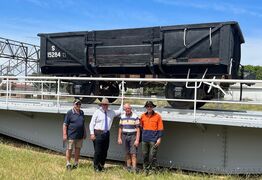
Big week back on the roadI was happy to be back out on the road last week after a few weeks in Canberra. My favourite part of the job is getting out and meeting the people of my electorate and last week provided a great opportunity do that.In Dubbo I was pleased to join some of the Orana region’s movers and shakers for the 2024 Inland Growth Summit, organised by Regional Development Australia – Orana. I provided an address highlighting the enormous potential of the region and our ability to rise to any challenges to achieve that bright future.I also had the opportunity to speak at the University of Melbourne’s Return to Country Oration in Bourke. This was a wonderful evening promoting Science, Technology, Engineering and Mathematics (STEM) pathways for students in our rural areas. I believe education is the key to giving young people choices in life, so it’s great to see our local children being inspired to take up the opportunities offered by STEM.During the week I had productive meetings with the mayors and general managers of Narromine, Bourke, Brewarrina and Walgett shire councils, as well as a number of constituents in Dubbo. But perhaps the highlight of my week was attending the Sing Out Choir for people living with dementia in Dubbo. The choir – the first of its kind west of the Blue Mountains - is a wonderful initiative by Lourdes Hospital dementia counsellor Anne Gemmell, providing so many positive benefits to local dementia sufferers. Just being there and seeing the enjoyment everyone gets from this choir was uplifting.Narromine Lions Club fundingIt was lovely to meet with members of the Narromine Lions Club last week to check out their completed restoration of the historic turntable precinct at Tom Perry Park.The club received a $2,500 grant from the last round of the former Coalition Government's Stronger Communities Programme to go towards this project, which involved the restoration of the S type rail truck mounted on the turntable, repainting the turntable, signage and landscaping. It looks fantastic and will be a great tourist attraction for the town, connecting with the rail trail that ends at Nyngan Rail Museum.Funding opportunity for childcare providersChildcare providers in the Bourke, Brewarrina, Cobar, Coonamble, Far West, Lightning Ridge, Moree and Walgett areas have the opportunity to apply for funding to undertake capital works or improve their viability and financial sustainability.A total of $84 million is available under the Community Child Care Fund (CCCF) Open Competitive Round 4, to help support early childhood education and care services address barriers to participation. This round is only open to services in identified priority areas, including those mentioned above in the Parkes electorate.Access to childcare is one of the key challenges for communities across my electorate, so I strongly urge all eligible services to apply by 8 March for a share of this funding. For more information and to apply, visit: https://www.grants.gov.au/Go/Show?GoUuid=8be42077-5bdf-4490-a581-654eb8f5feb3Live music grants availableI encourage businesses or community groups in the Parkes electorate to apply now for funding to bring more live music to our communities under the latest round of the Live Music Australia program.A number of pubs in the Parkes electorate have been successful under previous rounds of this program, which was established by the former Coalition Government to help live music venues bounce back after the pandemic.Grants of between $5,000 to $100,000 are available for small to medium sized venues to purchase equipment, undertake infrastructure upgrades, pay for promotional expenses or artist fees, or for initiatives that build their capacity to host live music. Applications for Round 8 close on Tuesday 12 March. For more information and to apply, visit: www.arts.gov.au/funding-and-support/live-music-australia

Roy’s Roundup 19 February 2024

21 February 2024, 12:50 AM

G’day Folks, Parliament is back for the year; the first sitting week was in early February. That first week back was even busier than expected, there was a lot going on, plenty of meetings, visiting councillors and representatives from community groups and other organisations. There was also a lot happening in the chamber. I spent a fair bit of the time catching up with government ministers and the Premier to talk to them about a range of issues relevant to Barwon.After the sitting week was over, I took a trip to Victoria for an important discussion about a very exciting investment opportunity for Barwon. More on that shortly.This week I will be travelling to Wagga for Investment, Industry and Regional Development Committee hearings before heading back around the electorate. See you all soon. Royal Far West funding boostRoyal Far West is an organisation that does some great work to help overcome some of the disadvantages experienced by families in rural and remote areas, connecting them with assessment, health and disability services as well as arranging accommodation for those who need to travel to access such services.During the first sitting week of parliament for 2024 I went and met with some of the dedicated people from Royal Far West to discuss some of the things that could be done to improve health outcomes for people living in country areas. They need additional support to meet a growing demand for services. Several other MPs, including Michael Regan, Independent Member for Wakehurst, helped organise the meeting.Health Minister Ryan Park also attended the function and last week announced a funding boost for the organisation of $369,000. This is an important step; it will help Royal Far West move closer to their funding goals. I will continue to advocate for more funding so that they can continue their work. Butler and Barwon military traditionOn February 6 I spent a very proud morning seeing my son Gabe heading off to 1 Recruit Training Battalion (RTB) Kapooka. Bound for Infantry. Gabe is the latest generation of my family to enlist. I was in his shoes at 17 years of age back on February 28th, 1995. I went on to serve in 6RAR in Support Company in Reconnaissance, but thankfully I never went to war.My father, Royal Maurice Butler, joined the army in the 1950s and served in Korea, seeing action at the battle of Kapyong. He ended up TPI - totally and permanently incapacitated. He rarely spoke about his experiences and continued to battle his inner demons.His father Francis William Butler lied about his age to serve in World War I. He was briefly sent to the front before being sent home for being underaged. In World War II he was back, this time lowering his age slightly to join up. He was put into 2/2 HQ Guard Battalion, along with a lot of other older men - which is why the guard battalions were nicknamed the “olds and bolds”, or less charitably the “ruthless and toothless.” He signed up in October 1942 but was discharged in December 1943.I must admit that I had mixed feelings about saying goodbye to Gabe, but I know that after 3 months he will come back. He will be different, but with a head full of new knowledge and he’ll be very fit.But I also know that, given the unstable international situation at the moment, there is an outside chance that he will be sent overseas to serve in some conflict or as part of a peacekeeping force. I also know that is what military service is about. It is not only a family tradition but a strong tradition in towns across Barwon, people who signed up for service, writing a blank cheque for their country, knowing full well they could pay with their life.Many people in Barwon answered the call, in conflicts from at least the Boer War to the present day. The evidence is there right across Barwon, in the form of the many prominent memorials to people who served. These memorials are often the focal point of the town and are important gathering places. It shows the respect we have for people who have donned a uniform in the service of their country, and I would urge every young person to consider time in the forces as a career option or as a life changing experience. Power to the people… of BarwonRecently we heard the exciting news that Tibooburra, Ivanhoe, Packsaddle and Milparinka will soon have a more reliable power supply, as Essential Energy begins significant reviews of the electricity network and offers network-connected generators and alternative battery solutions for more reliable power supply.My team and Essential Energy have been working together to deliver a more resilient network, and I am pleased to announce the work is now underway.Phase one involves the installation of network-connected generators, which will operate during a network outage, rapidly restoring supply to customers in the township areas of Ivanhoe and Tibooburra.Later phases, due to be in place in June 2025, will include more long-term sustainable solutions for customers, such as the installation of batteries and opportunities for customers to increase the return on their investment in solar, which will work together with the generation, forming a microgrid network.Alternative battery solutions are currently being planned for Packsaddle and Milparinka.  A big thank you to Essential Energy for making this happen. Bogan Gate to Tottenham Rail Tottenham is a charming town in Barwon, a growing part of Australia’s wheatbelt. Every year after their grain is harvested, they are dependent on trucks to haul their produce. That adds considerably to freight costs for the farmers, and to councils for the upkeep of the roads that need to handle the full laden weight of the grain trucks. But the locals have a solution - an upgrade to the railway line Between Bogan Gate and Tottenham, which would be a boon to farmers in the area, giving them a cheaper alternative to transport grain and relieve some of the pressure on the road network.So, in the first sitting week, I facilitated a meeting between members of NSW Farmers, Tottenham Branch, and Regional Transport Minister Jenny Aitchison to allow them to put their case for the upgrade. Tottenham locals George and Margaret (representing lots of local farmers) have been at this since 1986, and their success to date has come from being organised and well researched. This meeting was no different.There were some encouraging signs, and I will keep following up to see what we can do to make this happen. Sink or swim in ParliamentIn the first sitting week I delivered a notice of motion to highlight the disproportionate number of drownings that occur in remote or very remote places. While the most popular swimming spots along our coast are patrolled, our inland waterways are mostly not.I have been speaking about this to the Royal Life Saving Society Australia, an important organisation integral to educating communities about water safety and training people to assist in an emergency. The more people we have trained to swim and to act if there is an emergency, the more lives will be saved.The society has therefore organised to have some water rescue training delivered in Parliament this year, which will allow Members of Parliament to lead by example in getting skilled up in water safety and rescue.Yes - there is a pool in Parliament, although I have not used it since coming to office, so this will be a great first swim. I will keep you posted. New year REZ solutionsIt is widely known that the Central-West Orana Renewable Energy Zone (REZ) and the process of making it happen, has been fraught from the outset. It is impossible to stop the REZ, it has bipartisan political support, so our focus in Barwon has been on making sure that the implementation of the zone is fair, that the communities affected are consulted and that it brings some benefit to those communities.While I was in Parliament this month, I met with the Hon. Penny Sharpe, Minister for Climate Change, Energy, Environment and Heritage, to discuss the valid concerns locals have raised about how this project is being rolled out.Earlier this year I raised concerns about the disappointing, often disrespectful, consultation process for the REZ and expressed the need for local communities to have a more comprehensive say in how the $128 million Community and Employment Benefit Fund would be distributed. I discussed these issues with the Minister and am pleased to say that we agree.The Minister believes that the process, at a local level, has been flawed and is keen to work with me and my team to get better outcomes and real engagement for communities directly impacted by the REZ.While I was in Wagga last week, I also discussed the issue with fellow independent crossbencher Dr Joe McGirr. There is no doubt renewables will be a part of our energy future, but the process used to engage and consult with communities needs to be genuine, fair and transparent.Joe and I are concerned about how communities are being treated and will be looking to move legislation that requires the proponents of large-scale renewables to be accountable for how they deal with the public.We should not lose highly productive farmland to these projects, and if communities don’t see the benefit, they should be able to reject the proposal. Straight out of Parliament in the first weeks of February, I travelled to Regional Victoria talking to a business about relocating into Barwon - I can’t get into detail just yet, but I'm very excited about the prospect of that happening.I arrived in Melbourne on the Sunday after the sitting week ended and had several meetings last week. One was with Luca the Managing Director of Beretta Australia and the Operations Manager Clemente. Luca is also the chairman of SIFA - Shooting Industry Foundation of AustraliaLovely people who spent a couple of hours talking about their business and some of the matters we have been working on in NSW to assist the shooting industry, and law-abiding firearms owners.It was nice to finally meet in person. Small-scale Titles review submissionsThe independent review of the statutory framework for small-scale titles is looking to sort out some of the ways that the Mining Act 1992 can be improved for small-scale opal miners. It is important that those who will be affected be heard. I have been in discussions with Mining and Energy Minister Courtney Houssos about the review and she has accepted a recommendation for an extension of the deadline for submissions to March 31.This extension was requested to allow all stakeholders and representative groups more time to gather information and make better submissions.This will ensure the findings and recommendations of the independent review better inform the NSW Government of ways to improve the Act and make it better for everyone, including landholders, the mining industry and all those associated with the opal mining industry in NSW. To make a submission go to:https://www.nsw.gov.au/have-your-say/independent-review-of-small-scale-titles Housing The housing shortage across the state is holding back growth in Barwon.It is one of those choke points that gets in the way of economic prosperity and increasing population. We need the homes to house people who want to make a tree change or people wanting to take up jobs as teachers, doctors, nurses, agricultural workers or even miners in regional areas. Over the next few years there are mining, transport and energy projects that will bring thousands of jobs to Barwon, but without the housing to accommodate them things could be difficult for those workers and the projects on which they are working.That is why it is good to see the government taking steps in Bogan and Brewarrina Shire to work on the housing supply problem with an injection of over $200,000 in funding.It won’t immediately solve the housing problem, but it is an important first step. See more from Roy here: Roy Butler

Further Inland Rail uncertainty

21 February 2024, 12:35 AM

Last week I was terribly disheartened to hear that there are currently no plans to continue work on the Inland Rail north of Parkes.Under questioning at Senate Estimates, Australian Rail Track Corporation executives conceded the Government hasn’t provided funding to deliver the Inland Rail north of Parkes and had been forced to break contracts entered into for sections of Inland Rail between Parkes and Brisbane. Officials confirmed the Labor Government has no plan for when construction will begin on the Narromine to Narrabri section, despite the recent environmental approval of the project.This is another set-back for communities along the route, but I will continue to advocate for this nation-building project to be delivered in full.Grants to strengthen our communitiesI’m pleased to welcome funding for several groups in the Parkes electorate under rounds 18 and 19 of the Australian Government and FRRR Strengthening Rural Communities program.These grants are awarded for projects that support small yet vital community needs, disaster resilience and COVID-19 recovery initiatives. Recipients include:·        Boggabri Women’s Shed - $1,900 for a sewing room·        Leaderlife Limited Dubbo - $10,000 to purchase an outdoor barbecue and meat smoker·        The Youth Impact Foundation Limited on behalf of The Catalytic Impact Institute - $10,000 to support engagement with young people in Moree·        Moree Cultural Art Foundation Limited - $10,000 to provide free art classes for people living with a disability or mental illness·        Isolated Children's Parents Association (ICPA) of NSW Incorporated on behalf of ICPA Walgett Branch - $20,000 for an ICPA Garden Day·        Anglican Community Services - $24,940 to distribute waterproof preparedness packs at workshops and recovery events across the Moree Plains Shire in 2024·        Wiradjuri Condobolin Corporation Limited - $9,922 for the Miima Warribinya Skyfest 2024 astronomy festival in CondobolinMeanwhile, Round 20 applications close 26 February 2024. For more information and to apply, visit: https://frrr.org.au/funding/place/src-rebuilding-regional-communities/Drop in trainees and apprenticesNew data has revealed a nearly six per cent drop in the number of apprentices and trainees taking up a new trade or learning a new skill in the Parkes electorate.These figures come after just one year of Labor being in government and compare to a 20 per cent increase in the number of apprentices and trainees in the Parkes electorate during the final year of the Coalition Government.This is a blow to communities throughout my electorate which need more people, not less, upskilling to meet the ever-growing skills shortage in our rural areas. Labor promised they would skill more Australians, but their programs are not delivering and we are suffering the consequences.Number Apprenticeships and Trainees In-Training by electorate (QON:Department of Employment and Workplace Relations Question No. SQ24-1) Electorate- ParkesJune 2021- 2,850June 2022- 3,430June 2023- 3,225Party- LNPFinal Year of Coalition June 2021-22 (% change)- 20.35First Year of Labor June 2022-23 (% change)- -5.98  Family car tax to hit hip pockets of regional familiesAt a time when families and small businesses are already struggling, Labor's proposed Vehicle Efficiency Standard will add thousands of dollars to the cars that regional Australians love to drive – SUVs, utes and 4WDs. Under the proposed new standard, Labor will place penalties on new petrol and diesel vehicles over a certain emissions limit to subsidise electric vehicles and make them relatively more affordable.While it might be good for those who live in the city, this policy will particularly hit us in regional Australia. Many people in my electorate – like farmers and tradies - rely on utes and 4WDs to do their jobs, while others simply can't afford the cost of an EV - let alone the impracticality in the bush where we drive large distances, often hundreds of kilometres from a charging station. This is yet another example of a Labor Government that is out of touch with the needs of regional Australia.See more from Mark here:Mark Coulton

VERTO shines a light on valuable VET careers this National Apprenticeship week

13 February 2024, 7:40 AM

National Apprenticeship Week (February 12-18) shines a spotlight on the achievements of Australian apprentices, trainees, and the employers who support their development.According to VERTO CEO Ron Maxwell, the week is also the perfect opportunity to promote the real-life benefits of pursuing a Vocational Education and Training (VET) career.“National Apprenticeship Week is a great chance for current Year 11 and 12 students considering their futures, school leavers, job seekers or anyone looking for a new career, to understand the exciting and very achievable opportunities that lie in VET,” Mr Maxwell said.“Today, the VET sector fuels careers in Australia’s largest and fastest-growing industries, with studies showing that nine out of ten of the future’s most employment accessible occupations will require a VET qualification.“Apprentices and trainees are powering some of Australia's largest and fastest-growing industries such as healthcare and social assistance, with 31 per cent of workers in this industry holding VET qualifications.”While VET is often linked to traditional apprenticeship careers, such as building, carpentry, electrical and hairdressing, Mr Maxwell suggested school leavers and job seekers take a closer look at what’s on offer.“There are more than 500 apprenticeship and traineeship career options, and long gone are the days when it’s only males that undertake apprenticeships,” he said.“Not only can you earn while you learn during an apprenticeship or traineeship, the reality is that on average, VET graduates earn $2,000 more than university counterparts in their first year, benefitting from hands-on and real-life experience with no HECS debts, and brighter job prospects.“So building a VET career really is a great investment in your future.”National Apprenticeship Week 2024 will run from 12–18 February. More information can be found at https://www.nationalapprenticeshipweek.com.auWith more than 65 locations across NSW, VERTO can help you find a career that matches your skills and interests. Contact VERTO on 1300 483 786, [email protected] or visit www.verto.org.au.

VERTO partners with Ronald McDonald House

22 January 2024, 6:40 AM

Not-for-profit employment and training services provider, VERTO, has today announced the signing of a new Memorandum of Understanding (MoU) with Ronald McDonald House Charities in Sydney, Northern NSW, and Central West.Under this partnership, VERTO pledges an annual contribution of $10,000 to each of the three chapters over the next three years, totalling $90,000 in support. In addition to financial backing, VERTO will offer its respected training and apprenticeship services to benefit the charities’ operations and community initiatives, and members of the community using the houses.“VERTO is committed to making a tangible difference in the lives of the individuals and communities we serve,” VERTO CEO Ron Maxwell said.“This partnership signifies our continued support of Ronald McDonald House Charities. VERTO has proudly made more than $70,000 in contributions over the past three years that support their mission of providing comfort and care to families during extremely challenging times.”VERTO, as an award-winning not-for-profit organisation and a registered charity, builds upon its ongoing commitment to giving back to those in need, contributing to the betterment of local communities and developing meaningful skills for all Australians.“On behalf of RMHC Chapter’s in Northern NSW, Sydney and Central West, we are grateful for this partnership with VERTO,” CEO of RMHC Northern NSW Ross Bingham said.“Their generous donation will make a real difference for families with seriously ill children who need our support so they can focus on what’s important - their child’s recovery.“We are also extremely grateful to VERTO for providing access to training, apprenticeships and support for seriously ill or injured children and their families. This additional, professional support will continue to make a positive impact to families supported by Ronald McDonald House Charities beyond their stay with us.“As an organisation that relies heavily on the support of the community, we can’t thank VERTO enough for this support and this ongoing partnership. Together we can make a difference for seriously ill children and their families.”

Why School Leavers Should Consider VET Pathways

28 November 2023, 4:45 AM

With the 2023 HSC now in the rearview mirror, many school leavers (and their parents!) are left with the question ‘What next?’. With the rise in early university offers, there can be significant pressure on those who don’t have the future sewn up just yet. There’s considerable emphasis placed on university these days, but the reality is that it is not the most suitable path for every school leaver. If your child is not sure what’s next, I encourage you to take a look at vocational education and training (VET) pathways. There is a lingering misconception that VET is the ‘poor cousin’ to university, but that couldn’t be further from the truth. Today, VET covers everything from aircraft engineering to hospitality and trades and is an excellent pathway to business ownership – and a lucrative career. Here’s why VET might be the right pathway for your HSC graduate. Opportunities aboundThe variety of VET courses is expansive, from Business and Entrepreneurship, Hospitality, Health and Community Support, Retail, and Employment Services to Supply Chain Operations and Trades. This diversity allows school leavers to choose a path they’re genuinely interested in and passionate about, driving a more focused and enjoyable learning experience and, ultimately, a more fulfilling career.And post-COVID, these are some of our most sought-after industries, offering a wealth of job opportunities across the country and even the globe. Real-time skills for a fast-moving world With the pace of change today, real-time learning is a significant advantage – precisely what VET offers. Balancing theory and learning on the job means students develop the skills to thrive in a live working environment. The earn-while-you-learn model also gives young people an important grounding in the social, emotional and communication skills needed to navigate a workplace and puts them in a great position to succeed from the outset. An increasing focus on STEM skills Many VET pathways that were traditionally about more manual labour have become about STEM skills. We only have to look at a trade like mechanics – cars have evolved to being driven by computers, and a whole host of new skills and abilities are required to thrive. The same can be said for most trades, from plumbing to electrical. Technology is changing the game. HSC graduates with an interest and skills in STEM areas are increasingly in demand. An excellent choice for budding entrepreneurs A VET pathway may be a great fit if your child learns best by doing and is ready to get out from behind a desk. VET courses are practical and prepare students directly for the workforce. This outcome-oriented approach gives them real hands-on experience and the opportunity to see what working in their chosen industry is like while they are still studying. With the ability to start work, earn a wage and build career experience earlier, VET pathways can be incredibly attractive.And for those who have that entrepreneurial flair, VET is an excellent entryway to business ownership. From tradespeople to chefs, many pathways are perfectly positioned for entrepreneurs to thrive. A foundation for further learningIt’s also important to note that choosing a VET pathway does not close the door to further education. Instead, it can serve as a stepping stone to higher-level qualifications or even a university degree in the future. This pathway approach allows school leavers to gain practical skills and work experience before deciding whether to invest in further study. Encouraging your child to consider a VET pathway is not about diverting them from university but about broadening their horizons and helping them understand that there are several paths to success. Ultimately, the most important thing is that they choose a path that suits their interests, goals and learning preferences.VERTO is here to support you and your child in making informed decisions about their future. Contact the team on 1300 483 786 or [email protected] to discuss how a VET pathway could be the perfect fit for your school leaver.

Verto celebrates 40 years of making a difference in local communities

12 October 2023, 5:36 AM

This October, VERTO is celebrating 40 years of supporting people in NSW through quality education, employment, apprenticeship and community services. According to VERTO CEO, Ron Maxwell, VERTO has grown from humble beginnings as a small evening college in Bathurst to a national organisation employing more than 500 staff and servicing thousands of clients every year.  “As we reflect on the journey so far, it is hard not to feel a sense of pride in the achievements of our organisation and our people, but most importantly, the positive difference VERTO has made in the lives of so many of our clients and local communities,” he said.  Founded in 1983 as the Central West Regional Evening College, the purpose of the organisation was to provide Bathurst and surrounds with practical, community-based, adult education services.  In 1990 the organisation became Central West Community College Inc (CWCC). During the 90s, CWCC expanded its operations to include both employment and training services. Throughout this period, CWCC was awarded a state contract to provide Tenancy Advice and Advocacy in the Southwest of NSW, a program VERTO still delivers today.  “The CWCC successfully secured a couple of key contracts in the 1990s and early 2000s which saw the organisation grow and expand into other areas of New South Wales, including the region’s largest Job Network contract as well as delivering apprenticeship services in the Western and Hunter/ North Coast regions,” Mr Maxwell said.  In 2012, Central West Community College was rebranded VERTO Limited – with VERTO being Latin for ‘transform’.  During 2021, The VERTO Group grew again with the acquisition of Riverina Community College in Wagga Wagga, followed by the strategic acquisition of not-for-profit employment and community services provider, Campbell Page earlier this year.  With the acquisition of Campbell Page, The VERTO Group has a truly national footprint with 135 locations and a workforce comprising more than 500 employees. “It’s a privilege to lead an organisation with a strong legacy of making a difference in local communities, and I know that the other members of our leadership team and our hard-working staff are delighted to be celebrating this milestone in 2023,” Mr Maxwell said. “I thank everyone who has supported the journey for the last four decades, and everyone who will help us continue our important work for many years into the future.”

VERTO puts the spotlight on small business this October

09 October 2023, 5:35 AM

To mark NSW Small Business Month (1-31 October), VERTO CEO Ron Maxwell is encouraging those considering starting a business, or wanting help transitioning an existing small business into a thriving one, to contact VERTO. “NSW is made up of a range of small businesses who continue to make a vital contribution to our economy and our local communities,” Mr Maxwell said. “Small Business Month is about recognising these fantastic operators and offering support and opportunities to grow their businesses and create stronger networks. “VERTO is in a unique position to offer support to small businesses through the Australian Government’s Self-Employment Assistance program, which we deliver in the Hunter, Mid-North Coast, Murray Riverina and Far West Orana regions of NSW. “The program allows you to choose the level of support that meets your needs and those of your business. Small Business Month is the perfect time to check in with one of our Self-Employment Assistance mentors and take your business to the next level,” he said.  The theme for Small Business Month 2023 is ‘My Small Business’ and is focused on providing assistance and tips on how small businesses can strengthen their business in seven key areas - branding and marketing, cyber security, business health, ecommerce, current market conditions, resilience and teams.  Small Business Month aims to help small businesses to share knowledge, learn from business leaders and attend local events aligned to their individual business interests.  For more information about Small Business Month, or to register for a local event, visit: https://www.smallbusinessmonth.nsw.gov.au/  For more information about VERTO’s Self-Employment Assistance program,  phone 1300 483 786 or visit: https://www.verto.org.au/our-services/self-employment-assistance.  About VERTOVERTO is a not-for-profit organisation delivering a range of apprenticeship, community support, employment and training services to assist individuals, employers and industries. We can be found in more than 65 locations across New South Wales. For more information, visit www.verto.org.au.

Tighter links between high school and the workforce could help alleviate skills shortages

26 September 2023, 2:22 AM

Skills shortages are an enduring issue in the Australian labour market today. Across many industries, such as technology, trades and healthcare, there is a significant gap between available skills and those required by employers. As a result, employers struggle to find suitable talent for their organisations, and this can have a flow-on effect, even limiting our economic growth potential. Australia will need to tackle these shortages from all sides. Building more links between high school and industry would contribute to a long-term solution. Learning from successful models overseasThere are already some successful models globally that Australia could adopt to bridge the skill gap. The vocational education and training (VET) model in Germany, Switzerland and Austria is one, as is this high school pathway being rolled out in Indiana, USA. It combines classroom-based education with on-the-job training, equipping students with the skills businesses need, and offering them a clear path to employment.We are seeing some steps in this direction here at home. For example, five Sydney high schools are trialling a program allowing students with an aptitude for tech to skip university and commence working in tech roles that may have otherwise required tertiary studies. Increasing work-integrated learning opportunities More work-integrated learning opportunities are a must. These programs give students a taste of life in different careers. Done at the right time, the programs would allow students to make subject choices that equip them for their chosen careers. Of course, we already have a fantastic one in NSW – School Based Apprenticeships and Traineeships (SBATs). The program enables students to begin working in and qualifying for their chosen career while finishing their HSC studies. And there are some great success stories across the country, such as Callaghan College in Newcastle, which had an impressive 102 students enrolled in SBATs in 2022, the most of any secondary school in the state. It's an excellent option for those who may have finished in Year 10 in the old days to continue their studies while building an employment pathway. It would be good to see more schools actively encouraging students to make use of it. Closer collaboration with industry The vocational education and training (VET) system collaborates closely with industry and employers. It works to keep VET relevant and ensure students have the skills employers need today and into the future. As we look for new ways of addressing skills shortages, I think there is a fantastic opportunity for industries, from trades to tech and the professions, to engage with high schools. This could be looking at specific curriculum streams targeted at students interested in a specific industry. Or, it could be industry bodies talking to our education departments about the skills needed in the workforce to ensure the curriculum is aligned, particularly when it comes to life and soft skills, from creativity to critical thinking. This way, academic learning and practical skills can be interwoven into a student's educational journey to create highly employable and career-ready future generations.  Benefits abound Alongside addressing skills shortages, a career-driven approach to education could increase student engagement, particularly during senior high school. By helping students build a bridge between academic learning and real-world application, learning can become more meaningful. In addition, we'll be equipping the next generation with the tools to thrive in the workforce. Australia's skills shortages won't be resolved by a single solution. It will take a multifaceted approach. However, integrating education systems and the world of work should certainly be in the mix. What could we achieve if we reimagine our approach to education, creating more pathways between the classroom and the workplace? We wouldn't just be tackling skills shortages but laying the foundations for more robust, enduring economic growth.

21-40 of 72