Western Plains App
Western Plains App
What's what out west!
What's OnShop WestEat Drink StayEducationYour Local MemberYour CouncilEmergency ContactsRadio Puzzles & GamesAdvertise NOW
Western Plains App

Blogs


A Total Lunar Eclipse for Eastern Australia on 3 March: What to Expect and How to Watch

13 February 2026, 2:50 AM

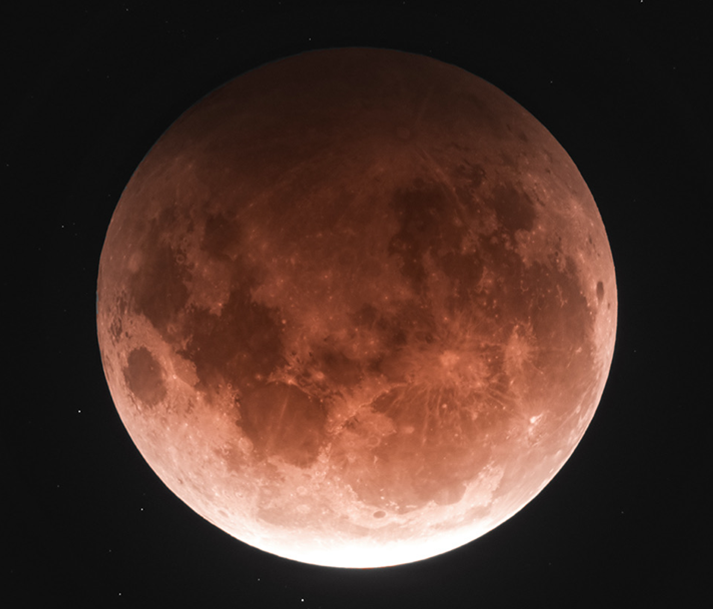
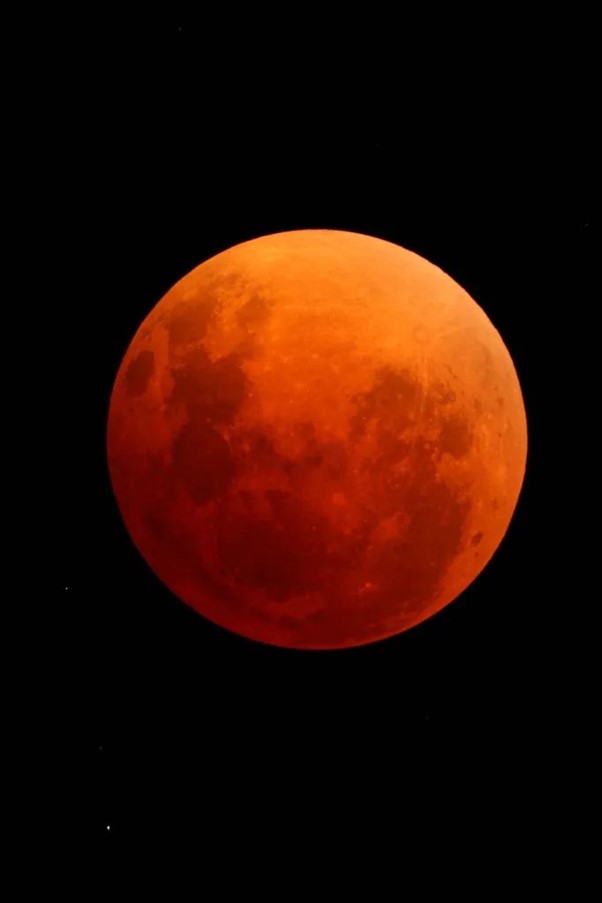
Many of us spend our evenings looking up, but every so often the sky offers something that invites a longer pause. The lunar eclipse on 3 March is one of those events. Eastern Australia will have a particularly good view, with the entire sequence unfolding at a civilised evening hour. This makes it one of the more accessible eclipses for both newcomers and regular sky watchers. A lunar eclipse occurs when the Earth moves directly between the Sun and the Moon. As the Moon passes into the Earth’s shadow it loses its usual brightness and takes on a muted copper tone. This colour appears because sunlight travels through the Earth’s atmosphere on its way to the Moon, filtering out the shorter wavelengths and leaving the richer reds. It is a subtle and rather instructive reminder that our planet plays an active role in shaping the light we see. The timing is straightforward. The eclipse begins in Universal Time at 08:44 UTC with the penumbral stage. It moves into partial eclipse at 09:50 UTC. Totality begins at 11:04 UTC and reaches its maximum at 11:34 UTC. Totality ends at 12:03 UTC followed by the partial phase ending at 13:17 UTC. The final penumbral stage ends at 14:23 UTC. For those on Australian Eastern Daylight Time the penumbral begins at 7:44 pm on 3 March. The partial phase begins at 8:50 pm. Totality runs from 10:04 pm to 11:03 pm. The final penumbral stage ends at 12:23 am on 4 March. All phases will be visible across the eastern states if the sky remains clear. Observing the eclipse requires no equipment. A clear line of sight to the eastern horizon at moonrise or a darker vantage point later in the evening will help. Binoculars provide a more detailed view, but even the unaided eye will show the gradual shift from bright to red and back again. The only essential requirement is patience. Eclipses unfold slowly and encourage an unhurried appreciation of celestial mechanics at work. The eclipse also offers an opportunity to reflect on how much of our understanding of the sky depends on perspective. The alignment that produces a lunar eclipse is simple, yet the experience of watching the Moon darken is always more compelling than a diagram or explanation. It is a teaching moment offered by the sky itself. Here is the question I want to leave you with. If the Moon can change so noticeably in a single evening, what else in the night sky might reveal more when we give it the time it deserves?

When Mars Let AI Lead the Way

13 February 2026, 2:19 AM

NASA has reached a turning point in robotic exploration.The Perseverance rover has completed its first drive on Mars using a route generated entirely by artificial intelligence. Instead of relying on human teams to analyse terrain, identify hazards and plan carefully spaced waypoints, the rover followed an AI‑designed path across the rim of Jezero Crater on 8 and 10 December 2025.The system, developed in collaboration with Anthropic, used years of mission imaging and telemetry to assess boulders, slopes and surface conditions, then proposed a safe and efficient route. Engineers validated this approach in simulation before sending it to Mars, where the rover executed the plan without issue. According to NASA Administrator Jared Isaacman, this achievement demonstrates the responsible, forward‑looking use of new technology that expands how future missions can operate.This shift does not replace human expertise; rather, it strengthens mission capability. As communication delays make real‑time control impossible, increasing autonomy allows rovers to respond more rapidly to unexpected features, accelerate scientific discovery and support future astronauts on the surface.AI‑planned mobility may become a cornerstone of exploring distant worlds. It represents a move toward more adaptive, efficient and resilient missions across our solar system.If AI can now chart safe routes on another planet, how far should we allow autonomous systems to go in shaping future exploration?

The Summer Solstice down under: A celestial perspective

22 December 2025, 6:40 AM

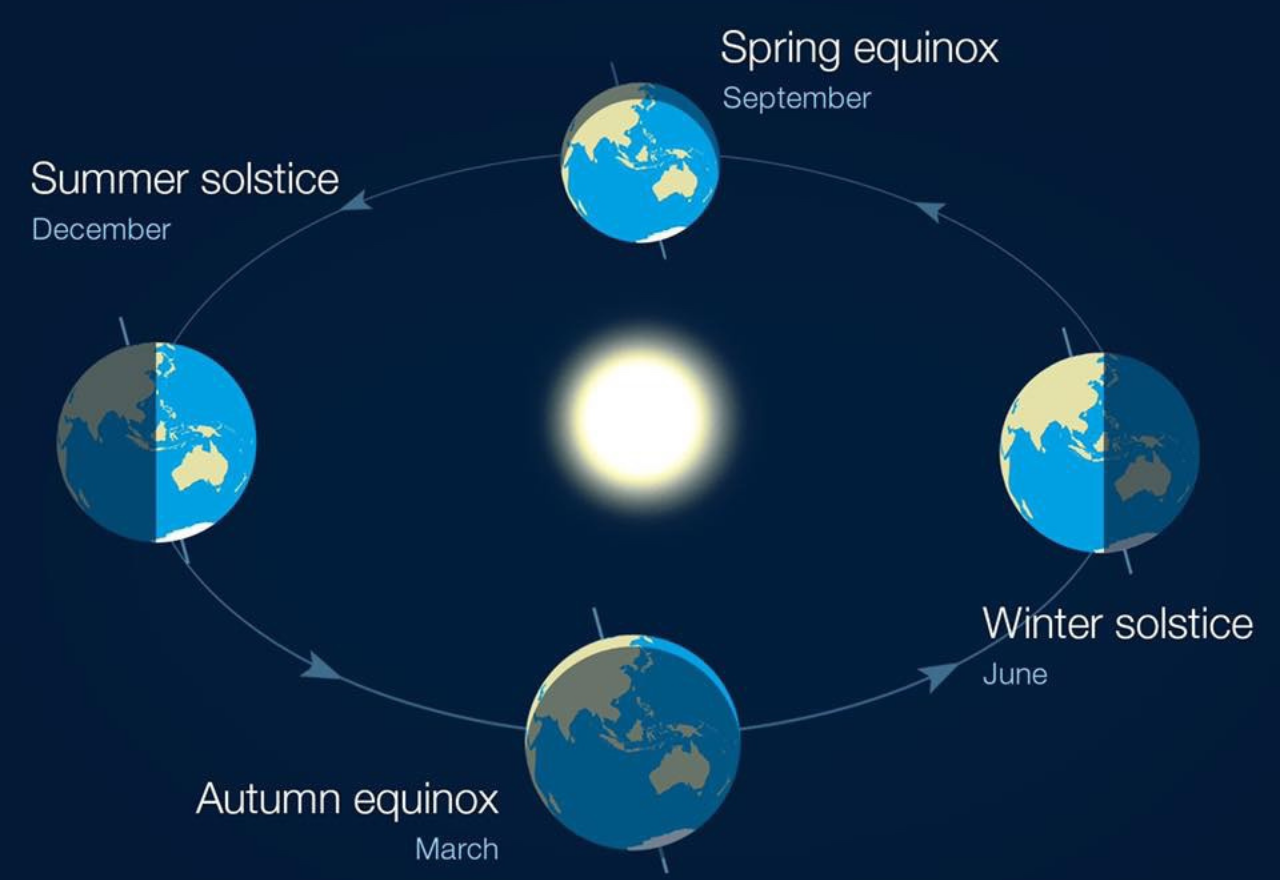
As we approach the summer solstice at 2:02 AM AEDT tonight (22 December 2025), it's a moment ripe for reflection and celebration here in the Southern Hemisphere. This solstice marks the longest day of the year, when the sun reaches its zenith in our skies, casting long shadows and bathing our landscapes in golden light.The Tropic of Capricorn, located at approximately 23.5 degrees south of the equator, plays a vital role in this celestial event. During the summer solstice, the sun is directly overhead at noon along this line, making it the southernmost point where the sun can be at its zenith. For us in the Southern Hemisphere, this means longer daylight hours, warmer temperatures, and heightened solar intensity. The sun’s positioning directly impacts our weather patterns, ecosystems, and agricultural practices, ushering in the peak of summer.At the same time, our friends in the Northern Hemisphere are grappling with winter during their solstice, occurring simultaneously. While they brace for shorter days and colder weather, we embrace warmth and extended sunlight. This contrast highlights the unique experiences each hemisphere has during this celestial event.So, what exactly is a solstice? At its core, a solstice occurs when the sun reaches its highest or lowest point in the sky as seen from Earth, leading to the longest and shortest days of the year. The summer solstice signifies when the sun is directly over the Tropic of Capricorn and has been celebrated across cultures for centuries, symbolising renewal and hope. Many societies create festivals and rituals to honour the sun, reflecting the deep cultural significance of this astronomical phenomenon.However, amidst the joys of longer days and the beauty of our vibrant summer, we must acknowledge the pressing environmental challenges we face today. As the planet warms and climate variability becomes increasingly apparent, the solstice serves as a powerful reminder of our connection to the Earth and our duties as its caretakers. As stargazers and sustainable advocates, we have an opportunity to merge our love for nature with pragmatic actions that benefit the environment. This summer solstice, I invite you to ponder how we can honour our celestial wonders while championing conservation efforts. Let’s take this time to reflect on our relationship with the universe and our responsibility to protect our planet. Together, let’s explore the possibilities and celebrate the beauty of the summer solstice in all its glory.Clear skies!

Big show this weekend: Geminid meteor shower

13 December 2025, 1:40 AM

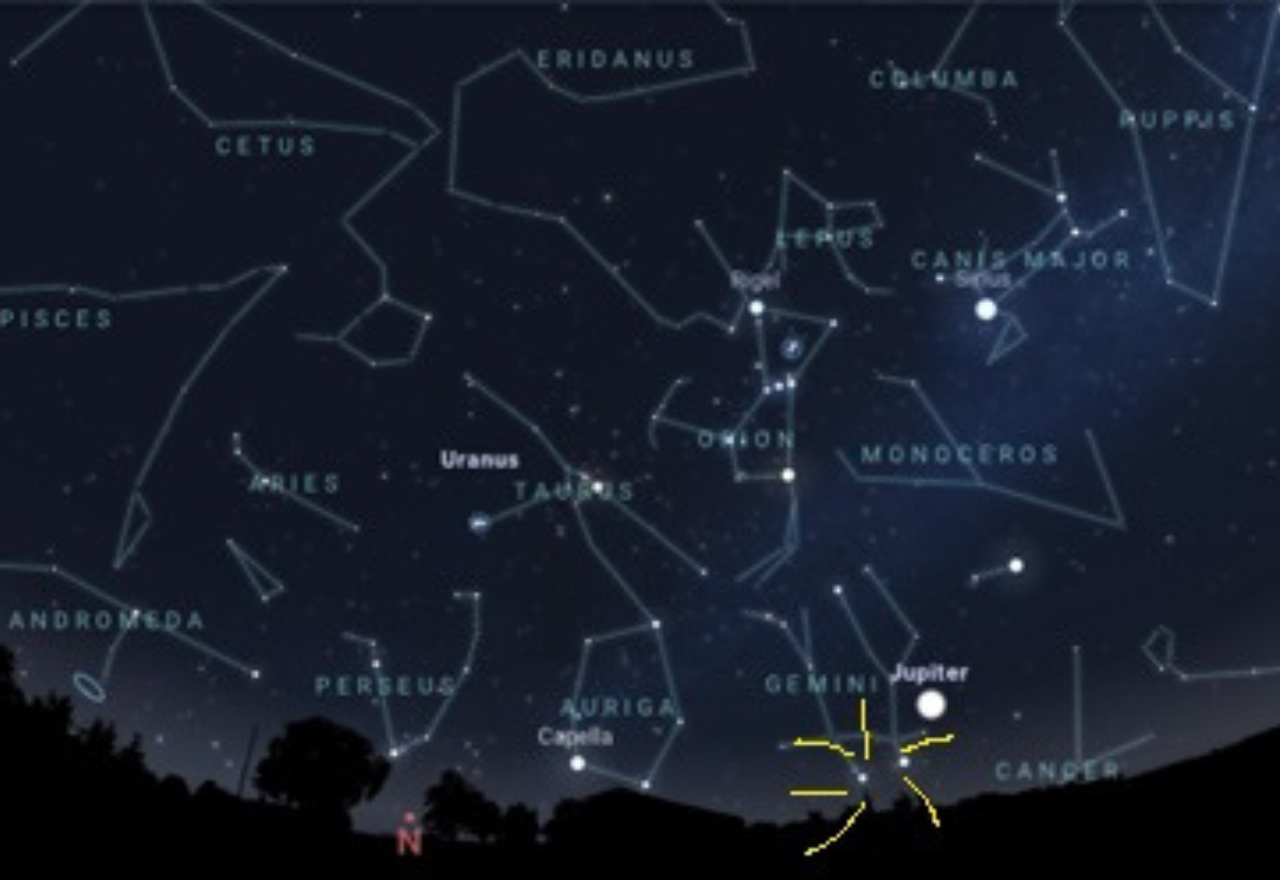
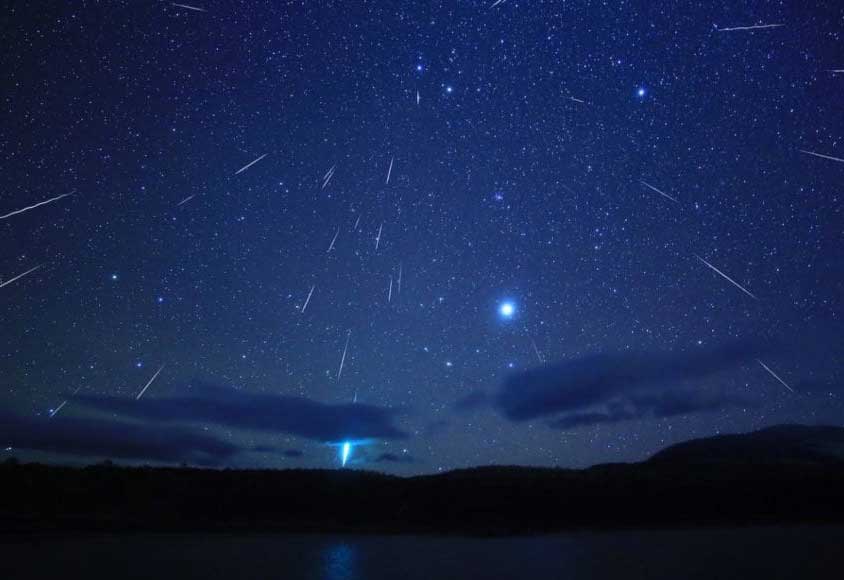
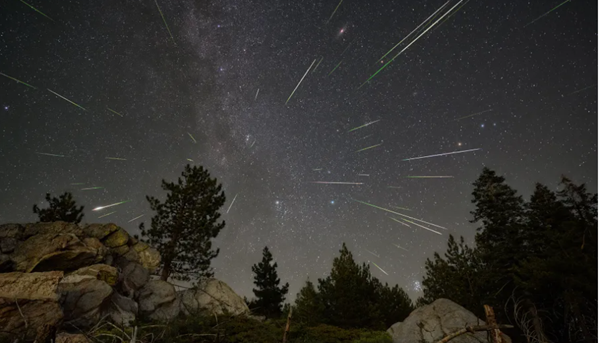
The Geminid meteor shower is one of the most spectacular and reliable annual displays in the night sky, famous for producing bright fireballs that capture the imagination of stargazers. If you're willing to be out after midnight you're in for a treat tonight (Saturday 13 December) and tomorrow night (Sunday 14 December).Unlike most meteor showers that originate from comets, the Geminids are unusual because their parent body is an asteroid—3200 Phaethon. This rocky asteroid leaves behind a trail of debris as it travels through space, and each December, Earth passes through this stream of fragments. When these tiny particles enter our atmosphere, they burn up and create the brilliant streaks of light we know as meteors.The Geminids are visible from both hemispheres, although the Northern Hemisphere enjoys higher meteor counts because the constellation Gemini climbs much higher in its night sky. How and whenIn Australia, the shower is active from about 4 to 20 December, with the peak occurring on 14 December at 3:30 am UTC. This translates to 3:30 pm Sydney time, but there is no need to worry—the Geminids have a broad peak. From Sydney, the radiant rises around 11 pm and reaches its highest point near 2 am, making midnight to dawn on both Saturday 13 December, and Sunday 14 December, the best windows for viewing.To enjoy the Geminids, choose a dark location away from lights and look toward a clear patch of sky, ideally away from the Moon, which can wash out fainter meteors. Give your eyes 15 to 20 minutes to adjust to the darkness, and lie back on a blanket or a reclining chair so you can take in as much of the sky as possible without straining your neck. Dress warmly, bring a thermos, and allow plenty of time—meteors often appear in bursts, so patience is key.Look for Jupiter, the brightest object above the northern skyline. IMAGE: Stellarium OnlineA gift from an asteroidThe Geminids are scientifically significant because they challenge traditional ideas about meteor showers. Their origin from an asteroid rather than a comet provides valuable insight into the diversity of small bodies in the Solar System and the processes that shaped planetary formation. Studying 3200 Phaethon and its debris helps astronomers understand how these rocky fragments interact with Earth and contribute to the dynamic nature of our skies.How to photographFor those keen to capture the spectacle on camera, use a tripod for stability and a wide-angle lens to cover as much of the sky as possible. Set long exposures of 10 to 30 seconds with a high ISO, and take continuous shots to increase your chances of catching a meteor. Including a foreground element such as a tree or landscape can add interest to your images.The Geminid meteor shower is a remarkable opportunity to experience the beauty and motion of our Solar System. Whether you are an experienced observer or simply curious, make time to watch this celestial event—it is well worth marking on your calendar.Fun Fact: Under ideal dark-sky conditions during the peak, you could see up to 120 meteors per hour!

Saturn's Rings: Weird, wonderful and vanishing?

13 November 2025, 6:40 AM

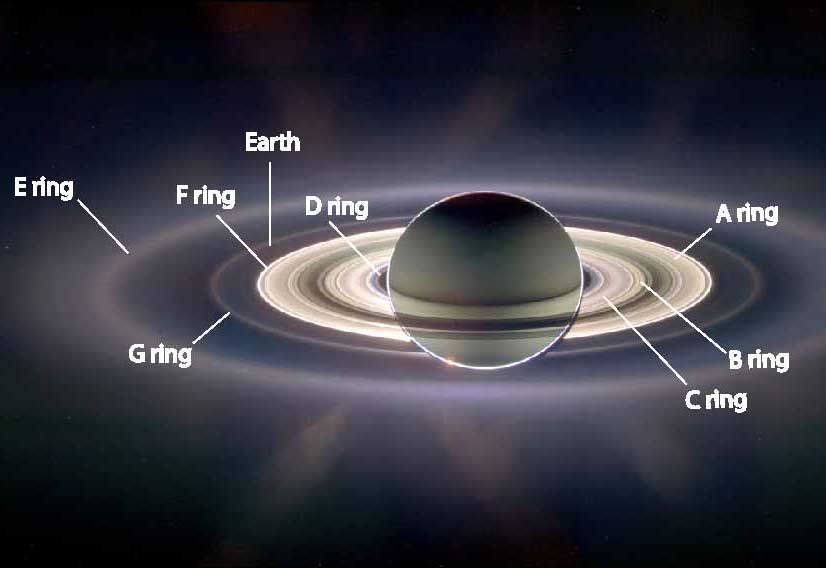
Saturn is often called the jewel of the solar system, and it’s easy to see why.Its rings are one of the most spectacular sights in the night sky. Through a telescope, they draw gasps and wide-eyed wonder.But these shimmering bands of ice and dust are more than just beautiful: they are strange, temporary, and full of surprises.Here are ten weird and wonderful facts about Saturn’s rings that might just change the way you see this iconic planet which is now showing at an Observatory near you.1. Younger Than DinosaursSaturn’s rings are surprisingly young.While dinosaurs first appeared around 250 million years ago, the rings likely formed just 10 to 100 million years ago.So, if a dinosaur had a telescope, it would have seen a ringless Saturn.Fig 1: The full set of rings, imaged on July 19, 2013, as Saturn eclipses the Sun from the vantage of the Cassini orbiter, 1.2 million kilometres (3⁄4 million miles) distant. Earth appears as a dot at 4 o'clock, between the G and E rings(NASA / JPL-Caltech/ Space Science Institute2. Massive in Width, Paper-Thin in DepthThe rings stretch across 273,000 kilometres, but they are only about 10 metres thick on average.That’s thinner than a cricket pitch. Most of the ring particles are smaller than a metre, and what looks like a solid band is actually a vast collection of icy fragments.3. They Occasionally Vanish from ViewEvery fourteen or so years, Saturn’s rings line up edge-on with Earth. Because they’re so thin, they become nearly invisible to us.The last time this happened was in March 2025. They will be back in full view by 2032.4. They are Actually DisappearingSaturn’s rings are slowly vanishing.The icy particles are being pulled into the planet by gravity and magnetic forces in a process called ring rain.Scientists estimate the rings could be completely gone in 100 to 300 million years.We are lucky to be alive at a time when we can see them.Fig 2: Cassini space probe view of the unilluminated side of Saturn's rings (October 10, 2013).NASA/JPL-Caltech/SSI/Cornell5. Enceladus Keeps One Ring GoingSaturn’s E ring is constantly being topped up by the moon Enceladus.This little moon has geysers that shoot icy particles into space, and some of that material ends up in the E ring.Even more exciting, those geysers contain organic molecules, hinting at the possibility of life beneath Enceladus’s icy crust.6. Saturn Has Ring ShepherdsTiny moons like Prometheus and Pandora act like sheepdogs, keeping the ring particles in line.Their gravity helps maintain the shape and structure of the rings, especially the narrow F ring.7. The B Ring Has SpokesSaturn’s B ring sometimes shows strange dark streaks called spokes.These were first spotted by spacecraft and are thought to be made of tiny, electrically charged dust particles that get lifted by Saturn’s magnetic field.They come and go with the seasons, especially around Saturn’s equinox.8. They are Incredibly ShinySaturn’s rings are made of about 99 percent water ice, which makes them highly reflective.They shine brightly in the night sky, making Saturn one of the most spectacular sights through a telescope.9. The Particles Are Moving FastDespite their calm appearance, the particles in Saturn’s rings are racing around the planet at speeds between 16 to 23 metres per second or up to 82,000 kilometres per hour.The closer the ring is to Saturn, the faster its particles move.10. We Still Don’t Know Exactly How They FormedThere are a few theories.One suggests a moon was torn apart by Saturn’s gravity.Another says the rings are leftover material that never formed into a moon because it was too close to the planet.A third theory involves a collision between moons or a passing comet. Whatever the case, the rings are a reminder that the solar system is still evolving.Why This MattersSaturn’s rings are not just beautiful; they are a window into the history and dynamics of our solar system.They show us how moons form and break apart, how gravity shapes matter, and how even the most iconic features in space are temporary.We are lucky to be alive at a time when Saturn still wears its icy crown. So next time you look up, take a moment to appreciate this fleeting masterpiece of the cosmos.

 What's up in the night sky? November's celestial highlights
What's up in the night sky? November's celestial highlights

06 November 2025, 6:40 AM

November offers a remarkable array of astronomical events, and you do not need specialised equipment or advanced knowledge to enjoy them.Whether you are a seasoned observer or simply curious about the cosmos, this month’s night sky has something for everyone.The Southern Cross sets as it is getting dark and won’t be visible until early morning in the South for the next couple of months.Scorpio and Sagittarius are setting in the west with Orion (the Saucepan) about to dominate the sky for summer.The Leonid Meteor Shower: A Trail of Cometary DustThe Leonid meteor shower will peak during the night of 17–18 November, with optimal viewing in the early hours before dawn.This year, the absence of a bright Moon provides excellent conditions for observing meteors.Under dark skies, observers may see between 10 and 15 meteors per hour.The Leonid’s originate from Comet 55P/Tempel-Tuttle, which orbits the Sun every 33 years.As Earth passes through the debris trail left by the comet, particles enter our atmosphere and burn up, producing the bright streaks we call meteors.The Leonid’s are known for their speed, travelling at approximately 71 kilometres per second, and their potential for producing meteor storms.The most famous occurred in 1966, when thousands of meteors were visible per minute.To observe the Leonid’s, find a dark location away from artificial lights, lie back comfortably, and look towards the southeast, where the constellation Leo will be rising.No telescope is required, just patience and a clear view of the sky.You can still see the Orionids and Northern and Southern Taurids as well just after midnight to dawn.Comets Currently VisibleIn addition to meteors, several comets are making an appearance this month.Comet C/2025 A6 (Lemmon)Comet Lemmon is currently visible and is considered one of the most prominent comets of the year.With a brightness of approximately magnitude 4, it may be visible to the naked eye under ideal conditions.Through binoculars, it appears as a diffuse greenish glow with a faint tail.The best time to observe Comet Lemmon is shortly after sunset, particularly during the first half of November.Look towards the northwestern sky for a chance to spot this icy visitor. Look for Antares in Scorpius and Mercury and Mars below it.Then move your eyes or binoculars slightly to the North and you should be able to see it.Comet 3I/ATLASLater in the month, Comet 3I/ATLAS may be visible through telescopes.This is an interstellar comet, meaning it originates from outside our solar system.Although it is not expected to be bright, it presents a rare opportunity to observe an object from another star system.Additional CometsComet 210P/Christensen will be visible in late November, best viewed with a telescope.Comet C/2024 E1 (Wierzchos) is also present in the night sky and will remain visible into early next year.Full Moon and Planetary HighlightsThe Full Moon is on 6 November will also be a so called “supermoon” appearing slightly larger and brighter due to its proximity to Earth.The New Moon, which is the best time for viewing the dark sky objects will occur November 20.In the planetary realm:Jupiter will be rising in East just after midnight from mid-month. It is easily visible to the naked eye, and binoculars may reveal its four largest moons.Saturn remains visible nearby, with its rings nearly edge-on, offering a striking view through a telescope.Venus shines brightly in the pre-dawn eastern sky, ideal for early risers along with Jupiter which will be almost overheadMercury and Mars are setting about 8:45 mid-month in the western evening sky.Antares – the red supergiant in Scorpius means either rival of Mars or “not “Mars.Check them both out just after sunset if you have a good western horizon. Antares is above and Mercury and Mars below.A Glimpse into the UniverseMost of the stars visible at night belong to our own Milky Way galaxy, but some of the faint, diffuse patches are entire galaxies located millions of light-years away.Observing the night sky is not just a visual experience, it is a journey through time, as the light from these distant objects has travelled for millennia to reach us.Final ThoughtsNovember presents an excellent opportunity to engage with the wonders of the universe.Whether you are observing meteors, tracking comets, or simply admiring the Moon and planets, the night sky offers a sense of perspective and awe.If you have questions or would like assistance identifying celestial objects, feel free to reach out to Donna The Astronomer. Astronomy is for everyone, and the best way to begin is simply to look up.

Asteroid 2024 YR4: Sensationalism vs Reality in the media’s cosmic drama

30 October 2025, 6:40 AM

Asteroid 2024 YR4 has once again found itself in the spotlight, reigniting public interest and media speculation.Described by some outlets as a “city killer” and the subject of proposed nuclear missions, YR4 has become a case study in how celestial events are often portrayed with more drama than data.Discovery and DataDiscovered on 27 December 2024 by the ATLAS observatory in Chile, YR4 initially raised concern due to its projected close approach to Earth on 22 December 2032.Early orbital calculations suggested a small but notable chance of impact, which briefly climbed to 3.1% in February 2025.This led to its classification at Level 3 on the Torino Impact Hazard Scale, a level that warrants attention from astronomers but not public alarm.As more observations were gathered, including data from NASA’s James Webb Space Telescope, the probability of an Earth impact was revised downward.By late February, the risk had dropped below 1%, and by March, it was effectively ruled out. Today, the chance of YR4 striking Earth sits at a negligible 0.00005%.Figure 1: These images of asteroid 2024 YR4 were captured by the NASA/ESA/CSA James Webb Space Telescope in March 2025Media ResponseDespite the low probability, media coverage has leaned heavily on sensationalism.Headlines have focused on nuclear disruption missions and dramatic forecasts, often overshadowing the scientific consensus.The Moon, however, has emerged as a more likely target, with a 4% chance of impact.Scientific AnalysisYR4 is estimated to be between 53 and 67 metres in diameter and classified as an S-type asteroid.It spins once every 20 minutes. If it were to strike the Moon, it could create a crater approximately 1 kilometre wide and eject debris into lunar orbit.Some of this material could potentially reach Earth’s orbital environment, posing a temporary hazard to satellites.Figure 2:Comparison of the estimated diameters of 2024 YR4 and other notable meteoroids (the 2009 Sulawesi superbolide, the 2013 Chelyabinsk meteor, and the 1908 Tunguska impactor), with a Boeing 747 shown for scalePotential Lunar Impact“A lunar impact remains unlikely, and no one knows what the exact effects would be,” says Richard Moissl of the European Space Agency.“It is a very rare event for an asteroid this large to impact the Moon – and it is rarer still that we know about it in advance."The impact would likely be visible from Earth, and so scientists will be very excited by the prospect of observing and analysing it."I am sure that detailed computational simulations will be done over the next few years.“It would certainly leave a new crater on the surface. However, we wouldn’t be able to accurately predict in advance how much material would be thrown into space, or whether any would reach Earth.”In the coming years, as humankind looks to establish a prolonged presence at the Moon, monitoring space for objects that could strike Earth’s natural satellite will become increasingly important.Small objects burn up in Earth’s atmosphere as meteors, but the Moon lacks this shield. Objects just tens of centimetres in size could pose a significant hazard to astronauts and lunar infrastructure.ConclusionAs a science communicator, I have learnt that saying “I don’t know, but I’ll get back to you” builds trust and encourages curiosity.The Moon has weathered countless impacts, and whether or not YR4 strikes, the data we gather will enhance our understanding of planetary defence.Why do dramatic narratives capture more attention than the quiet, methodical work of science? And how can we, as consumers of information, learn to distinguish between spectacle and substance?

Donna The Astronomer gives her tips on how to photograph a meteor shower with your Smartphone

24 October 2025, 6:40 AM

Meteor showers are among the most accessible and awe-inspiring celestial events for amateur astronomers and night sky enthusiasts. While professional astrophotographers use specialised equipment, it is entirely possible to capture meteors using a smartphone — provided you prepare carefully and understand the limitations and strengths of your device.Equipment and SettingsTripod - A tripod is essential. Long-exposure photography requires absolute stability, and even the slightest movement can blur your image. If you don’t have a tripod, placing your phone on a stable surface and using a weighted object to hold it in place can be a temporary alternative.Long Exposure - Most modern smartphones offer a night mode that automatically adjusts exposure time. For more control, apps like NightCap Camera (iOS) or Camera FV-5 (Android) allow you to manually set exposure times up to 15 or 30 seconds. Longer exposures increase the chance of capturing a meteor streaking across the sky.Manual Focus - Set your focus to infinity. This ensures stars and meteors remain sharp. On some phones, this can be done in pro mode or via third-party apps.Autofocus tends to struggle in low light and may focus on nearby objects or the dark sky itself.Manual or Pro Mode - If your phone supports manual controls, adjust the following:ISO: Start with ISO 800–1600. Higher ISO increases sensitivity but also noise.Shutter Speed: Try 10–30 seconds. Longer exposures gather more light but may also capture star trails.White Balance: Set to daylight or manually adjust to avoid unnatural colour casts.RAW Format - Shooting in RAW preserves more image data, which is useful for post-processing. Apps like Adobe Lightroom Mobile or Halide (iOS) support RAW capture.Disable HDR and Zoom - HDR is designed for daylight scenes and can interfere with low-light performance. Digital zoom reduces image quality and should be avoided. Instead, crop your image later if needed.Use a Timer or Remote Shutter - To prevent camera shake, use a 3–10 second timer or a Bluetooth remote shutter. This ensures the phone remains perfectly still when the exposure begins.Location and TimingFind a Dark Location - Light pollution is the biggest obstacle to meteor photography. Use light pollution maps (e.g. Dark Site Finder or Clear Outside) to locate dark-sky areas. National parks, rural properties, and coastal regions often offer excellent conditions.Plan Ahead - Meteor showers have radiant points — the area of the sky from which meteors appear to originate. Use apps like Sky Safari, Stellarium, or Star Walk to locate the radiant and plan your framing. For example, the Orionids radiate from the constellation Orion, which rises in the east after midnight.Check the Weather and Moon Phase - Cloud cover and moonlight can significantly affect visibility. A clear, moonless night is ideal. Check forecasts for cloud cover, humidity, and wind. The moon phase also matters — a full moon can wash out faint meteors, while a new moon offers optimal darkness.Arrive Early and Prepare - Get to your location before sunset to set up your gear, test your settings, and allow your eyes to adjust to the dark. Bring warm clothing, a torch with a red filter, and extra batteries or power banks for your phone.Additional TipsFrame Wide: Use the widest lens available on your phone to capture more sky. Meteors can appear anywhere, so a wide field increases your chances.Take Multiple Shots: Meteors are unpredictable. Use interval shooting or burst mode to take continuous exposures over time.Post-Processing: Use apps like Lightroom or Snapseed to adjust contrast, reduce noise, and enhance detail. RAW files offer more flexibility for editing.Final ThoughtsPhotographing a meteor shower with a smartphone is both a technical challenge and a creative opportunity. It requires patience, planning and a willingness to experiment. As a science communicator, I often say that the best camera is the one you have — and with the right approach, even a phone can capture the magic of the night sky.So, will you be heading out for the next meteor shower? And if you do, what story will your image tell?

Celebrating the Legacy of Bart Bok: the Father of Siding Spring.

27 September 2025, 7:40 AM

As we look up at the vast expanse of the night sky, we are reminded of the pioneers who dedicated their lives to exploring the cosmos. One such luminary is Bart Bok (1906-1983), a Dutch-American astronomer whose profound impact on Australian astronomy continues to resonate today. After relocating to Australia, Bok became the Director of Mount Stromlo Observatory in the ACT and played an essential role in establishing Siding Spring Observatory in Coonabarabran. His legacy is one of advocacy for public engagement with astronomy, the fight against light pollution, and the enhancement of the Australian astronomical landscape. Bok was instrumental in initiating a site-testing program that identified Siding Spring as an optimal location for astronomical observation, far removed from light pollution. This vital initiative positioned Australia as a leader in southern hemisphere astronomy. But Bok was not just a dedicated researcher; he was also a passionate advocate for outreach. He travelled across the country, delivering captivating talks on celestial topics to both academics and the general public. His commitment to making astronomy accessible sparked interest among people from all walks of life. A key figure in Bart Bok's journey was his wife, Priscilla Bok, who was an accomplished astronomer in her own right. Their partnership transcended personal and professional realms as they collaborated on research and co-authored several publications, including the popular book The Milky Way. Priscilla’s keen insights and unwavering support were invaluable to Bart as they worked together to promote astronomy as a field accessible to all. The Festival of the Stars, which began as a week-long event featuring "Science in the Pub" and various astronomy-related activities, has evolved significantly over the years. In 2014, this event transformed into Starfest, marking a new chapter in the celebration of astronomy and continuing to unite enthusiasts around Siding Spring Observatory. One of the standout features of Starfest is the Bart Bok Lecture, which serves as a testament to Bok’s enduring legacy. This lecture promotes public interest in astronomy and has been hosted in various locations, primarily in Coonabarabran and, since around 2017, at Siding Spring Observatory. While earlier Bok Lectures were held in Dubbo, the shift to Coonabarabran reflects the community's investment in astronomy. Notably, the lectures in 2020 and 2021 adapted to the challenges posed by the COVID-19 pandemic, taking place virtually to maintain community engagement. Bok's influence extended beyond his work in astronomy; he was also dedicated to keeping the local community engaged. The residents of Coonabarabran made significant sacrifices to implement lighting restrictions aimed at preserving dark skies for better astronomical observations. Bok worked diligently to ensure these locals were informed about developments at Siding Spring Observatory, valuing their contributions and concerns. This commitment to community was at the heart of the annual Bart Bok Lecture and the free science events run by the local astronomical society, offered in gratitude for the town's dedication to protecting the night skies. As Starfest continues to flourish, Bart Bok’s legacy lives on through the ongoing promotion of astronomy and education. His passion inspires future generations to gaze at the stars and explore the wonders of the cosmos. Bok's dedication to fostering a love for science and outreach remains vital to Australia’s rich astronomical culture, ensuring that the spirit of exploration thrives in the community. Priscilla’s influence is still felt in the ongoing pursuit of knowledge in the field, reminding us of the power of collaboration. This year's Starfest event is on 4 October at the Canyon Park Area of Warrumbungle National Park. The evening features a public lecture by the new Director of Siding Spring Observatory, an Associate Professor at ANU, followed by a night sky presentation and telescope viewing. The event celebrates the enduring legacy of Bart Bok and the vibrant world of astronomy. By Donna The Astronomer

Discovering September's Night Sky: A Guide to Spring Astronomy

13 September 2025, 7:40 AM

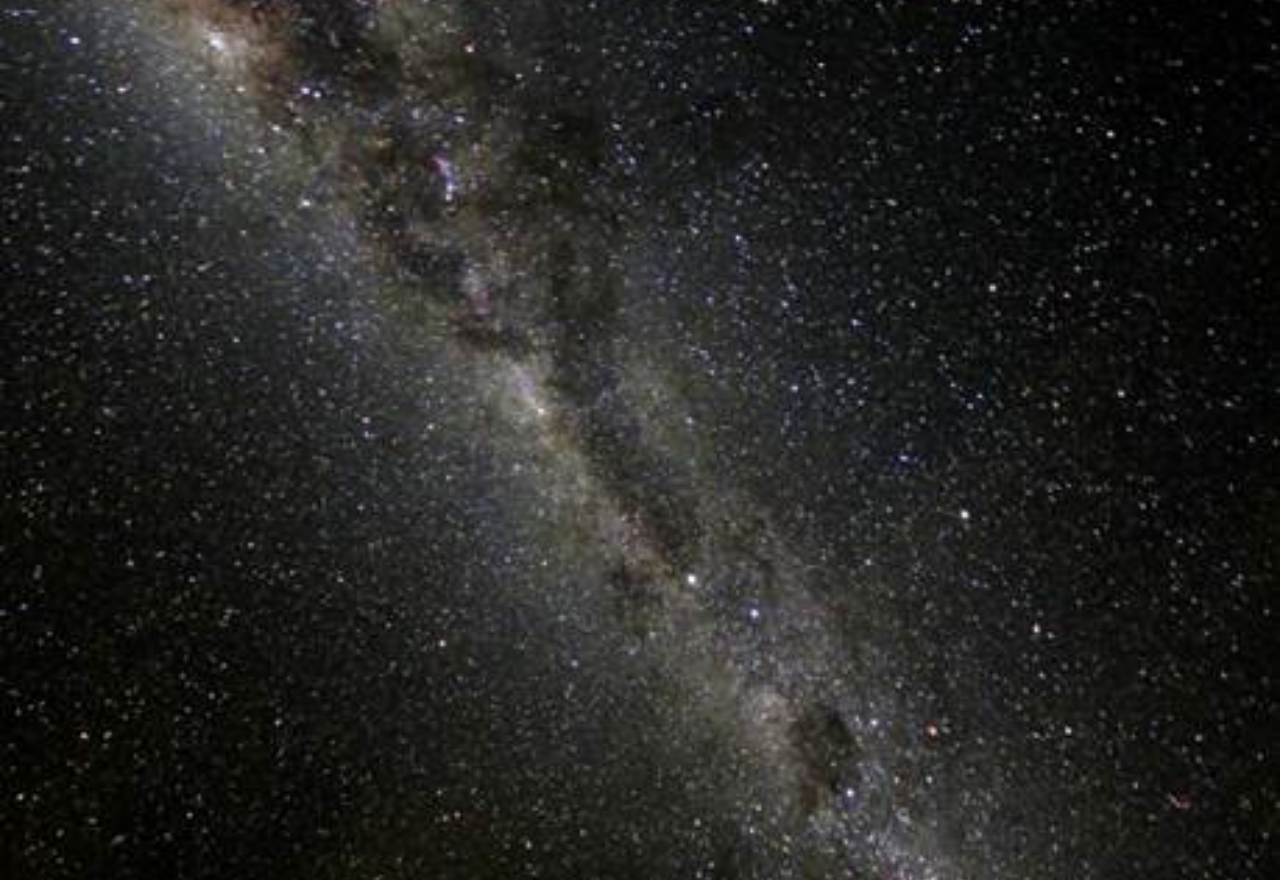
September ushers in a beautiful transition into spring, where the sky becomes increasingly rewarding as the evenings grow warmer and the wildflowers begin to bloom. The Milky Way is still spectacular when the Moon is not visible. In Australia, spring officially begins on 1 September, but astronomically, it begins at the vernal equinox. This year, the equinox occurs at 4:20 am AEST on Tuesday, 23 September, marking the time when the Sun crosses the celestial equator and day and night are approximately equal. We will explore the equinox further in an upcoming blog. Times provided are for Coonabarabran, NSW (AEST), which will be consistent across much of Eastern Australia.The Moon this MonthFull Blood Moon: 4:08 am, 8 September Last Quarter: 8:32 pm, 14 September New Moon: 5:54 am, 22 September First Quarter: 9:53 am, 30 September The Moon will reach perigee - its closest point to us in its elliptical orbit around Earth - at 10:00 am AEDT on 10 September 2025, at a distance of merely 364,777 kilometres. This month, the Full Moon will be a ‘Blood Moon’ or lunar eclipse, visible over most of Australia. You would have read about it earlier.Planets Mercury will be visible extremely low in the eastern sky during the latter half of the month, situated within the constellation Leo. To find it, look in the direction of sunrise for the faint, yellow-white planet. It will reach its greatest elongation (the farthest distance from the Sun) on 22 September, making it the best time for observation in the eastern sky, approximately one hour before sunrise, provided the horizon is clear. Venus shines brightly as a morning "star," rising well before dawn in the eastern sky. This planet is the most luminous object visible before daybreak and can be seen for most of the month. You will find it in the constellation Cancer at the beginning of the month and transitioning to Leo by the end. Venus and Jupiter in morning sky before Sunrise. From Stellarium.Mars can be spotted early in the month within the constellation Virgo. Look low in the western sky after sunset for the red planet, which will become lower and increasingly difficult to find as the month progresses. Jupiter appears brilliantly in the constellation Gemini during the morning sky. The best time to view it alongside Venus is around 5:00 am AEDT, with an excellent photo opportunity on 16 September when a 30%-lit waning crescent Moon accompanies it. Jupiter and the Moon on September 16. From Stellarium.Saturn is observable in the evening sky within the constellation Pisces, moving to Aquarius by the month's end. This period offers the best chance for viewing as it will be at opposition (closest to Earth), visible all night and throughout the rest of the year. At opposition, Saturn’s rings are tilted by two degrees relative to terrestrial observers, which is quite narrow. From Earth, Saturn’s rings appear nearly edge-on. In March 2025, when we last crossed the plane of Saturn’s rings, they temporarily seemed to vanish. Saturn in the early evening sky in the east. With a pair of binoculars you should also be able to see blue Neptune as well. From Stellarium Meteor Activity The month begins with the minor Alpha Aurigids meteor shower. From southern latitudes, the display is modest; you might see a handful of meteors an hour around 3:00–4:00 local time under dark skies. Face north-east near the bright star Capella and allow your eyes to adjust. As spring unfolds, the skies will provide a delightful mix of planetary activity and deep-sky opportunities. Enjoy your stargazing!Donna The Astronomer

3I/ATLAS: Science over Spaceships

03 September 2025, 9:40 AM

Donna The Astronomer here with a brief public service announcement from deep space.Meet 3I/ATLAS (C/2025 N1, previously A11pl3Z), the third confirmed interstellar visitor recorded by our surveys.Expect tabloid UFO copy. Do not buy it.Why we call it interstellarThe decisive evidence is orbital mechanics.3I/ATLAS follows a strongly hyperbolic path, with eccentricity greater than one, and carries an excess heliocentric velocity that cannot be explained by ordinary Solar System dynamics.That hyperbolic trajectory is the same signature that flagged ʻOumuamua and 2I/Borisov as extrasolar visitors. In short, these objects are just passing through, not bound to the Sun.A quick look back at the earlier visitors1I ʻOumuamua, discovered in October 2017 by Pan‑STARRS, arrived with a list of oddities.It showed no obvious coma, appeared highly elongated in some light curve analyses, and showed a small non‑gravitational acceleration. That combination sparked a flood of hypotheses, from porous, rocky fragments to volatile‑rich aggregates.Wild speculation about alien craft followed, but none of the data supported an artificial origin. This artist’s concept shows how ‘Oumuamua is usually depicted: as a cigar-shaped asteroid.2I Borisov, found in August 2019, was much more straightforward.It behaved like a comet: ice, dust and gas that brightened for our telescopes and revealed compositional clues about another planetary system.Borisov was a reassuringly natural interstellar visitor and offered a direct look at material formed around another star.A photograph of Borisov's dust trail taken on 12 October 2019 Early notes on 3I/ATLASInitial observations indicate 3I/ATLAS is cometary in nature, composed of ice and dust.It is making a fast cosmic drive by.Again, its orbital dynamics are the smoking gun for an extrasolar origin.We will learn more as spectra, photometry and follow‑up imaging arrive, but nothing so far demands a detour into science fiction.About the alien spaceship theoryI adore human imagination, but the artificial origin story runs into practical problems.An engineered object would need a propulsion history or energy signature that betrays deliberate control, and we have not seen either.Radio and optical searches for deliberate signals have returned silence.Natural explanations such as unusual shapes, asymmetric outgassing, or fragmentation account for the observations without invoking extraordinary agency.Science prefers the simplest model that matches the data.That does not mean we ignore anomalies; it means we flag them, gather more data and design tests that could falsify the natural hypothesis.Extraordinary claims require extraordinary evidence.Why these visitors matterInterstellar objects are not celebrities because they might house little green men.They matter because they are samples from other planetary systems.Each visitor helps us probe the distribution of cometary and rocky material in the galaxy, the processes that eject such material from its home system, and the diversity of planetary building blocks.They also sharpen our observational techniques and international coordination for transient events.Keep your apps ready and your scepticism calibrated3I/ATLAS joins a tiny but informative club.Expect good science and, if you enjoy speculation, vivid imagination from the internet. If you want the latter, fine — but remember to check the data before drafting your alien real estate brochure.Controversial question for the curiousShould we treat interstellar visitors as natural unless overwhelming evidence suggests otherwise, or keep an open scientific mind about artificial origins even with limited data?Donna The Astronomer, still enchanted by cosmic visitors and allergic to clickbait.

Witness the Blood Moon - September 7-8 2025

28 August 2025, 11:45 PM

On the nights of 7 and 8 September 2025, a Blood Moon will be visible across Eastern Australia.This phenomenon occurs during a total lunar eclipse when the Moon takes on a reddish hue.If you're willing to be out in the early hours and can find a clear slice of sky, you are in for a treat.What is a Blood Moon?A Blood Moon occurs during a total lunar eclipse when the Earth passes directly between the Sun and the Moon.As a result, the Earth blocks most of the sunlight, but the atmosphere scatters the remaining light, allowing only the longer, reddish wavelengths to reach the lunar surface.Total lunar eclipses occur roughly every 2.5 years, but favourable viewing conditions make Blood Moons rare.Stages of the EclipseDuring the eclipse, there are several stages.The penumbral eclipse begins first; the Moon enters the Earth’s outer shadow, causing subtle shading.This leads to the partial eclipse phase, where the Earth's shadow starts to cover more of the Moon.The total eclipse, or Blood Moon phase, occurs when the entire Moon moves into the Earth's inner shadow, resulting in the characteristic red colour.Afterward, the Moon will gradually exit the umbra, moving back to the partial and then penumbral phases, finalising the event.Visibility in Eastern AustraliaThis Blood Moon will be well positioned for observation across Eastern Australia.The timings for the eclipse in AEST are as follows: the penumbral eclipse starts on September 8 at 01:28, followed by the partial eclipse at 02:27the total eclipse begins on September 8 at 03:30, reaching its maximum at 04:11, and ending at 04:52. the partial eclipse concludes at 05:56, with the penumbral eclipse finishing by 06:55 after sunrise.Be sure to mark these times on your calendar.Tips for Viewing the Blood MoonTo make the most of this experience, find a dark location away from city lights, such as parks or rural areas.Even city dwellers will be able to see the Moon, which will appear quite orange against the dark sky.Check the weather in advance for clear skies and have a plan for any changes.While the Blood Moon can be viewed with the naked eye, binoculars or a telescope can enhance your experience.Sharing this event with friends or family can also enrich the experience.If you plan to take photographs, consider using a camera with manual settings or a smartphone.A tripod is essential for stabilising your shots. To capture the best images, use a longer exposure to highlight the Moon’s colours.Lowering the ISO will help reduce noise, and manual focus is recommended for sharper images.Including foreground elements like trees or buildings can add depth to your photographs.The Blood Moon on September 7-8 2025, presents an exciting opportunity to observe a fascinating astronomical event.Spoiler Alert! If you just want to see the main event, go out between 03:30 am and 04:52.But if you can watch the distinct stages, it is lots of fun.Rug up and have your warm drinks near to hand.As we gaze at the night sky, let us appreciate the beauty and significance of such phenomena.Enjoy your journey of exploration and discovery.Happy Moongazing!Visit Donna The Astronomer to experience more while you're in the western plains.

Sorry, No Planet Parade: the truth about 20 August

19 August 2025, 10:41 PM

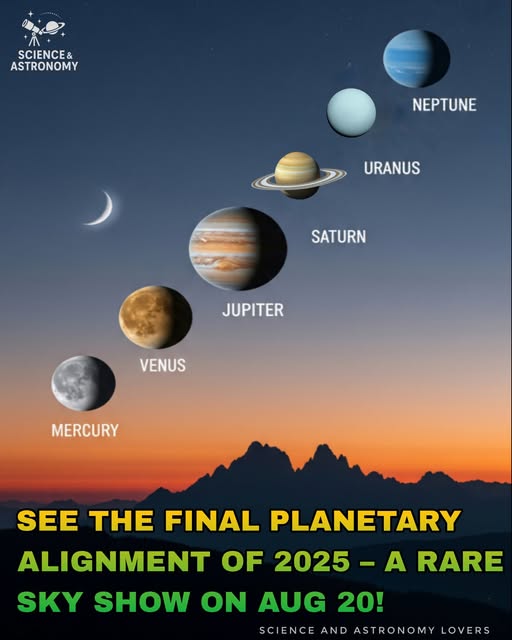
Donna the Astronomer here — yes, the one who enjoys orbital mechanics more than dramatic headlines. Before your feed fills with breathless claims that the planets will “line up” on 20 August like extras in a science‑fiction parade, here’s a reality check with a smirk.What people mean (and what they don’t)- “Planetary alignment” in clickbait land usually implies a crisp, photographic straight line of planets stretching across the sky. That’s not what astronomers mean.- A proper term is conjunction: from our viewpoint on Earth, two or more planets share roughly the same direction (ecliptic longitude). In plain English: they appear close together in the sky, not physically in a single file through space.Why the Solar System doesn’t stage a runway show- The Solar System is approximately flat — the planets orbit near the ecliptic plane — but “approximately” is doing a lot of work. Each planet’s orbit is tilted slightly and the planets are at vastly different distances from the Sun.- So even when several planets have similar sky longitudes, they can be separated by tens or hundreds of millions of kilometres in three‑dimensional space. You won’t get a literal line of planets stretching across the cosmos.What a “planet parade” actually is- A planet parade is a loose clustering of bright planets along the ecliptic. It can be a beautiful sight if timing, sky conditions and your location cooperate.- Whether you can see the parade with the naked eye depends on: the planets’ elongation from the Sun (how far they appear from the Sun in the sky), local horizon, light pollution, and the weather. Sometimes the best view is just after sunset or before sunrise, when several planets are above the horizon together.Why some of the media keep getting it wrongIt seems that “Alignment” sells. Straight lines, grand events and apocalypse vibes generate clicks; subtler realities do not.Headlines compress complex geometry into a single phrase. The nuance about apparent proximity versus real spatial alignment gets lost between headline and share button.This results in anxious or overexcited posts, with readers expecting a choreographed sky show that won’t happen.About 20 August specifically.There is no striking, naked‑eye straight line of planets to look forward to on 20 August. You might see a couple of bright planets in the same general patch of sky around dawn or dusk depending on where you are — but not a precision parade. Also, you can see the naked eye planets: Jupiter, Venus and Saturn regularly over the next few months. So, don’t be disappointed if the weather is bad!In the early morning sky you can easily see Venus and Jupiter in the Eastern Sky from around 5 am local time, Mercury rises roughly around 5:45am local time and is very difficult to see unless you have a perfectly clear eastern horizon - cruise ships or east coast locations may work, but tough for the rest of us! Mars is setting around 8:30pm low in the West.Saturn rises about 8:10pm in the East with Neptune below to the North East both need a telescope to really make them out.While Uranus rises in Taurus about 1am but needs a reasonable size telescope to see. Also they will look nothing like the Voyager and/or HST photographic images! If you want certainty for your location and time, check a reliable planetarium app such as Stellarium or an ephemeris such as on timeanddate.com. They’ll give accurate rise/set times, elongations and a realistic sky map and save you from disappointment and odd conspiracy threads.Final note (with affection)- I love that people take an interest in the sky. Just don’t let sensational headlines replace a quick check with good tools or a dose of basic celestial mechanics. The real Solar System is far more interesting than clickbait.Brought to you by Donna the Astronomer, slightly amused, scientifically accurate, and available for myth‑busting questions.

Brewarrina talks roads and transport with state Minister

30 April 2025, 9:20 PM

Brewarrina Shire Council welcomed the NSW Minister for Roads and Minister for Regional Transport, Jenny Aitchison, and Transport for NSW Acting Regional Director West, Holly Davies, back to town last week.The discussion ranged from progress on key roadworks in the shire through to the successful 'bike kitchens' run with young people in Brewarrina, Weilmoringlle and Goodooga.Brewarrina Shire Council General Manager David Kirby said it was wonderful to welcome Minister Aitchison back to Bre again – her third visit to the region during her tenure.“I thank Minister Aitchison and Mrs Davies for taking the time to meet with the Mayor, Deputy Mayor, Council staff and I during their recent tour of the region. It was great to hear from the Minister on a range of initiatives and funding opportunities to further better our Shire,” said Mr Kirby.“We also took the opportunity to thank and acknowledge Minister Aitchison for the ongoing support and funding she has delivered, or helped to deliver to our region, as well as update her on the significant progress and successful delivery on a range of key projects funded and supported by the NSW Government, and the long term benefits these projects are having for our community.“We are committed to improving the road infrastructure within our Shire. Despite challenges posed by fluctuating weather patterns, our road networks have been maintained and enhanced, benefiting residents, businesses, and visitors alike. "The ongoing support from grant providers and state bodies, like Minister Aitchison and Transport for NSW, have been invaluable in helping us achieve our transport goals.”At the meeting, Council updated Minister Aitchison on a number of key projects, as well as highlighting the wider benefits these projects had on the community, including employment opportunities. Key projects included:Jobs Gate Road – funded by Fixing Local Roads and Transport for NSW. Stage One, Two and Three of the sealing project are now completed, resulting in 37 kilometres of new sealed road infrastructure. This marks a significant milestone in improving connectivity for the Weilmoringle community and the wider regional road network. Stage Four is expected to get underway in May which will see an additional 11 kilometres sealed beyond Weilmoringle, further extending this project and improving access to remote communities and supporting economic growth to the QLD border and the Paroo Shire.Weilmoringle Pathway – funded by NSW Government Active Transport Grant. 1.6-kilometre shared pathway from Wytalibah Aboriginal Reserve to Weilmoringle Post Office and school, facilitating improved pedestrian safety and night visibility. This is the first ever formalised footpath in Weilmoringle, contributing to safer and more accessible movement through town, particularly benefiting children and elderly residents.Essential maintenance and repairs of the road network and state highways, including slashing, heavy patching, weed spraying, pothole repair, resealing and heavy patching as part of the Road Maintenance Council Contract (RMCC).Bangate Road – NSW Block Grant. Resealing of sections of the Bangate Road completed, improving safety and connectivity, and expanding work opportunities.Brenda Road box culverts - Design and construction of two culvert crossings on the Goodooga Brenda Road to improve connectivity and safety especially during wet weather. Design is now completed, with construction to commence in July 2025.Extensive resealing, pothole repair and heavy patching completed in Goodooga, and set to begin in Brewarrina thanks to the NSW Government Pothole Repair Fund.Key roads such as Goodooga Road, Hebel Road, and Goodooga town roads underwent extensive heavy patching, covering over 45,000 square meters. This initiative has significantly improved road conditions on Adam Street, Reserve Road, and Queensland Street benefiting the residents of the Goodooga town.The Bike Kitchen program has been thriving since Council took over the project earlier this year, with almost 60 bikes repaired through sessions in Brewarrina, Goodooga and Weilmoringle, just in time for students to return to school. The Kitchens were a success, not only in terms of the volume of repairs but also the community coming together. It’s also providing local youth with training and purpose fostering personal growth and community cohesion.

Tooraweenah Prime Livestock goes Beyond the Cuts

12 January 2025, 2:40 PM

By Jodi SamsTooraweenah Prime Livestock (TPL) is a marketing cooperative based in Gilgandra that sells family-grown, Australian-produced lamb and beef.TPL sources from two states and covers an area of 68,000 square kilometres.Recently, ten members and guests toured Thomas Food International Abattoirs at Tamworth to view their own consignments of lamb and mutton at various processing stages, from yarding to packaging.Director Jenny Bradley said, "TPL and its members value this insight into the production supply chain. This endpoint provides valuable data for producers to make informed business decisions to improve on-farm efficiency and deliver a product preferred by consumers."Andrew Jackson, the Northern Livestock Buyer for TFI Tamworth, stressed the importance of adhering to stock curfew periods and highlighted the necessity of presenting stock with a market crutch to avoid contamination. Any contamination is trimmed from the carcass, meaning a loss of yield for the producer.Buyer Andrew Jackson speaks to the touring group. IMAGE SUPPLIEDBest practice feedback for maximising yield included monitoring on-farm practices to limit the impact of injection sites on carcasses, grass seed contamination, bruising, dog bites, and faecal contamination.The tour included assessing carcasses first-hand and correlating on-farm assessment with carcass visual assessment and yield data.Producers also viewed the skin production process, which included the pellematic removal of the skin from the carcass, salting of the skins, and the methods used to classify and value skins; most members expressed the need for the industry to rediscover the value of skin as a versatile, natural product with many uses.TPL members get a rundown on the skin department. IMAGE SUPPLIED.Jackson also showcased the latest DEXA unit (dual-energy X-ray absorption entry), which uses X-ray to determine the lean meat yield on each individual carcass and identify the exact location for each main cut to maximise meat yield.The ten members and guests who made the trip to TFI Tamworth all agreed that the insights gained from the tour would positively impact the development of a keen awareness of market specifications for TFI. Producer Allison Martin said, "The journey through the process really transformed our understanding."TPL has long held the principle that members should follow their product from paddock to processing whenever the opportunity arises to gain a deeper understanding of the processing phase of the supply chain.

Roy's pre-Christmas Roundup 19 December 2024

19 December 2024, 5:48 AM

G’day folks,Well, it’s almost Christmas, which usually means things slow down a bit, but for some reason that doesn’t seem to have been the case in my world. The last week or so has seen me travel back and forth between the electorate and Sydney, for a range of meetings including committee inquiries in Parliament, an end of year school awards presentation and a community meeting about medical services. Speaking of medical services, in between appointments I battled a nasty bug that has been doing the rounds. While I won’t be taking an actual holiday, I am looking forward to spending a bit of time with members of my family in the coming weeks, as I hope you are too.Vale Claire KellyI was saddened to hear of the passing of Claire Kelly, a centenarian from Broken Hill. Earlier this year I had the great pleasure of presenting Claire with a certificate acknowledging her reaching the age of 100. Claire shared a few stories of growing up in Marrickville, playing under trains in nearby railway yard, and sliding down sand dunes on sheets of tin. She told me that they took risks in her days and said, “I don’t think kids these days have the fun that we did.” She also had an ambition when she was young to swim all the rivers in NSW “but I gave it up when I tried to swim the Lachlan.”Claire spent time in the army during World War II and ended up living in Broken Hill, which she made her home, and it became the place where she raised her family. Her daughter Sharon said that Claire went into care in November due to decreasing mobility, and she passed away in the early hours of December 9.I'm deeply saddened to learn of Claire Kelly's passing at the remarkable age of 100 and a half. My condolences go out to her family and loved ones. Claire will be greatly missed.Vale Claire.IMAGE: Essential EnergyEssential Energy Workers disputeIf there is one thing that we have learnt from the recent power outages in Barwon it is that energy workers are vital to the functioning of our electricity network.They are highly skilled and critical to our bush communities. Where there would be separate specialist teams in cities, teams are often called on to do every job needed to keep our power on in Barwon and other regional areas. Recently my Cobar office received a delegation of Electrical Trades Union workers putting forward their case for better pay and conditions. Workers need to be paid fairly, and I hope the NSW Government and the Electrical Trades Union can work together, in good faith, toward a fair outcome that will work for all parties.The NSW Government is a major employer of ETU workers in the bush, these workers provide an essential service. I urge the Government to work with the ETU, to come to some kind of resolution as soon as possible, one that recognises the skills, responsibilities, and unique challenges of working in rural and remote NSW.I will continue to talk with the relevant ministers about this issue.Beating the heatRecently a heatwave gave us a bit of a taste of how hot a summer we might be in for. People who live in Central Western and Far Western NSW already have an idea of how hot it can get, but it is always good to take precautions when out in the heat. Stay out of the sun during the hottest part of the day, wear a hat, take breaks to cool down, and stay hydrated. Although many of us are used to the heat, some are more vulnerable, so check on your neighbours, friends, and family to ensure they are okay. Especially children and the elderly who feel the heat more.Animals can also be particularly vulnerable. During the summer, it's crucial to ensure that animals have constant access to water and shade, as they can quickly suffer from heat stress in hot weather.Here are some tips to help your pet cool down during summer:Provide extra bowls of water in case one is accidentally knocked over.Freeze half a bowl of water overnight and add half a bowl of cool water before giving it to your pet.Provide extra shade areas in your backyard using shade cloths and shade umbrellas.Let your pet play in paddling pools filled with water. (Be sure to watch any children who might be around the water.)Never leave your dog in the car, even with the windows down. Animals can die in as little as six minutes, as temperatures in a vehicle can rise to dangerous levels, even on mild days. (Leaving the windows open, parking in the shade and tinting do not help to reduce the inside temperature.)Always walk your dog in the early morning or late evening when it’s cooler. (Be careful as surfaces can stay hot, which can damage your pets’ paws.)Ensure your pet always has easy access to shade and water throughout the day.Regional Development TrustRound two of funding from the NSW Government’s $400 million Regional Development Trust is now open.Businesses, consortiums, local governments, associations, Aboriginal corporations, not-for-profits, and other eligible applicants are encouraged to apply for a share of the $50 million Regional Economic Development and Community Investment Program, delivered by the NSW Government’s $400 million Regional Development Trust.Grants between $500,000 and $5 million will be available for infrastructure projects and capital investments to create jobs and economic opportunities.Regional programs will have between $250,000 and $1 million available to improve service delivery, community connection, and capacity building.Applications are now open and close at 5pm on Thursday, 20 February 2025.For more information click here.Coonamble on the goWhen I was travelling the electorate recently, I paid a visit to Coonamble, to meet with members of the Coonamble Shire Council including the Mayor, Deputy Mayor, the Acting GM and one of the Directors. They took me to have a look at several projects the council has underway, projects I have supported and are now being constructed.One of them is the Bore Baths complex, which will be a draw card for tourists and locals. There are several bore baths around Barwon, and every time I visit them, I meet people who come from all over the state and from interstate.Along with that there are 19 new home sites in development, which will increase availability for essential worker accommodation and take pressure off private rentals. The Council has also built new tennis courts.Roy speaking with Deputy Mayor Steven Butler and Mayor Dan Keady on the site of the proposed Yarran Street housing development. IMAGE: CSCWhile in town I also had the privilege of attending the 2024 Class Performances and Presentation Night for St Brigid’s Catholic Primary School Coonamble.Each year the school puts on a great performance, which has lots of colour and movement, and really shows off the talents of the students and the ability of the teachers to bring out the best in the performers. There was also recognition of academic and sporting achievements. This event really drew a massive crowd, it was standing room only. This is a great school community.It’s great to see so many good things happening in Coonamble. I look forward to my next visit.Nyngan to Cobar Pipeline Pumping StationsUnlike many towns and cities that are built on a river, Cobar is one of those unusual places that grew without a natural watercourse. But like any other population centre, residents, and businesses of the “Copper City” still need a reliable and affordable source of water. This is provided by a pipeline from Nyngan, but the ageing infrastructure is in need of an upgrade.That is why it was good to hear news that two new high-tech pump stations are being delivered at Nyngan and Hermidale to ensure water is pumped more efficiently.The $45.5 million infrastructure project contract has now been awarded to construction company Diona. Work will begin in early 2025 and will create 20 jobs in Western NSW.The works will significantly improve the efficiency and transfer of water as it travels from the Nyngan weir pool to Cobar along an existing 138-kilometre pipeline.The current infrastructure is nearing the end of its useful life and is at risk of failing. This is a welcome announcement from the NSW and Federal Government.The priority now is to get the pipeline itself upgraded; this is something I am continuing to talk to the government about.Inquiry into Power OutagesIn October this year a storm took out seven electricity towers south of Broken Hill, cutting many towns in the region off from the electricity grid. A backup generator tripped, and another was offline, leaving people in the Far West without power, or with an unreliable service, for nearly two weeks. In the aftermath I requested the government hold an inquiry into the effects of the outage and the response to it.That request has been granted and the Committee on Environment and Planning will now hold an inquiry into the outages, looking at the impact of the outage on people, businesses, and organisations in the Far West, determining whether the response was adequate or whether it could have been handled better.The inquiry covers Broken Hill and towns/localities in the Far West of NSW, including Menindee, Silverton, Tibooburra, White Cliffs, Milparinka, Packsaddle, Emmdale and Wilcannia, during the period from 17 to 31 October 2024.I encourage anyone affected to make a submission. The more detailed and comprehensive a picture the committee gets of what went on the better their report will be. A submission doesn’t need to be a complicated document, it can be as simple as an email telling your experience. Submissions are open until the 10th of February 2025 To make a submission go to https://www.parliament.nsw.gov.au/committees/inquiries/Pages/inquiry-details.aspx?pk=3084#tab-submissionsMerry ChristmasIt has been a challenging year for many people, not least because of the rising living costs, but hopefully things will improve in the New Year. I have been working on issues like improving health, education, roads, community consultation and talking to the government about a range of measures that will help people deal with cost-of-living pressures and prevent some further rises.If you are heading out on holidays or driving to see friends and family, be careful on the roads. Focus on getting to your destination safely rather than making it in the shortest time possible.I hope that everyone has time to relax for a time over the Festive Season, to catch up with friends, families and loved ones. I wish everyone a Merry Christmas and a Happy New Year.

Calling for EOI's on Independent Agronomic Service Delivery

27 November 2024, 2:30 AM

Outlook Ag Pty Ltd is seeking expression of interest from cropping, grain, and livestock producers in the Coonamble region that currently are or would consider engaging an independent agronomic service to improve their farm business performance.Outlook Ag is an independent agronomic service provider that evolved from the merging of 4 established independent agronomy teams in 2019. We provide high value agronomic advice covering planning and strategic decision making around crop sequencing, nutrition, fallow management, and in-crop management advice. Outlook Ag has a strong and proven commitment to northwestern NSW producers and currently service clients from the southern Liverpool Plains, north to Bellata, west to Walgett and beyond.The 5 current principles have a combined 140 years of applied agronomy experience. Since its formation Outlook Ag has built an agronomic team which also encompasses an in-house Precision Ag capability plus support staff of 17. We pride ourselves on our strong ad enduring client relationships that have a proven record across all seasons and our commitment to bringing the best knowledge to the paddock to deliver the most profitable outcomes.Given local enquiry in recent seasons we are exploring the opportunity to expand our service area into the Coonamble region. Our plan is to establish an independent agronomy team based locally in Coonamble providing longstanding service to local growers whilst supported by other Outlook Ag senior agronomists. We believe we can deliver a value proposition particularly for grain growers but also have the skills and interest in livestock production utilising productive pasture systems.Given sufficient interest, our plan would be to commence operations early in 2025. Client fees will be negotiated with individual entities based on scale and the complexity of agronomic input required. We encourage local growers to register their interest by responding to this notice.To express interest, please contact Greg Rummery on 0428 259 535 or email [email protected] more information about Outlook Ag and the services we offer, you can visit: www.outlookag.com.au

Coulton's Catch Up 18 November 2024

18 November 2024, 6:00 AM

Plan to fix agriculture On National Agriculture Day last week, The Nationals pledged to fix 10 terrible Labor policies that are harming agriculture in the Parkes electorate.National Ag Day is a timely reminder of the important role Australia’s agriculture industry plays in feeding and clothing the country and the world. We’re lucky to have the best farmers in the world right here in the Parkes electorate and I thank everyone involved in the industry for the incredible work they do every day.However, our farmers are struggling as a direct result of Labor policies. As part of a future Coalition Government, The Nationals plan to:Reinstate the live sheep export tradeBring back the Agriculture Visa and fix Labor’s PALM scheme messStop Labor’s changes to the Murray-Darling BasinIntroduce an import container levyReverse cuts to regional infrastructureStop the truckie tax and vehicle efficiency standardCreate a mix of energy, rather than Labor’s all-renewables approach, which is destroying agricultural landScrap harmful emissions profiles, or Scope 3Stop proposed taxes on superannuation, which will impact family farmsEnsure the 88-day backpacker work visa remains in place for the agriculture sector.Narrabri to Turrawan Line Upgrade completeI was delighted to hear that the Australian Rail Track Corporation has completed the Narrabri to Turrawan Line Upgrade last week.The 35-kilometre project involved the replacement of outdated steel and timber sleepers with heavy-duty concrete sleepers, upgrading existing rail and associated civil works.Narrabri to Turrawan is an essential link along the rail network and this upgrade will support heavier train loads, allowing greater volumes of freight to be transported from North West NSW to the Port of Newcastle, reducing transport costs and taking more trucks off the road. It’s also an important link to the Inland Rail.The completion of this project will be welcome news for farmers in North West NSW who are in the middle of one of the largest grain harvests.This $44.7 million project was funded by the former Coalition Government, not the Albanese Government as touted by the Minister for Infrastructure Catherine King. It’s very frustrating to see the Labor Government claiming credit for projects like this, saying how important it will be for the Inland Rail when they’ve done nothing but hold up the Inland Rail project ever since coming into Government. For Senator Deb O’Neill to say it’s “another example of the Albanese Government delivering meaningful investments in rural and regional NSW” is a bit rich when our regions have been starved of investment under this Government.Honouring local veteransI was honoured to be able to present Saluting Their Service Certificates of Appreciation to the family of three World War II veterans from the Parkes electorate recently, coinciding with Remembrance Day.Moree’s David Poole and his family were presented with certificates for David’s late father Cedric Bede Poole who served in the Australian Army Medical Corps and David’s late stepfather Raymond Victor Abrahams who was a Leading Aircraftman in the Royal Australian Air Force.In Dubbo, I presented a certificate to Mark and Tom Gallagher for their late father and grandfather Patrick Augustine Gallagher who served in New Guinea in the Royal Australian Air Force Radar Unit. Thank you to Cedric, Raymond and Patrick for their service and sacrifice. Even though they are no longer with us, these certificates will be a memento for their family to pass onto future generations to remember the role they played in World War II. For more information about Certificates of Appreciation and how to apply for one, visit here.Funding to improve mobile network resilienceRound 3 of the Mobile Network Hardening Program (MNHP) is currently open for applications to fund upgrades to improve the resilience of mobile network telecommunication infrastructure in areas impacted by or at risk of natural disasters.This funding opportunity is particularly timely given the widespread power outages in the Far West recently after a storm hit the Transgrid powerlines, which impacted telecommunications.Telstra and Optus were awarded funding to upgrade a number of sites in the Parkes electorate during the last round, so I’d hope that we also have some success in this latest round. Up to $20 million is available to co-fund projects with mobile carriers and tower companies, however this round is split into two streams, with $10 million for projects in regional, remote and very remote Australia, and $10 million for projects in the peri-urban fringe. This means less money on offer for regional areas – yet another example of Labor taking from the regions to give to peri-urban areas close to major cities.For more information about the MNHP visit here. 

Why business leaders should be at the forefront of sustainability

27 August 2024, 3:15 AM

In today’s world, sustainability is a business imperative. This cannot be overstated as the decisions we make today can have far-reaching impacts. I believe we, as business leaders, have the leverage, voice and vote to make impactful changes not just within our organisations but also across our wider communities. It’s key to business success Sustainability has a number of positive benefits for businesses, from stimulating innovation to strengthening relationships with clients, stakeholders and communities – because it matters to them. It also has positive cultural benefits, increasing employee engagement and commitment. However, the pathway to sustainable operations requires more than just intent. It needs committed leadership and governance. It is the responsibility of business leaders to pave the way, demonstrating that sustainable practices are integral to the business through actions, not words. It's about progress, not perfection The sustainability issue can feel like a significant mountain to climb, leading to inertia. My philosophy is that it is about progress, not perfection; if every business takes small steps, then together we can go far.  For example, VERTO, as a regionally based business, must use vehicles to reach the people who need us. Changing this would negatively impact our community. We’ve started where we can, such as switching to electric vehicles. However, this isn’t always possible, as some regions simply don’t have the infrastructure yet. So, we have a plan for today – and one for tomorrow. As new battery technology emerges that increases longevity, and access to infrastructure increases, we’ll continue to review and make incremental changes for the better. What is available today is only a fraction of what is to come, but it is essential to start somewhere. Look to existing guidelines and benchmarks to light the path forward At VERTO, we’ve aligned our approach to the Australian Government’s Sustainable Procurement Guide. Using this has helped us reinforce our commitment to minimising our environmental impact.A significant step in our journey was commissioning an assessment of our carbon emissions. This comprehensive evaluation didn’t just help us understand our current carbon footprint; it’s helped us to create a robust framework for emission reduction aligned with achieving the Australian Government's Climate Active Carbon Neutral Standard.Make it measurable, meaningful and integrated It’s critical that your governance structure is in place to help you integrate sustainability into your core operations. At VERTO, our Executive Leadership Team plays a significant role, leading the charge with ambitious but attainable goals, monitoring progress and fostering a culture of continuous improvement. This approach is designed to make our journey towards sustainability transparent, measurable and, most importantly, impactful.It ebbs into every area of our business. For example, our procurement teams prioritise suppliers and products that demonstrate a commitment to sustainability, enabling us to amplify our impact. The call to actionReflecting on the journey so far, it’s clear that the transition to sustainable operations is not only an environmental imperative, it’s a strategic move towards business resilience, innovation and sustained success. Integrating sustainability into the heart of business operations is challenging and rewarding, but it is a journey of progress, not perfection. At VERTO, we are proud to be part of this transformation and encourage every business leader to consider sustainability a part of their business strategy. Together, we can achieve a greener future for all.

1-20 of 75