Western Plains App
Western Plains App
What's what out west!
What's OnShop WestEat Drink StayEducationYour Local MemberYour CouncilEmergency ContactsRadio Puzzles & GamesAdvertise NOW
Western Plains App

News


Building resilient kids in the west - Dr Justin Coulson to give tips

18 February 2026, 7:46 AM

Building resilience in children is an important learning objective for parents as they raise their children in today’s uncertain world.CatholicCare Wilcannia-Forbes (CCWF) hopes to assist parents with this by bringing Happy Families podcast’s Dr Justin Coulson to western NSW in March following on from a successful series of talks in 2023 hosted by CCWF.‘Resilient Kids: Building Stronger Kids Through Life’s Challenges’ will be delivered by Dr Coulson in evening sessions in Forbes, Condobolin, Narromine and Parkes.The free sessions, funded by CatholicCare Wilcannia-Forbes will be fun, interactive style talks providing parents with the tools to help create resilient kids.According to Dr Coulson, adversity with parental support creates resilient kids.Dr Coulson co-hosts his Happy Families podcast with his wife Kylie and is also well known as co-host and parenting expert on Channel Nine’s Parental Guidance.While parents work hard to shelter children and lessen their struggles and stress, Dr Coulson says challenges, with parental support to guide, are a part of growing resilience by experiencing developmentally appropriate adversity and providing the skills to get through.CatholicCare Wilcannia-Forbes Family and Relationship Services delivery leader Rebecca Lee, says the organisation wants parents to feel supported and empowered. [Image supplied] “Parenting doesn’t come with a manual, and many parents quietly struggle with the pressures of raising children,” said CatholicCare Wilcannia-Forbes Family and Relationship Services delivery leader Rebecca Lee. “These free sessions with Dr Justin Coulson are about normalising those challenges and giving families practical, realistic strategies they can use every day.“We want parents to feel supported, empowered, and confident,” said Ms Lee.“Everyone wants their children to feel safe and happy, but unfortunately there are elements of the world that take that away,” said a western area mother of three.“We really need to build resilient kids and if Dr Coulson can give us the skills to assist with creating a resilient child, I will be first one at the door to listen to his advice.“As parents, we want the best for our kids so they can cope with real life,” she said.The talks will take place from 5.30pm-7pm on:Monday March 2, 2026, at the Narromine High School HallTuesday March 3, 2026, at the Parkes High School HallWednesday March 4, 2026, at the Forbes North Public School HallThursday March 5, 2026, at the Condobolin Public School HallInterested community members are kindly requested to RSVP to assist with planning the event, and can click here for further details.

Doubling down on ferals in the Pilliga

18 February 2026, 2:40 AM

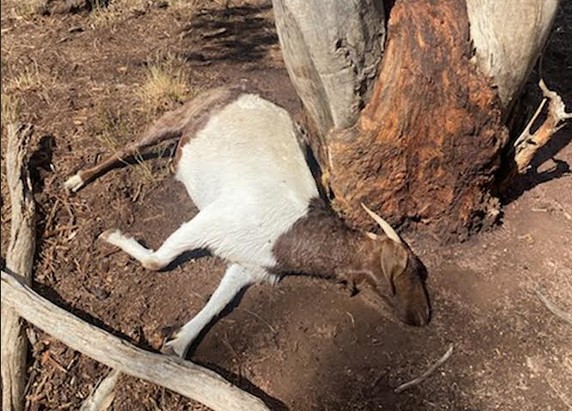
It's a busier time ahead for animal control in the Pilliga Forest with both shooting and baiting set for this month in different areas of the vast scrublands.Part of the Pilliga Nature Reserve is set to close from 23-27 February for shooting to remove feral goats from the area.The National Parks and Wildlife Service (NPWS) said they are carrying out the ground shooting in the Sandstone Caves precinct to protect important Aboriginal cultural heritage.An NPWS spokesperson said the goats can cause corrosion and degrade the landscape."Following several favourable seasons with above-average rainfall across the Pilliga, feed availability has increased significantly, leading to improved breeding conditions and a rise in feral goat numbers," the spokesperson said."The Sandstone Caves precinct is closed for the duration of the operation for visitor safety."The spokesperson said the shoot is part of the NPWS's ongoing pest management program.The Sandstone Caves are culturally significant for local Gamilaraay people. IMAGE: John SpencerThe Australian Wildlife Conservancy (AWC) is conducting an ground baiting program with the poison 1080 (sodium fluoroacetate) to remove foxes from the Pilliga National Park and Pilliga State Conservation Area.That program aims to reduce predator impacts on wildlife - especially threatened species - and is running from 31 December to 31 March.Signs will be placed at the entry to the baiting location.Authorities urge pets and working dog owners to restrain or muzzle their animals in the vicinity of the poison, and avoid entering baiting locations.If their animal is accidentally poisoned, owners should seek out a vet immediately.Immediate neighbours are typically notified directly of control activities, while visitors and can find alerts on the NPWS website.

Work begins to replace burnt railway bridge

17 February 2026, 8:20 PM

The resumption of rail freight services between Dubbo and the Port of Newcastle has moved closer with work starting on a replacement rail bridge over Beni Creek on Monday 16 February. Completion is expected mid-year, but Australian Rail Track Corporation (ARTC) is yet to indicate when it will be operational. Since the old wooden railway bridge near Dubbo was burnt down in a ferocious bushfire at the beginning of December, regional grain handlers have had to use alternate routes to the coast adding costs and delays for growers. The old bridge was on the Dubbo to Merrygoen line, a vital part of a route to export massive quantities of grain from western receival sites like Coonamble and Gilgandra via Dubbo to export terminals at Newcastle. A known freight 'pinch point' requiring slower speeds, the bridge was already marked for replacement with the Australian Rail Track Corporation (ARTC) calling for tenders that closed in August last year. The ARTC say the fire has facilitated the replacement process, minimising the time the line will be closed. An ARTC spokesperson confirmed the work had begun and told the Western Plains App, "The new bridge will be a two-span concrete ballast top bridge, designed to increase load capacity and reliability, as well as reduce maintenance requirements.  "Until the rail bridge is rebuilt the track between Dubbo and Elong Elong will remain closed, impacting freight services between Dubbo and Newcastle.  "ARTC continues to work closely with individual operators and customers impacted by re-routing their services to allow them access to the Port of Newcastle. " With hundreds of thousands of tonnes of local grain contracted to overseas buyers, rail users have been re-routing to Newcastle via Sydney. Alternate routes to Port Kembla, south of Wollongong, are also being utilised.The bridge site cleaned up and ready for a modern construction that is expected to be six months away. [IMAGE: B COULTER FACEBOOK] The country's largest rail freight company is among those impacted.“Aurizon’s services in western NSW have been significantly affected by the loss of the Beni Creek Bridge," an Aurizon spokesperson says. "The required detour adds substantial distance and complexity to our operations, resulting in higher costs and impacts for our customers. "The current workaround is not sustainable over the long term. "Restoring the direct rail connection at Beni Creek as quickly as possible is critical to ensuring freight remains on rail and that regional producers aren’t disadvantaged. “The required detour adds substantial distance and complexity to our operations, resulting in higher costs and impacts for our customers." Local road transport companies have reported a big uptick in the amount of grain now leaving local receival sites by truck. Kim Jackson of JW Jackson & Sons Transport said the company are transporting 80 tonnes of freight daily, with half their drivers specifically dedicated to grain carting. Mrs Jackson says there has been a big rise in canola transporting into the Carrington Terminal since December. "I would surmise that [the canola influx] would have something to do with the bridge," she said. 

Butler honours Barwon’s quiet achievers in Parliament

17 February 2026, 8:40 AM

Member for Barwon Roy Butler has used the floor of the Parliament of New South Wales to recognise a number of western community leaders, congratulating them on their Australia Day honours and local awards.Speaking during Community Recognition Statements on 12 February, Mr Butler paid tribute to volunteers and health leaders from Wilcannia, Brewarrina, Bourke and Wanaaring, describing them as examples of the dedication that keeps regional communities strong.John Elliott OAM – WilcanniaMr Butler congratulated Wilcannia grazier John Elliott on being awarded a Medal of the Order of Australia in this year’s Australia Day Honours list.“John has been involved in so many aspects of his local community that it is hard to list them all here,” he told the House.Mr Elliott’s service stretches back to the 1960s, when he played for the Wilcannia Tigers Football Club before later becoming president.He joined the Rural Fire Service in 1965 and remains an active member to this day.He was a foundation member of the Emmdale Landcare Group, a former chair of the Wilcannia and District Hospital board, served as a Justice of the Peace and was a driving force behind the sealing of the Cobb Highway.He has also been a board member of the Royal Flying Doctor Service, a founder of the Emmdale Race and Gymkhana Committee and a member of the NSW 1/19 Battalion (the Bushman’s Rifles) in the Army Reserve.“Much of his life has been dedicated to helping others and working for his community. John is a worthy recipient of the OAM,” Mr Butler said.Alice Gordon – Brewarrina Citizen of the YearMr Butler also recognised Alice Gordon, recently named the 2026 Brewarrina Citizen of the Year.He described Ms Gordon as “a dedicated member of the health community for rural and remote NSW”, noting her 17 years of service across child and family health, antenatal care and her pivotal role during the COVID-19 response.Ms Gordon currently works as an Immunisation Officer with the NSW Public Health Unit, covering an enormous geographical area from Broken Hill to Bathurst and down to Wentworth, ensuring children receive critical vaccinations.Her work in helping develop a statewide adopted upskilling program for clinicians has earned recognition for excellence in Aboriginal Health Care and Excellence in Multicultural Health Care.“If this wasn’t enough, Ms Gordon is also a retained firefighter with Fire and Rescue NSW and an active member across many organisations and community groups,” Mr Butler said, describing her leadership and commitment to Brewarrina as outstanding.Alister Ferguson from Bourke was one of several deserving Western Plains residents to be recognised in parliament by Member for Barwon, Roy Butler.Alister Ferguson OAM – BourkeMr Butler also congratulated Alister Ferguson on receiving a Medal of the Order of Australia for service to the Indigenous community of Bourke.“His well-deserved award is for service to the Indigenous community of Bourke,” he said.Born in Brewarrina, Mr Ferguson initially aspired to become a chef before working in the Attorney General’s Department, where he gained insight into youth incarceration rates.That experience led him to the concept of justice reinvestment and ultimately to the founding of Maranguka in Bourke - a community-led, place-based initiative focused on reducing contact with the justice system.Mr Ferguson has also served as Chairperson of the Bourke Aboriginal Working Party for more than ten years, is Deputy Chair of the Orana Haven Aboriginal Corporation and in 2015 received the Aboriginal Justice Award from the NSW Law and Justice Association.“Alister works hard for justice and I am pleased to see his efforts recognised with an OAM,” Mr Butler said.Raymond Hughston OAM – WanaaringWanaaring’s Raymond Hughston was also acknowledged for receiving a Medal of the Order of Australia for service to the community.Originally from a property near Taree, Mr Hughston’s family moved to Wanaaring in 1964.He became deeply involved in the Rural Fire Service, rising to Captain of both the Wanaaring Village and Wampralea brigades, and was awarded the National Emergency Medal for his role in the 2019–2020 bushfires.Beyond the RFS, he has also volunteered with the SES, served as President of the Wanaaring Progress Association, been a trustee of the Wanaaring Memorial Soldiers’ Hall and contributed to the local Tennis Club, Golf Club and River Waters Association.“His varied interests and volunteer roles take up a lot of his time, but he says he likes to help people,” Mr Butler said, adding that Mr Hughston is a worthy recipient of the honour.

$751 million agreement for training GPs in the bush

17 February 2026, 2:40 AM

The Royal Australian College of GPs (RACGP) has secured a $751.3 million, five-year Australian General Practice Training (AGPT) Grant agreement with the Federal Government, the longest and largest training agreement ever awarded to a medical college.With interest in general practice at an all-time high, the RACGP has filled every available place across the initial AGPT contract, with a record 1772 doctors joining the program in 2026 - a nearly 19% increase on 2025’s record-breaking number of future GPs.Of the 2026 cohort:841 doctors on the rural training pathway will spend all three years of their training in regional, rural, or remote communities. This is a 44.2% increase on 2025, driven by a 125% rise in interest in rural training since 2024.293 doctors (16.5% of the cohort) will train as rural generalists, gaining an extra year of skills in emergency medicine and hospital care essential for rural communities.“The RDANSW welcomes the announcement of new training places for general practice across Australia, recognising the increasing investment into and recognition of the importance of general practice by the Federal Government,” says President RDA NSW Rachel Christmas. “It is important to note that the number of new positions takes into account undersubscription of previous years and the carrying forward of that funding to allow for the positions to be filled now.“So, whilst the increase in numbers of registrars and training positions looks impressive, it is still making up for many years of undersubscription and under investment in general practice training. “The ongoing challenge is to continue supporting the supervision (and supervisors) of these registrars in general practice, especially in rural areas." The continued investment into general practice is seen as critical to ensuring its viability. “With the recent recognition of rural generalism as a sub-specialty of general practice, the next step is seeing it embedded within our health system industrially and within the state systems to support trainees and current RGs in attaining and maintaining their skills to be able to serve their rural communities,” said Dr Christmas.Bogan Shire Council, which operates its own medical centre in Nyngan, says the additional funding can only be a good thing for rural medicine.Bogan Shire General Manager Derek Francis says rural communities are struggling to attract GPs. [IMAGE: A.White]“Rural communities like ours are struggling to attract GPs so this initiative to train more doctors is very welcome,” says Bogan Shire General Manager Derek Frances.“The rural training pathway is especially important because we know that, more often than not, when people have experienced living and working in the bush, they like it and are more inclined to stay rural. "Most people just don’t know what’s out here – but there are heaps of opportunities."RACGP President Dr Michael Wright [IMAGE: RACGP]In announcing the new funding, RACGP President Dr Michael Wright said GPs across the country will benefit, taking time to acknowledge GP training supervisors and training practices who have and will help achieve this vital outcome.“Their commitment to high-quality education is the foundation of the Government’s confidence in our ongoing delivery and is recognised across three years of independently conducted medical trainee surveys and the GP National Registrar Survey,” he said.“General practice is central to Australia’s healthcare system and RACGP training prepares our general practice registrars for lifelong practice as GPs anywhere in Australia.”

NSW Farmers' advocate changes to firearm regulations

16 February 2026, 8:20 PM

NSW Farmers has presented the NSW Government with a list of issues it says needs to be addressed in the Firearms Regulation 2017, in light of recent changes to firearms legislation.NSW Farmers President Xavier Martin said members had raised concerns about how the new settings would operate in practice.“At the moment I’m hearing from a lot of farmers who don’t know whether they’re breaking the law or not because there’s this cloud of uncertainty hanging over them,” Mr Martin said.“For farmers these are vital tools – expensive tools – that are needed to do a job, and we’ve made it clear to the NSW Government that it needs to get the settings right around their new laws.”Among the matters raised by NSW Farmers are the design of any buyback scheme, firearm caps, mandatory gun club membership requirements, licence terms, resourcing of the Firearms Registry and appeal pathways for licence decisions.For example, it argues that if firearms are required to be surrendered under new state-based requirements, compensation should reflect fair market value and include associated ammunition, accessories and parts.It has also called for agricultural producers to be exempt from mandatory gun club membership requirements, particularly in rural and remote areas where facilities are limited.NSW Farmers has further raised concerns about potential processing delays if licence renewal periods are shortened, and has called for the restoration of merit review pathways through the NSW Civil and Administrative Tribunal (NCAT) for licence decisions.“We’re conscious that there are ways to improve practicality for farmers,” Mr Martin said.“The process to update the Firearms Regulation 2017 must not be rushed and it must provide adequate consultation opportunities with key stakeholders such as NSW Farmers to mitigate adverse and unintended consequences for food and fibre production, and the state’s biosecurity and landscape management. “We’re continuing to build engagement with government, opposition, crossbenchers and agencies to make the best out of this situation, so we can sort out the confusions, and let farmers get on with the important job of producing healthy plants and animals.”Barwon MP Roy Butler has also been vocal in Parliament about firearms law changes and their impact on regional communities.He has previously called for meaningful consultation with rural stakeholders and has argued that laws affecting primary producers must be practical and workable for those who rely on firearms for pest management and farm operations.“The firearms licensing changes are complex and will take many months to implement, so whether this legislation is passed now or in 2026 after the appropriate consideration won’t affect the actual start date of the changes,” Mr Butler said in December 2025.“The firearms industry hasn’t been consulted at all, and regional voices are being ignored, which means these new laws have plenty of unintended consequences.”The NSW Government has stated that firearms reforms are aimed at strengthening oversight and community safety, with consultation on regulatory settings ongoing.

Lobbyists' turn to contribute to the Basin review

16 February 2026, 1:40 AM

With the start of the public consultation phase of the review into the Murray Darling Basin Plan, differing views are being offered. The review aims to balance environmental, social, cultural and economic water needs for Basin communities over the next ten years, and will make recommendations on changes to the plan in late 2026.Irrigation and farming lobbies argue that the current plan has reserved enough water for environmental sustainability, and that water recovery efforts have hurt businesses. Environmental advocates say there are still parts of the Basin - stretching across four states and including the Barwon-Darling, Bogan, Castlereagh and Macquarie rivers - that aren't improving. A discussion paper released by the Murray Darling Basin Authority has set the scene. "The 2025 Basin Plan Evaluation found that water reforms have had a relatively minor effect on the Basin’s overall regional economy. Shifts in regional and rural Australia have played a larger role in shaping economic outcomes at regional scales," it says. "However, water recovery has been particularly tough for some smaller and more remote irrigation communities. "Irrigation infrastructure operators have had to adapt their service models and cost structures to remain viable with fewer water users. "The step change was needed to secure the Basin’s long-term environmental health. The shift to more balanced water use has required difficult adjustments and some Basin communities have experienced significant and lasting impacts."The opportunity to review the Basin Plan is therefore significant, to ensure it is working as efficiently and effectively as possible for the next phase of Basin management."The discussion paper also looks at matters including water quality, native fish decline, First Nations rights, research gaps and aging infrastructure like dams and weirs.When it comes to water policy in the Basin, debate over irrigation and environmental need is never far from sight. [IMAGE: River McCrossen] The Plan was launched in 2012 following the Millenium Drought from the late 1990s to late 2000s.The discussion paper says the drought exposed "serious consequences of over extraction", including periods where parts of the Darling River stopped flowing for hundreds of days. In response, the Plan aimed to rebalance usage to ensure river health with measures like buy backs, where governments purchase water entitlements off landholders to keep it in the system. Since the Plan came into force 14 years ago, the federal government has recovered about 20 per cent of the Basin's 'consumptive' water - which can include town and agricultural supply - for the environment. Environmental water now makes up around 27 per cent of water holdings in the Basin. National Farmers’ Federation (NFF) Water Committee Chair Malcolm Holm said more water to protect the system is not the way to go. “Given the Report, what further evidence do we need to provide to cease more buybacks?” he said.  “After $13 billion and more than a decade of implementation, the focus must now be on optimisation and applying the lessons learned to improve outcomes." At the NSW Irrigators Council, CEO Madeleine Hartley said the industry has made "significant" efforts to improve water efficiency over the years. "This is a living and productive Basin, and we need to keep it that way. With over 8,500 irrigation businesses operating in the Basin and an economic value of $40 billion, the review needs to bring real solutions that ensure the future viability of irrigation," she said. "At this critical juncture in the Basin Plan’s review, governments must turn their focus to addressing invasive species like carp, improving fish passage, riverbank restoration, tree and vegetation planting all the while working alongside local communities to deliver projects to improve flow patterns."Environmental advocates like the Murray-Darling Conservation Alliance say not enough water is reaching wetlands and floodplains, and that all options should be on the table. "The recent listing of the lower River Murray (in South Australia) as Critically Endangered demonstrates how serious the situation is," Alliance co-director Craig Wilkins said. "The rivers, wetlands and floodplains of the Murray-Darling Basin are in trouble. Too much water is still being taken from rivers for irrigation. "Limiting ambition from the outset is doing a disservice to Basin communities and our rivers."Public consultation closes on 1 May.

Barwon MP ups the ante on national parks

15 February 2026, 8:20 PM

Bourke Shire Council are backing calls for a shake-up of how National Parks are purchased and managed across the state.It comes on the back of draft legislation from Barwon MP Roy Butler that is now making its way through NSW Parliament.Butler's Bill aims to ensure there is proper and transparent decision-making around the purchase and management of National Parks with stronger community engagement in the process.Bourke Mayor Lachlan Ford has been vocal in his opposition to what he labels a "proliferation of NSW National Park buy-ups" in recent years.Bourke's GM Leonie Brown says local representatives should take advantage of opportunities to have their voices heard."Council has previously raised its considerable concerns with the NSW Government regarding the proliferation of National Parks, not only in the Bourke Shire but also across the wider western region of NSW," she said."At a recent meeting with officers from the National Parks and Wildlife Service (NPWS), it was brought to council's attention that applications are currently open for the new term of NPWS Regional Advisory Committees, with these committees to operate from 1 July 2026 to 30 June 2030."Whilst it is unlikely that the macro issue of further acquisition of land in the west for use as National Parks would be up for discussion at the committee, issues relating to park management, including weed infestations, invasive feral pests, inadequate fencing and like issues, would be part of the Committees role."It is considered fair to say that there is considerable discontent across the wider western region as to how the existing tranche of National Parks are being managed."  Delivering his second reading on Friday 13 February on legislation that would impose new conditions on land acquisitions for National Parks, Member for Barwon, Roy Butler said the move was based on overwhelming push back from his electorate in November of 2025.Roy Butler MP says he has taken the concerns of Barwon communities and converted them into new legislation to see better processes around national park management.The Bill's provisions would require the Minister, before acquiring land under the National Parks Act, to obtain a report on the policy objectives of the acquisition.The local council, where the land is located, would be able to nominate a temporary member to the regional advisory board responsible for preparing the report.The Bill would also prohibit the acquisition of land under the Act until alternative arrangements are made to apportion the cost of fencing boundaries under the Dividing Fences Act 1991 and to apply local government rates to the land reserved under the National Parks Act.Mr Butler says the Bill would protect communities.“The purpose of this Bill is to ensure that, when land is acquired for the National Parks estate, the purchase adds value not only in environmental terms but also to the local community where the land is located.“We have a situation in NSW where the alleged environmental value of land is often prioritized over the social impacts on small communities bordering National Parks."This is not good enough.”Access the Bill and the full second reading speech here. 

Get in quick for healthcare scholarships aimed at keeping graduates in NSW

15 February 2026, 6:41 AM

Applications for $12,000 scholarships for healthcare students across the NSW are now open to ease the hefty weight of degree and diploma debt and keep graduates in the state for at least five years. The third year of the Tertiary Health Study Subsidies Program opened on 28 January to students studying medical, nursing, midwifery, dentistry, Aboriginal health and allied health degrees in NSW. The subsidy gives up to 4000 NSW healthcare students $4000 per year for three years of study, or graduating students can receive $8000 on the spot. The scholarship is designed to help with fees, technology, travel, or other study-related costs, and is paid at the end of the year.  The only requirement for successful applicants is they must make a five-year commitment to working in the NSW public health system. Minister for Health Ryan Park said the aim is to keep healthcare workers working in NSW. “We know that not only do we need to recruit more health workers, we need to retain them, and our tertiary study subsidies bolster that effort."Since commencing in January 2024, more than 7,900 students across NSW have received payments, including Coonamble's Charles Sturt University online student nurse Ruby Cush. Her application for the scholarship was accepted in 2024.Now in her final year of study, Ms Cush's degree's debt will weigh in at almost $19,000 once it is completed. "I think this scholarship is a step in the right direction," she said."Potentially a smaller deposit start of every semester would be more beneficial to help support students to buy things required for that study period." Ms Cush said the scholarship payments are "appreciated and helpful" but more could be done given nursing placements are especially hard for students, even with the scholarship. "The placements are long, unpaid full-time work. There needs to be more financial support in this area." NSW Health has already received over 830 applications for this year, with applications open until all funds are exhausted.  Find out more here.

Demerit reward program for safe drivers becomes permanent

15 February 2026, 2:40 AM

Motorists across the Western Plains – and the whole of NSW – who manage to keep their driving record clean for a year could continue to see a demerit point wiped from their licence, with legislation introduced to make the state’s trial demerit reward program permanent.For many regional drivers, who often clock up long distances for work, school runs and sport, that single point can make a real difference.More than two million demerit points have already been removed during the trial period, which began in 2023.Central North Police District Commander Gerard Lawson said the program provides an incentive to stay offence-free.“With most safety offences carrying more than one point, usually two or three, it won’t totally wipe the points out in one swoop,” he said.“This is a type of reward to encourage safe driving and a way to recognise good drivers and help people who make honest mistakes."Under the proposed changes introduced by the NSW Government, unrestricted licence holders who remain offence-free for a continuous 12-month period will have one demerit point removed from their record.Learner and provisional drivers remain excluded under the Graduated Licensing Scheme, reflecting their lower demerit thresholds and higher risk profile.Drivers must also maintain an active licence and remain free of relevant offences for the full 12-month reduction period for a demerit point to be removed.Excessive speed can be costly - in many different ways. Demerits depend on the amount of excess speed and are doubled during holiday periods.Penalties, fines, licence suspensions and police action remain firmly in place for dangerous and repeat offenders.The Government says this reform works alongside those measures by giving drivers a clear incentive to slow down, follow the rules and stick to safer habits.Roads Minister Jenny Aitchison said the reform was designed to work alongside enforcement, not replace it.“For too long, road safety has relied almost entirely on penalties and enforcement, and while those tools remain absolutely essential, on their own they don’t always change behaviour for the long term,” she said.“We believe the best approach is a clear carrot and stick – strong penalties for dangerous behaviour, combined with a real incentive for drivers who do the right thing and stay offence-free.“If you break the rules, the penalties apply – fines, points and suspensions are still there.“But if you slow down, follow the rules and drive safely over time, that effort is recognised. We think that balance gives us the best chance of changing behaviour and saving lives.”The legislation forms part of a broader $2.8 billion road safety investment over four years, covering infrastructure, enforcement and education initiatives across NSW.

Measles alert: Western NSW now on the list

13 February 2026, 9:40 PM

After a series of measles alerts based around Sydney airport and other city locations western New South Wales has now joined the list of locations where vigilance is being urged. NSW Health is advising people to be alert for signs and symptoms of measles after being notified of four new cases across the state. While there are no further details on where in western NSW cases have been found, NSW Health advises that people should monitor for symptoms of measles. NSW Health advises that there has been an increased risk of measles in NSW since 1 January this year. Of the cases detected in the week up to 13 February, three of the cases have not travelled overseas and acquired their infection in NSW.  Two of these locally acquired cases have a link to earlier NSW cases and the source of the third remains under investigation.  The fourth case is a returned traveller from South East Asia, where there are ongoing outbreaks of measles. The four cases have visited several locations across NSW while unknowingly infectious. Why worry? Measles is a very contagious viral illness that can lead to serious illnesses or even death in vulnerable people.Young children, unborn babies and people with weakened immune systems are most at risk and other unvaccinated people can become seriously unwell.Measles is a strictly notifiable disease in NSW and is considered an urgent public health risk. Medical practitioners and laboratories are required to immediately notify the local Public Health Unit upon suspicion of a case, without waiting for laboratory confirmation.  “Symptoms to watch out for include fever, runny nose, sore eyes and a cough, usually followed three or four days later by a red, blotchy rash that spreads from the head to the rest of the body," said Director of Communicable Diseases NSW, Dr Christine Selvey.  Anyone with early symptoms who gets a rash a few days later should also think about measles,and seek testing. “It can take up to 18 days for symptoms to appear after an exposure." How to avoid getting measles Measles is a vaccine preventable disease that is spread through the air when someone who is infectious coughs or sneezes.  “We want to remind the community to make sure they are up to date with their vaccinations.  "The measles vaccine can prevent the disease even after exposure, if given early enough,” Dr Selvey said.  “This should be a reminder for everyone to check that they are protected against measles, which is highly infectious. “Anyone born after 1965 needs to ensure they have had two doses of measles vaccine.  "This is especially important before overseas travel, as measles outbreaks are occurring in several regions of the world at the moment." The measles-mumps-rubella (MMR) vaccine is safe and effective, and is given free for children at 12 and 18 months of age.  It is also free in NSW for anyone born after 1965 who hasn't already had two doses. Children under the age of 12 months can have their first dose of MMR up to six months early if they are travelling overseas. Parents should consult their GP. People who are unsure of whether they have had two doses should get a vaccine, as additional doses are safe.  This is particularly important prior to travel. MMR vaccine is available from GPs (all ages) and pharmacies (people over 5 years of age). For more information on measles, view the measles factsheet. People can also visit the Australian Government Smart Traveller website for information on health risks, including measles outbreaks relevant to their travel destination. If you, or a loved one, is experiencing measles symptoms, or have questions about measles, please call your GP or healthdirect on 1800 022 222.    

Bourke's youngest councillor resigns

13 February 2026, 7:20 AM

Former Bourke councillor Maxime Nina says it's a "bitter sweet" moment after he resigned from the role from Monday 9 February. The 30-year-old was the youngest on the council and was first elected in September 2024. He is unable to continue to serve on council following a decision to move to Tasmania, where he has recently begun work as a law clerk. Mr Nina said he hopes his time inspired the area's young people. "Bourke will always hold a special place in my heart," he said. "I'm really deeply grateful for the belief and the support shown to me by the people of Bourke. Sometimes, much like a river, life takes you in directions you don't quite expect. My decision to step away was a considered one made with respect for the community and the role of council. "I greatly valued the camaraderie and of my fellow councillors and the opportunity to witness firsthand the tireless dedication of Council staff. "I was greatly supported by Mayor Lachlan Ford and General Manager Leonie Brown, both of whom are strong and committed advocates of the Bourke community. "I hope that my contributions brought new ways of thinking to council." Mr Nina moved from Dubbo to Bourke as a youth worker at the local public school in 2023. He said a desire to give back to the community and inspire political participation in young people drove him to stand for council. He threw his hat in the ring during the 2024 local government elections and was voted in with one of the highest counts of first preference votes.Among his highlights was work on the Audit Risk Improvement Committee, and representing Bourke on the board of regional arts organisation Outback Arts. Bourke Mayor Lachlan Ford said Mr Nina offered a "level head" on Council. "He would have made a great councillor had he been able to continue on with his role," Cr Ford said. "But these things happen and he's got to do what's best for him. "He's been on deck when we've made some significant policy changes over the last 12 months with a new council. Max has been supportive and offered intelligent responses." The council will now look to fill Mr Nina's seat with a 'countback' election between candidates who were unelected in the 2024 ordinary election. Mr Nina's vote preferences will be distributed between the participating candidates before the one with the highest tally is elected. The countback has to take place within 49 days of Mr Nina's resignation.

Minister questioned over Coonamble water denial

12 February 2026, 8:20 PM

NSW Nationals MP Scott Barrett has probed a government decision to deny funding for bottled water in Coonamble as the town enters their third week on a boil water alert. Mr Barrett asked water minister Rose Jackson why the $30,000 request was not granted in Parliament on Wednesday 11 February. "If not having clean water to wash and the ability to drink tap water isn't enough to trigger support, then what is?" Mr Barrett said. "They've had to cancel cattle sales in the area, and as they slip further and further into drought that means people are hanging into stock for longer, which is going to have further ongoing problems. "What we need to know is why this $30,000 to help this council was rejected." Local councils can apply to subsidise emergency bottled water in "exceptional circumstances," according to an information sheet from the NSW Department of Climate Change, Energy, the Environment and Water. (DCCEEW) and Coonamble Shire Council submitted an application on 4 February when it became clear the situation would last more than a few days. Coonamble Shire announced a ban on non-essential usage on 28 January after high demand outpaced treated water production at the town's plant.\A collection point for non-drinking water at Coonamble Showgrounds. IMAGE: River McCrossen That forced the council to pipe untreated bore lines directly into the drinking water system, which triggered a boil water alert. Minister Jackson said she understood that the council had not made a request, although the Western Plains App has seen a rejection letter from DCCEEW.  "Things like water carting are available to support critical human needs where an emergency situation arises," she said. "But that can't be at the expense of supporting a local water utility (Coonamble Shire Council) to be able to do its job in the long term, because we don't want to go down a path of saying to a community like Coonamble that you don't have the long-term sustainable capacity to have a local utility deliver your water." Impacts hit fastThe restrictions came during a state-wide heatwave in late January-early February that saw days of temperatures above 40 degrees. The impact has been felt by businesses and residents throughout the community, from failing gardens to extra transport costs. Volunteers from the town's Rotary club say have made around 40 trips for residents unable to collect drinking water as the town enters their third week of tight water restrictions.Mark Hoath fills his tank with water to hose a garden for an elderly resident. IMAGE: River McCrossen  They have delivered water from council collection sites to elderly people and young families unable to do so themselves since a boil water alert went out in late January. One of them was Mark Hoath, who filled a 1000-litre tank at a council station and transported it to residents on the back of his utility. He was using it to hose an elderly barber's garden when he caught up with The Coonamble Times on Monday 2 February. "It’s the right thing to do, mate. It’s what community should do,” Mark said on the way to pick up water. “She’s got veggie gardens all over the place and it’s just dying. “It’s just heartbreaking to see some of these oldies.”A drinking water collection point off Coonamble's Castlereagh Street. IMAGE: River McCrossen Supermarkets and alcohol-licenced venues were quick to order extra supplies of bottled water. They reported a loss in revenue, particularly due to transport costs, although no bottled water shortages have been reported.  "It will increase our costs quite a bit," Coonamble Bowling Club manager Natalie Thurston said. "We're buying bags of ice for the day. We're buying water to use in the kitchen." Residents initially reported varying levels of water pressure drops. However, they have since eased alongside temperatures following a state-wide heat wave in late January-early February. The council also opened a daily site where residents can grab a bag of bottles for free, while a shower on Monday 9 February provided temporary relief for local gardens. However, the there has been at least one report of a resident presenting to Coonamble Hospital with dehydration; school bubblers cannot operate and immuno-compromised people remain at higher risk.Council is working towards the return to treated water, but a series of other infrastructure set-backs have plagued the process.Breaking water mains, an unexpected drop in production of one of the main bores and a failure in the telemetry system that connects another bore to the water treatment plant have all added to the delays.Mayor Dan Keady and General Manager Greg Hill will be meeting with Water Ministry staff in Sydney later this month.

Wiggle your way to a Healthy Lunchbox

12 February 2026, 8:40 AM

Ask a parent one of the things they struggle with in school time, and they will tell you thinking of things to pack for kid’s lunches.Usually Mondays start brimming with fresh food and sandwiches cut in star shapes, but by Friday as the weekly shopping and a parent’s energy starts to dwindle, lunchboxes look a bit different, especially for those in live in rural and remote areas where access to supermarkets is limited and bulk shops once a week mean learning to be creative.This week (9-15) February is Healthy Lunchbox Week, and the International Fresh Produce Association A-NZ (IFPA A-NZ) has teamed up with the Wiggles to turn the daily routine of packing school lunches into a celebration.National Lunchbox Week inspires families to embrace diversity and enjoyment in lunchboxes, and with data recently released showing only 4 per cent of Australian children meet their recommended daily fruit and veggie intake, the IFPA A-NZ want to address this by promoting snackable produce to make them a preferred option for school kids.The IFPA A-NZ says now is time to transform the Monday to Friday lunchbox quandary into a “Fruit and Veggies Yummy Yummy” celebration.Managing Director IFPA-A-NZ Belinda Wilson says they are thrilled to be working with the Wiggles. [Image IFPA-A-NZ] "We know parents want their children to be healthy and our campaign aims to inspire them to 'Wiggle' more excitement into school bags with fresh, snackable produce that makes healthy eating the best part of the school day,” IFPA A-NZ managing director Belinda Wilson said. "Children are a key influence on what ends up in the shopping trolley. National Lunchbox Week is our opportunity to harness that influence for good. By partnering with The Wiggles, we’re making fruit and veggies fun, familiar and desirable choices for the lunchbox. It’s a brilliant way to capture back-to-school energy while tackling concerning consumption statistics. "School mornings can feel like a whirlwind, so anything that brings a little joy and connection is a win. We're encouraging families to start the day with a quick Wiggle reel - something fun that gets everyone smiling - and then keep that energy going by packing a colourful lunchbox inspired by what they've just watched. It's a simple way for parents to turn routine into memories, spark creativity, and make the everyday moments feel a little more magical."  The initiative comes off the back of IFPA A-NZ successful retail activations with Aldi and Harris Farm Markets in the back-to-school preparation weeks. Families had the chance to meet The Wiggles and make healthier choices at the checkout, learning about what foods are great for lunchboxes, that are fresh and good for you. Coming on board to support IFPA - A-NZ are Industry leaders and fresh produce organisations around the country all encouraging children to eat more fruit and vegetables in their daily lunch. Wiggles encouraging yummy yummy food [Image IFPA-A-NZ]Tottenham Central School Canteen Co-ordinator Lisa Fishpool says initiatives like this are a great way of teaching kids the ‘good’ foods to eat and makes it cool if everyone is eating fruit. It is all about educating kids about the best foods to eat. Our school has a fruit break in classrooms now and that encourages kids to eat fruit, whereas they may not have if it wasn’t part of the school activities,” said Mrs Fishpool.“I have three kids of my own, along with running the canteen, and from my experience, it’s all about preparing for the week so you know what you need.“My daughter is great and will eat the good things, like cucumbers, carrot sticks and fruit but the boys not so much so I try to do healthy salad boxes and wraps as well.“As far as the canteen goes cakes, slice and chips are still favourites but we offer and encourage yoghurts, muesli cups and fruit salad cups and salad boxes.The “Fruit and Veggies Yummy Yummy” campaign may make the next generation coming along more food wise and that’s a fantastic thing,” said Mrs Fishpool.Lisa Fishpool Canteen Co-ordinator at Tottenham Central School with husband Eric and children Max, Archie and Lexi says the Yummy Yummy campaign is a great iniiiative. [Image L.Fishpool]With research showing children nowadays are actively involved in the shopping process and preparation as parents struggle to juggle work and everyday life, so education around what to purchase may help solve the decline in fruit and vegetable consumption around the world.Industry partners include AUSVEG and Hort Innovation, Mitolo Family Farms, Flavorite, Perfection Fresh Australia, Premier Fresh Australia and Mackays Marketing. Mitolo Family Farms Chief Commercial Officer, John Tselekidis said: "We're proud to support a campaign that is about more than just driving awareness, it's about influencing positive food habits for families and encouraging children to enjoy more fresh fruit and vegetables. "The Wiggles have a unique ability to engage children, and being part of this initiative through IFPA A-NZ allowed Mitolo Family Farms to champion fresh vegetables, including potatoes, in a fun and meaningful way." Wiggles Spreading the good food message. [Image IFPA-A-NZ]» For more fresh ideas for National Lunchbox Week, browse these lunchbox ideas>

Another one bites the dust - Binnaway tobacco shop shut down after joint council and police raid

12 February 2026, 2:40 AM

A newly opened tobacco outlet in Binnaway has been shut down following a joint enforcement operation between Warrumbungle Shire Council and NSW Police.Council confirmed a significant enforcement action was carried out on Monday 9 February 2026, after local residents raised concerns about the alleged unlawful sale of tobacco products from premises on Renshaw Street.An investigation commenced after community reports were received on 5 February.Based on evidence gathered, authorised officers from Warrumbungle Shire Council, assisted by NSW Police, conducted an inspection and search of the business.During the operation, officers located and seized prohibited tobacco products, including loose and packaged tobacco commonly referred to as “chop-chop”.The inspection also identified serious fire safety concerns within the premises.Further inquiries indicated individuals associated with the business, based in Sydney, had been using, or intended to use, the building for intermittent accommodation.Given the dilapidated condition of the property, council said this raised significant concerns for public health and safety.All seized items are now in the possession of relevant authorities and form part of ongoing investigations.At the conclusion of the joint operation, an “Emergency Stop Use” order was served on both the employee present and the registered owners of the premises.Seized tobacco products in Binnaway have been confiscated.The order prohibits any further use or occupation of the building.Warrumbungle Shire Council is now reviewing the evidence obtained and is considering filing charges against the operators in relation to alleged offences identified during the investigation.Additional development control orders may also be issued in response to the fire safety risks identified within the premises.Council reaffirmed its commitment to working collaboratively with NSW Police and NSW Health to eliminate illegal tobacco sales within the region, noting the unlawful distribution of tobacco productsposes risks to community health and safety and is often linked to broader criminal activity.Anyone with information relating to the illegal sale of tobacco products is encouraged to contact Crime Stoppers.Further enforcement across the regionThe Binnaway closure comes amid continued enforcement activity across the wider district.On the same day, officers working on behalf of Gilgandra Shire Council, with support from NSW Police, conducted a coordinated inspection of a business on Miller Street in Gilgandra following intelligence about high-volume sales of prohibited tobacco products.During that operation, investigators seized prohibited tobacco, vape modules and packaged loose tobacco, and issued an Emergency Stop Use order barring further occupation of the premises.Evidence from that matter is also being reviewed, with charges under consideration.Both councils have reiterated their commitment to supporting NSW Police and NSW Health efforts to eradicate illegal tobacco retailing, warning the unlawful sale and distribution of prohibited tobacco products impacts local amenity and poses risks to communityThis comes as the government has recruited 30 additional full-time tobacco inspectors to boost the state-wide enforcement team bringing it to 78 inspectors.These officers work with NSW Police under the state’s tough new laws that came into effect in late 2025.

1-20 of 4887