"It's about keeping community safe" - Cobar council looks to new awning policy

Farren Hotham
15 December 2025, 1:40 AM
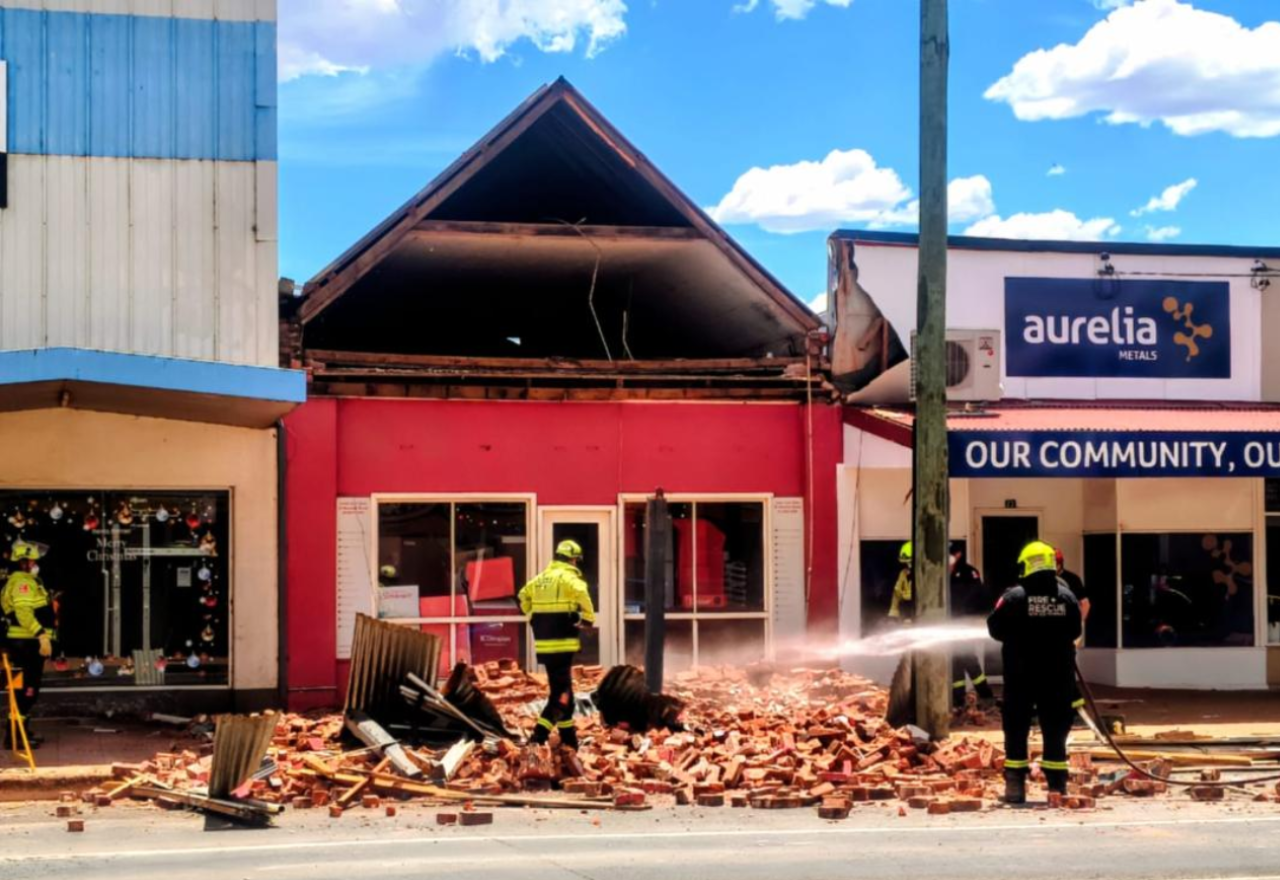 The awning collapse in Cobar on 15 November is still being investigated. [IMAGE: Emma Datson]
Cobar councillors have recommended an awnings and veranda policy go out on public exhibition after its latest meeting on 11 December.
Council general manager Peter Vlatko told councillors a grant is available for a structural engineer to inspect buildings.
"This is about keeping community safe on our footpaths," he said.
Business will be asked to work with council in the wake of the building and awning collapse on 15 November.
Although no-one was injured, it has galvanised council to act.
"As a response to a street awning collapse onto the Marshall Street footpath on Saturday 15 November action was taken to secure the site and protect the public thoroughfare," Mr Vlatko said.
"Awnings are part of the buildings to which they are attached and are the responsibility of the owner of the building, even when an awning is located over a public footpath.
"Additionally, with the increased popularity of outdoor dinning associated with lawful food and drink premises, this can lead to an intensification of the use of public space under or near an awning.’’
Investigations continue into the November building collapse.
It was explained that the Cobar Shire Council area has many shops and commercial buildings that have awnings which project over public footways.
It is not compulsory for shops and commercial buildings to have awnings, however they provide many benefits to the public, including protection from heat and rain, shading the premises and providing opportunities for advertising.
Some awnings are supported by steel tension rods connected to the building’s fascia.
These rods can fail over time for various reasons and failure of a tension rod can result in an awning's collapse which can cause property damage, personal injury, or death.
Other awnings may be supported by post adjacent to the street gutter, and many modern awnings are constructed with cantilevered beams which are integral to the structure of the building.
Cantilevered awnings are much less likely to suffer catastrophic collapse.
There are many reasons for awning failure, including corrosion, adverse wind and weather conditions, poor maintenance, illegal use and loading, build-up of debris inside the structure, failure at the façade or awning connection, impact by a motor vehicle, demolition of an adjoining building or awning and other reasons.
Awnings are part of the buildings to which they are attached and are the responsibility of the owner of the building, even when an awning is located over a public footpath.
Council staff say the policy will raise awareness of the need for owners to regularly monitor the safety of their awnings.
They voted to:
- implement an awnings awareness program framework for owners of awnings within the Cobar Shire area;
- promote an increased level of protection of public health and safety by reducing the risk of harm, injury or death which may result from the failure of an awning overhanging the Council’s footways;
- establish a policy position for imposition of appropriate conditions to address the safety of any associated awning when considering a license application under section 125 of the Roads Act and or in determining a development application for change of use, alterations and additions, or the use of the footway or public open space as an outdoor dining area;
- provide a standard for the location and type of future awning and verandah posts proposed on any footway or public open space.
Business and building owners will have an opportunity to view and comment on the proposed policy.